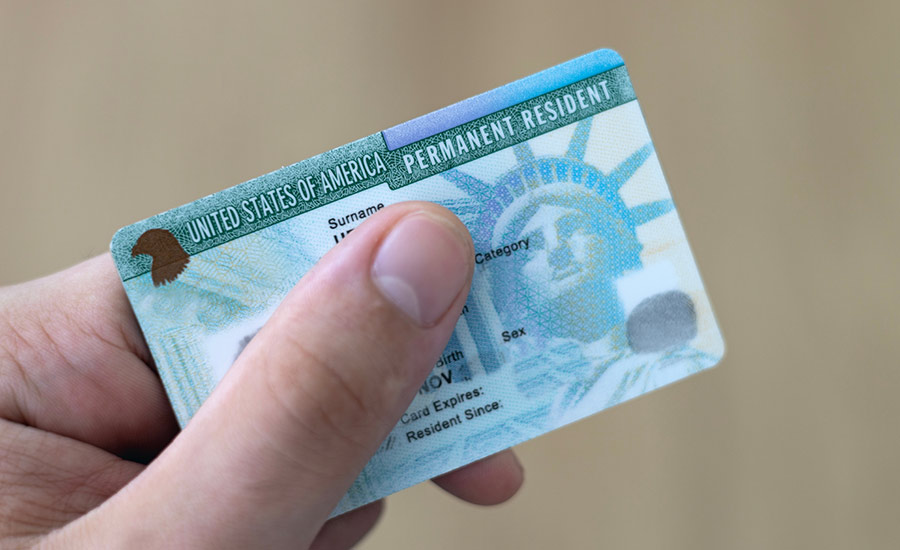
The Green Card Home Country Rule represents one of the most significant shifts in U.S. legal immigration processing in over six decades. Announced by the Trump administration on May 22, 2026, this directive fundamentally alters how many temporary visa holders can pursue permanent residency, pushing most applicants toward consular processing in their home countries rather than adjusting status while remaining in the United States.
Why the Green Card Home Country Rule Was Introduced
U.S. Citizenship and Immigration Services (USCIS) framed the Green Card Home Country Rule as a return to the original intent of the Immigration and Nationality Act (INA). According to USCIS spokesperson Zach Kahler, nonimmigrants—such as students on F-1 visas, temporary workers on H-1B visas, or tourists—enter the U.S. for a specific, temporary purpose. Their presence “should not function as the first step in the Green Card process.”
The administration argues that widespread use of adjustment of status (AOS) under INA Section 245 has created loopholes. Rejected applicants sometimes remain in the country illegally, increasing enforcement burdens. By requiring most applications through U.S. consulates abroad, the policy aims to:
- Reduce incentives for overstaying or going “into the shadows.”
- Free up USCIS resources for priorities like naturalization, victim visas, and human trafficking cases.
- Ensure stricter vetting through the Department of State’s consular process.
- Align processing with the statutory design, where consular processing is the default for immigrant visas.
In fiscal year 2024, approximately 58% of green cards (over 780,000 out of 1.3 million) were issued via adjustment of status inside the U.S. The Green Card Home Country Rule seeks to reverse this trend to prioritize American workers and restore system integrity.
When Does the Green Card Home Country Rule Take Effect?
The policy was announced on May 22, 2026, with USCIS stating it applies “from now on,” except in extraordinary circumstances. The exact implementation timeline for pending applications remains somewhat unclear in initial guidance, but officers are directed to treat adjustment of status as a rare discretionary act of administrative grace. Additional policy guidance is expected for specific categories.
This rapid rollout has created immediate uncertainty for hundreds of thousands of applicants, including spouses of U.S. citizens, skilled workers, and students nearing the end of their visas.
Key Provisions of the Green Card Home Country Rule
The core of the Green Card Home Country Rule is this: Temporary visa holders seeking a green card must generally depart the U.S. and apply for an immigrant visa via consular processing at a U.S. embassy or consulate in their home country.
Exceptions exist only for “extraordinary circumstances,” evaluated case-by-case. Factors may include strong ties to the U.S. (family, economic contributions, national interest), but officers weigh these against any negative immigration history. Categories with “dual intent” (like certain H-1B) or those where adjustment is the only pathway may receive more leniency, though details are still emerging.
This change affects:
- H-1B professionals and their families.
- F-1 students transitioning to employment-based green cards.
- Immediate relatives of U.S. citizens (spouses, children).
- Many employment-based and family-based applicants.
Consequences of leaving include potential long waits abroad (especially with backlogs), risks of visa denials preventing re-entry, and family separations. For nationals from countries with travel restrictions or paused processing, the pathway could become extremely challenging.
Interesting Episodes and Human Stories Around the Green Card Home Country Rule
The announcement quickly sparked real-world drama. One widely discussed anecdote involves Indian H-1B professionals in Silicon Valley tech firms. Many have waited years in backlogs; the Green Card Home Country Rule could force them to uproot families and return to India for processing, potentially disrupting multimillion-dollar projects. A viral story featured a software engineer who had just proposed to his American fiancée—now facing months or years apart during consular waits.
Another compelling episode: Afghan allies who supported U.S. forces. Advocates highlighted cases where individuals cannot safely return to Taliban-controlled areas with no functioning U.S. consular services. One former interpreter reportedly told media outlets he felt “abandoned twice”—first during the 2021 withdrawal and now under the new rule.
Humor mixed with anxiety emerged on social media. One meme showed a fictional H-1B worker packing suitcases labeled “Back to consular processing… see you in 2028?” while another quipped about “turning the American Dream into a very expensive world tour.” These light-hearted takes underscored deeper frustrations.
Maye Musk (Elon Musk’s mother) shared her own immigration journey in response, recounting earlier, simpler processes, adding a personal celebrity angle to the debate.
Broader Context and Criticisms
Critics, including immigration attorneys and Democratic lawmakers, describe the Green Card Home Country Rule as disruptive to families, businesses, and U.S. competitiveness. They argue it ignores decades of practical reliance on adjustment of status and could drive talent overseas. Legal challenges are anticipated.
Supporters view it as essential enforcement of existing law, closing loopholes that undermine the temporary nature of nonimmigrant visas.
This policy fits into broader Trump administration efforts on immigration, including enhanced vetting and pauses for certain nationalities.
Final Thoughts on the Green Card Home Country Rule
The Green Card Home Country Rule marks a pivotal moment in U.S. immigration history, prioritizing strict adherence to statutory processes over convenience. While aimed at fairness and efficiency, its human and economic impacts will unfold in coming months. Applicants should consult qualified immigration counsel and monitor USCIS updates closely.
For the most current official information: