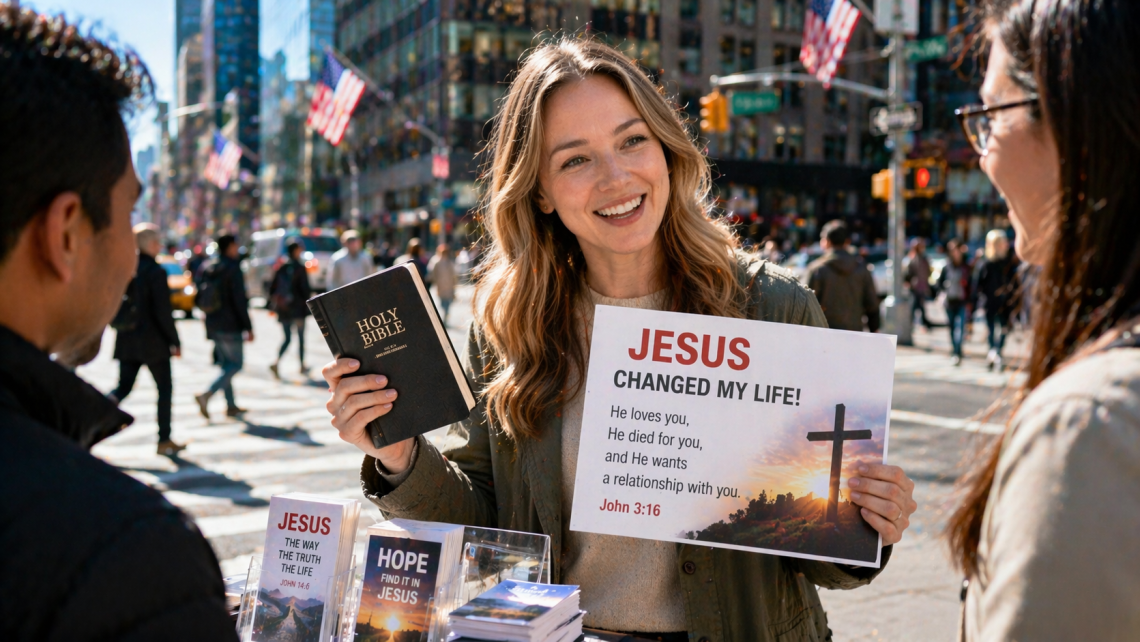
In today’s fast-paced spiritual landscape, the concept of Exercising Faith stands as a vital measure of Christian maturity. A brand-new LifeWay Research study, released just days ago on April 7, 2026, shines a spotlight on how Protestant churchgoers are navigating Exercising Faith amid growing doubts. This in-depth analysis draws exclusively from verified data published by LifeWay Research, offering church leaders, pastors, and everyday believers a clear-eyed look at the current state of discipleship in American churches.
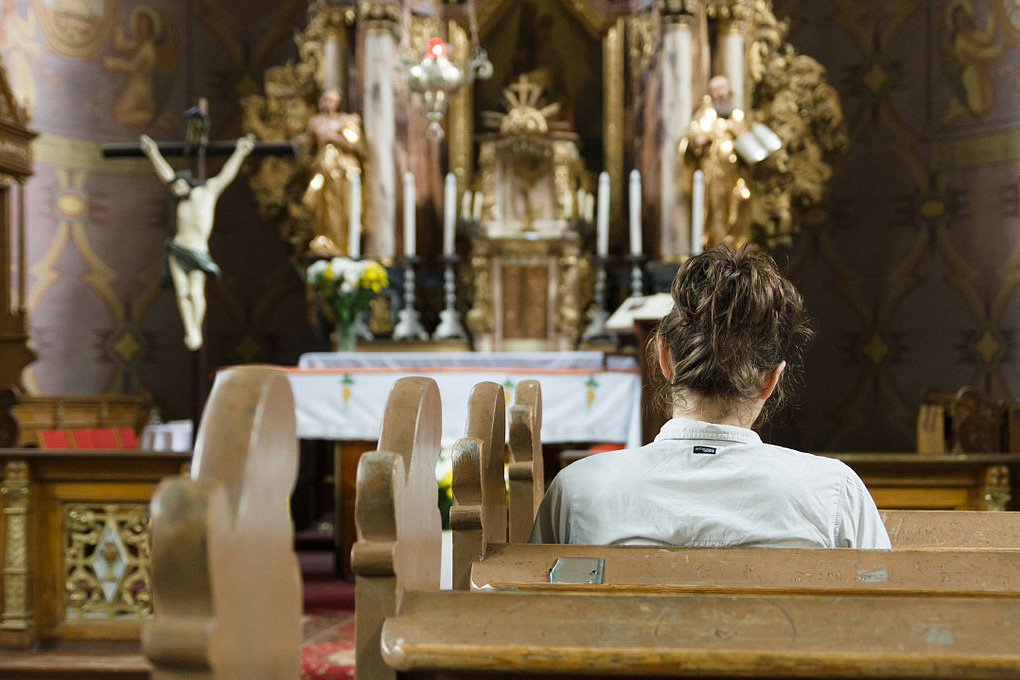
(Image: Thoughtful churchgoer seated in a traditional sanctuary, gazing toward the altar during a moment of quiet reflection, capturing the internal journey of Exercising Faith. Source: Pastoral Perspectives on Silence in Church via blog.adw.org)
The Purpose Behind This LifeWay Research Survey on Exercising Faith
LifeWay Research designed this survey as part of its larger State of Discipleship initiative. The core goal? To identify and quantify eight “signposts” that consistently appear in the lives of believers who are actively progressing in spiritual maturity. Exercising Faith is one of those eight signposts—a validated scale that measures how churchgoers trust God’s character, provision, and power even when life feels uncertain.
By focusing on Exercising Faith, researchers aimed to move beyond surface-level attendance numbers and uncover the real-life tensions believers face: Do they truly rely on God when circumstances turn difficult? The study equips church leaders with actionable insights to foster deeper discipleship rather than simply maintaining programs.
How LifeWay Research Conducted the Exercising Faith Survey
LifeWay Research conducted the online survey from March 19–26, 2025, using a national pre-recruited panel of U.S. adults. Researchers screened participants to ensure they identified as Protestant or non-denominational and attended religious services at least once a month. The final sample included 2,130 qualified Protestant churchgoers who could respond in English or Spanish.
Quotas and slight statistical weights balanced the sample across gender, age, region, ethnicity, education, and denominational affiliation. The methodology delivers a 95% confidence level with a margin of error of no more than ±2.21% for the overall sample (higher for subgroups). These rigorous standards make the findings on Exercising Faith among the most reliable snapshots of American church life available today.
(Image: Close-up of clasped hands resting on an open Bible, evoking personal prayer and the daily practice of Exercising Faith. Source: Dreamstime royalty-free stock photo collection)
Core Findings: What the Data Says About Exercising Faith
The average U.S. Protestant churchgoer scores 71.6 out of 100 on the Exercising Faith scale—ranking it fourth among the eight discipleship signposts. While this passing grade shows many believers maintain basic trust, the detailed responses reveal a troubling upward trend in doubt.
Here are the standout statistics on Exercising Faith:
- 25% of churchgoers admit that during difficult circumstances they sometimes doubt God loves them and will provide for their lives (up sharply from 15% in a 2012 LifeWay discipleship study and 18% in 2019).
- 24% typically doubt that God is involved when unexplained events occur in their lives (compared with only 9% in 2012 and 14% in 2019).
- 23% sometimes doubt that God can change the lives of non-Christians they know—more than double the 11% recorded in 2012.
- 18% believe sins that only affect themselves are not as harmful as sins that hurt others.
- Only 13% say they don’t need God’s help very often, yet the rising doubt numbers suggest many still struggle to lean on Him consistently.
(Image: Artistic depiction of the biblical father bringing his son to Jesus and crying out, “Help my unbelief!”—a powerful illustration of honest Exercising Faith in crisis. Source: Sunrise Chapel illustration)
These increases over the past 14 years are statistically significant and consistent across earlier LifeWay Research discipleship benchmarks. The data paints a picture of sincere believers who want to trust God fully yet find Exercising Faith more challenging in an unpredictable world.
What These Exercising Faith Findings Imply for Churches Today
Scott McConnell, executive director of LifeWay Research, sums up the tension perfectly: “The thought of measuring someone’s faith in God with more than one question might surprise people, but you can trust God in one area of your life and not another. It is as if churchgoers are saying, ‘Sure, I trust God, except when I don’t.’”
The implications are both sobering and hopeful. Growing doubts in Exercising Faith do not mean faith is collapsing—they signal an opportunity. Churches that ignore these trends risk watching members quietly drift toward deconstruction or silent disillusionment. Conversely, congregations that openly address doubt can become places where Exercising Faith flourishes.
McConnell adds a biblical anchor: “It is healthy to acknowledge our doubts, but it is also beneficial to not stay there. This is exemplified in the Gospel of Mark when the father asks Jesus, ‘Help my unbelief!’ (Mark 9:24, CSB).” Pastors who model vulnerability and point people back to God’s proven character will see stronger, more resilient disciples.
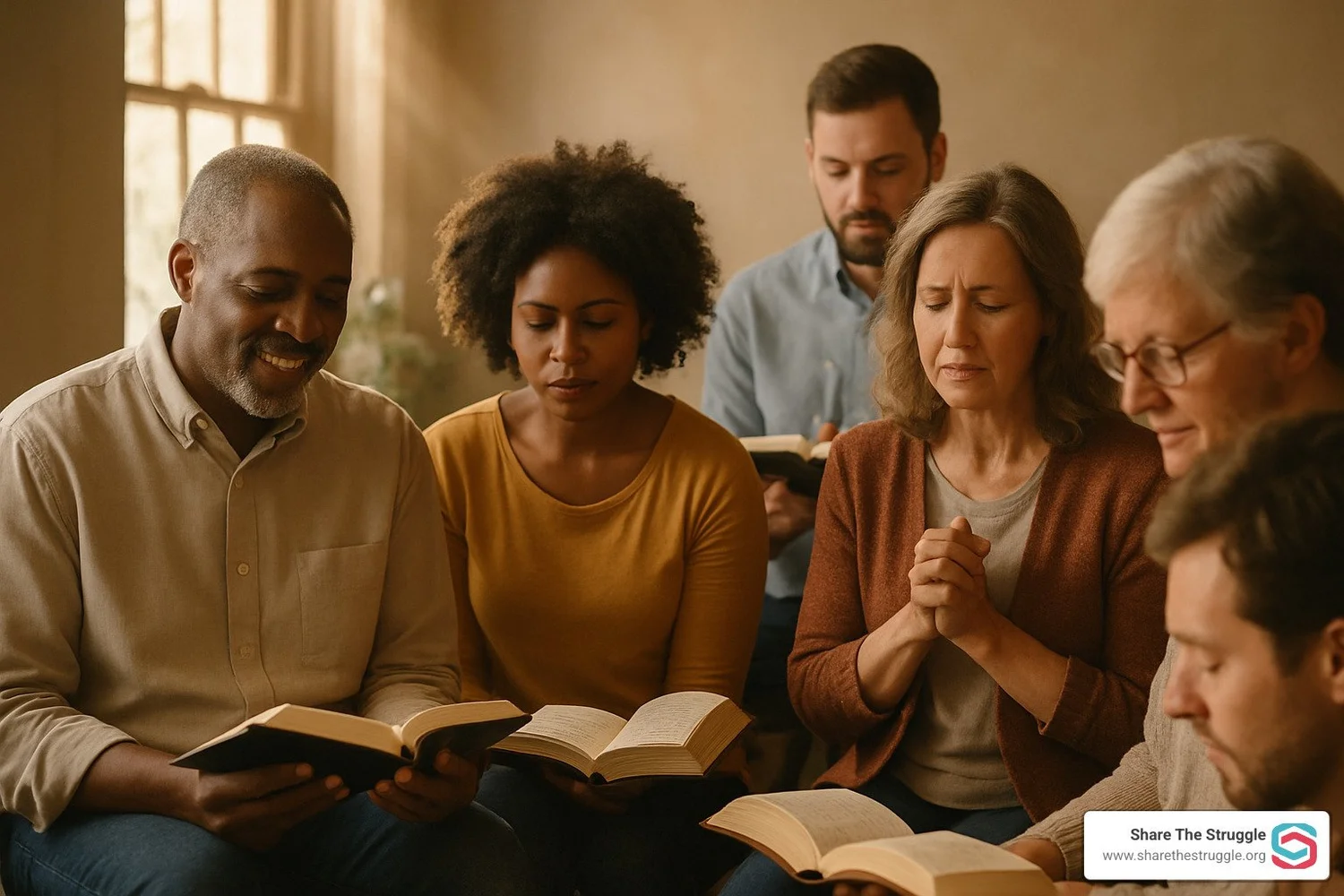
(Image: Diverse small group of believers gathered around open Bibles, praying and discussing faith together—perfect example of community support for Exercising Faith. Source: Share The Struggle ministry photo)
Fun and Faith-Building Episodes That Echo the Exercising Faith Struggle
Doubt has always been part of the faith journey—and Scripture is full of relatable, even humorous moments that mirror today’s Exercising Faith challenges.
Remember Doubting Thomas? After hearing the resurrection news, he declared he wouldn’t believe unless he could touch the scars himself. Jesus appeared, invited the touch, and Thomas fell to his knees. The episode ends not with scolding but with a gentle rebuke and an invitation to deeper belief—exactly the kind of grace churches can extend to the 25% who doubt God’s provision today.
Or consider the frantic father in Mark 9 whose son suffered violent seizures. He begged Jesus for help, then honestly confessed his wavering heart. Jesus healed the boy anyway. That raw “Help my unbelief!” prayer has comforted generations of believers who feel the same tension while trying to practice Exercising Faith.
Fast-forward to modern stories: C.S. Lewis famously wrestled with doubt after losing his wife, yet those honest struggles produced some of the most powerful apologetic writings of the 20th century. Or think of the countless small-group stories shared every week—someone admits, “I doubted God would provide during my job loss,” only to hear others recount miraculous answers. These light-hearted “God showed up anyway” testimonies turn isolated doubts into communal victories for Exercising Faith.

(Image: Vibrant small-group Bible study circle with participants engaged in discussion and note-taking, illustrating safe spaces to process doubts while growing in Exercising Faith. Source: Sanctuary Baptist church photo)
Practical Takeaways and Next Steps for Strengthening Exercising Faith
Church leaders can use these LifeWay Research findings to:
- Create safe spaces for honest doubt-sharing without fear of judgment.
- Teach the full character of God through Scripture, emphasizing His faithfulness across generations.
- Incorporate regular testimonies of God’s provision to combat the 24% who question His involvement.
- Evaluate discipleship programs specifically through the lens of the eight signposts, with Exercising Faith as a priority metric.
The data is clear: Exercising Faith is not automatic. It requires intentional cultivation. Yet the very act of acknowledging rising doubts positions today’s church to experience deeper revival.
For the complete LifeWay Research report on Exercising Faith, download the full PDF here: State of Discipleship – Exercising Faith Report. Read the press release with additional commentary: Growing Number of Churchgoers Face Doubts. Explore the entire State of Discipleship project at LifewayResearch.com/state-of-discipleship.
This LifeWay Research study on Exercising Faith reminds us that authentic discipleship thrives not by pretending doubts don’t exist, but by bringing them honestly before a God who delights in strengthening our faith.