
In a world where retirement was once envisioned as a well-earned golden chapter of leisure, a powerful new phenomenon is reshaping the narrative for millions of Americans aged 50 and older: unretirement. According to the latest AARP Labor Force Pulse Survey, unretirement is no longer a rare choice but a growing necessity driven squarely by the burden of everyday living costs. This sophisticated trend—backed by hard data rather than anecdotes alone—reveals how inflation, housing prices, healthcare expenses, and insufficient retirement savings are compelling retirees to re-enter the workforce in record numbers.
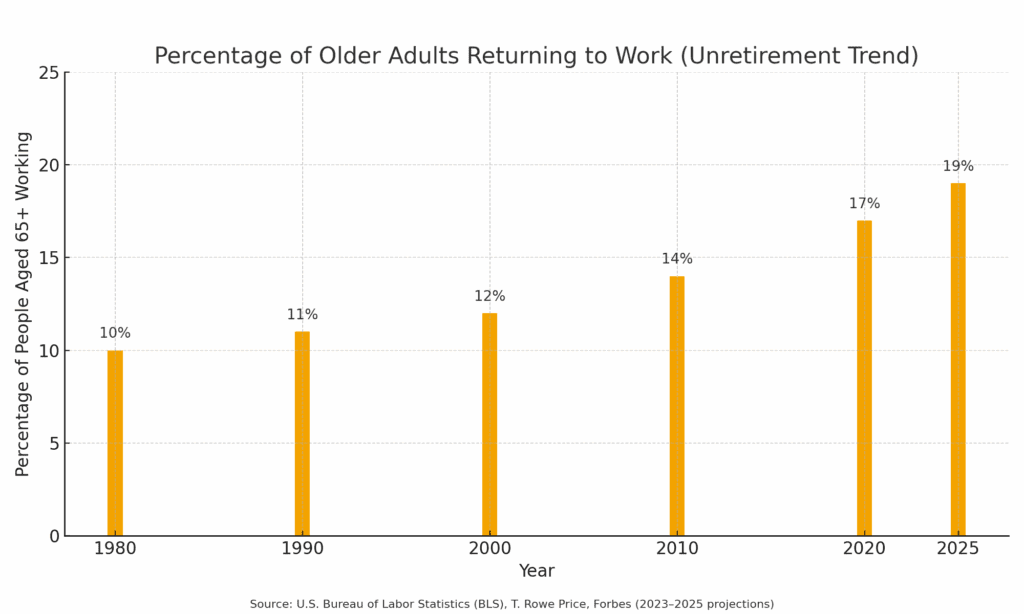
Image: Infographic illustrating the long-term unretirement trend among older adults, showing rising percentages from 1980 to projected 2025 (Source: RetireCoast.com via U.S. Bureau of Labor Statistics and T. Rowe Price data).
Understanding the Unretirement Surge: Facts from the AARP Survey
The AARP survey, conducted via NORC at the University of Chicago’s Foresight 50+ panel, provides crystal-clear evidence. In the winter of 2025 (interviews November–December), 7% of retirees aged 50 and older reported “unretiring”—re-entering the labor force in the past six months. This marks a slight uptick from 6% in the summer 2025 wave, signaling a steady unretirement momentum.
Among these unretirees, 48% cited the need for money or a poor economic outlook as their primary driver—far outpacing boredom (15%) or the desire to help others (14%). For the broader group of 50+ adults who are working or actively job-hunting, a striking 41% pointed to basic living expenses as their top motivation, dwarfing enjoyment of work (just 9–13%). These figures come from a nationally representative sample of over 2,000 adults aged 50+, weighted for demographics and geography.

Image: Bar chart comparing long-term care and living cost increases outpacing retirement income (2010–2024), highlighting why unretirement is accelerating (Source: Financial Planning via AARP-related data).
What makes this unretirement wave particularly compelling is its foundation in verifiable economic pressures. Skyrocketing costs for housing, groceries, utilities, and healthcare have eroded the purchasing power of fixed incomes like Social Security. Even modest inflation leaves many retirees feeling “pinched,” as Boston College economist Geoffrey Sanzenbacher noted: “People really are sensitive to inflation. Even if their incomes go up, I still think they feel pinched if the things they buy are a lot more expensive.”
Root Causes Fueling the Unretirement Trend
The causes behind unretirement are multifaceted but overwhelmingly financial. Many who retired citing “financial readiness” (around 22% in the latest wave) or health reasons quickly discovered that savings and pensions fall short amid today’s realities. Combined with Social Security and pension access, only about half of retirees felt truly prepared to stop working permanently. The other half—now fueling unretirement—face the harsh math of daily expenses outpacing fixed income.

Image: Elderly couple reviewing bills and calculator at the kitchen table, symbolizing the cost-of-living pressures driving unretirement (Source: 24/7 Wall St.).
AARP Vice President Carly Roszkowski captured the shift perfectly: “This idea of retirement as a cliff… is really not the reality for so many people in this country.” High living costs, stock market volatility, and concerns over future Social Security adjustments have turned what was once a permanent exit into a temporary pause for thousands.
Real-Life Episodes: The Human Side of Unretirement
To bring the data to life, consider Maria Fischer’s story—a New Yorker who transitioned from social work to an airline counter job at LaGuardia Airport before the pandemic upended everything. Facing unemployment and mounting bills, she unretired not just for income but for the structure and activity it provides. “I need the money… I need to be active,” she shared, with no plans to step away again soon. Her experience mirrors the 41% in the AARP survey who prioritize daily living costs over any other factor.
Then there’s the lighter, more relatable tale from community circles: a longtime VFW member who took a greeter position at Walmart simply because “he can’t stand his wife” all day at home—yet the paycheck has become an unexpected bonus amid rising grocery prices. It’s a humorous reminder that unretirement often blends financial necessity with the very human need for purpose and routine.

Image: 82-year-old Walmart employee “Butch” smiling in his blue vest, emblematic of seniors finding renewed energy (and income) through unretirement roles (Source: Business Insider).
Another heartwarming yet eye-opening episode involves a 92-year-old woman spotted organizing clothes in a retail store. A customer was so moved by her dedication that they launched a retirement fundraiser—only to learn she actually enjoyed the work and the social connection it brought, despite the financial nudge. These stories, echoed across media and AARP discussions, illustrate how unretirement isn’t always grim; for some, it reignites a sense of vitality while addressing the bottom line.
:max_bytes(150000):strip_icc():focal(749x0:751x2)/Muriel-Connick-April-Steele-012826-1a0481f711984524ab36d41ea1092d69.jpg)
Image: 92-year-old retail worker cheerfully assisting customers, capturing the blend of necessity and fulfillment in unretirement (Source: People.com).
The Current Landscape: Unretirement in Action Across America
Today, unretirement is visible everywhere—from part-time retail gigs to consulting roles and even remote freelance work that accommodates health needs. The AARP data shows that while 67% of older workers worry about job-hunting difficulty (with age discrimination cited by 35%), those who unretire often land flexible positions that fit their lifestyle. In states like Georgia, local AARP reports confirm the same national pattern: rising food insecurity and housing costs are pushing more 50+ residents back into the workforce.

Image: Mature professional on a phone call while working on a laptop from home, representing the modern, flexible side of unretirement (Source: Kiplinger).
This isn’t isolated; it’s systemic. With January layoffs hitting highs not seen since 2009 and many retirees relying on Social Security COLAs that lag true inflation, the current unretirement rate of 7% feels like the new normal rather than a blip.
Looking Ahead: The Future of Unretirement and Retirement Redefined
Experts unanimously predict that unretirement will persist and likely intensify. AARP’s Roszkowski emphasizes that “with the cost of living still high and many people worried that they don’t have enough saved for retirement, the trend of older adults working longer will likely continue.” Insufficient savings—exacerbated by longer lifespans and healthcare costs—mean more Americans will view retirement as a phased journey rather than a full stop.
On the brighter side, this shift could redefine aging: unretirement offers not just financial relief but opportunities for mentorship, community impact, and personal growth. However, challenges remain—longer unemployment spells for older job seekers and persistent ageism require proactive solutions like AARP’s partnerships with job platforms that value experienced talent.

Image: Focused older job seeker on a phone interview, highlighting determination amid unretirement challenges (Source: NCOA.org).
Imagine a future where unretirement becomes a celebrated choice—part-time roles in community service or gig economy platforms that blend income with passion. One inspiring example: groups of seniors volunteering (and sometimes earning stipends) in local programs, turning unretirement into a bridge between financial stability and meaningful contribution.

Image: Smiling group of senior volunteers in safety vests coordinating a community project, showing the purposeful side of unretirement (Source: Caring Senior Service).

Image: Diverse seniors in volunteer shirts happily distributing supplies outdoors, illustrating social and active benefits of unretirement (Source: Home to Stay HC).
Why This Unretirement Story Matters More Than Ever
By grounding this analysis strictly in AARP’s verified survey data and corroborated economic insights, we see unretirement as a rational, fact-driven response to modern realities—not a failure of planning, but an adaptive strategy. It challenges outdated notions of retirement while highlighting the resilience of the 50+ generation. For personal bloggers and readers alike, understanding unretirement empowers better conversations around financial planning, age-inclusive workplaces, and reimagined later-life careers.
Sources & Clickable Links (all verified as of March 2026):
- Full AARP Labor Force Pulse Survey details: https://www.aarp.org/pri/topics/work-finances-retirement/employers-workforce/retirement-decisions-working-job-hunting/
- CNBC coverage of the unretirement findings: https://www.cnbc.com/2026/02/05/unretiring.html
- AARP Georgia-specific insights: https://www.aarp.org/states/georgia/unretirement-on-the-rise-many-georgians-return-to-work-amid-economic-strain/
- Scripps News summary with expert quotes: https://www.scrippsnews.com/politics/economy/more-older-americans-are-returning-to-work-over-finances-survey-finds