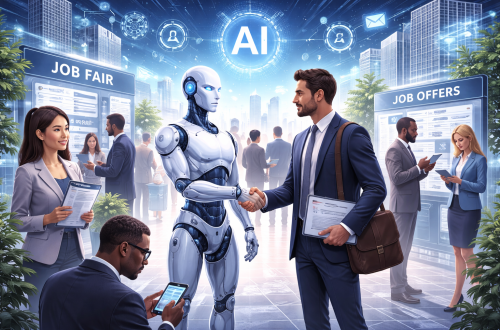
The AI Job Shift is no longer a distant forecast—it is the defining reality of the 2026 U.S. labor market. With generative AI tools now handling routine coding, data analysis, and customer queries at unprecedented speed, recent college graduates (often called “social newbies” or entry-level talent) are experiencing the sharpest pain. Yet the same AI Job Shift is simultaneously creating millions of new, higher-value roles. This in-depth, fact-verified guide draws exclusively from 2025–2026 data by the U.S. Bureau of Labor Statistics (BLS), World Economic Forum (WEF), Stanford Digital Economy Lab, Challenger Gray & Christmas, LinkedIn Economic Graph, and Cengage Group to separate hype from reality.
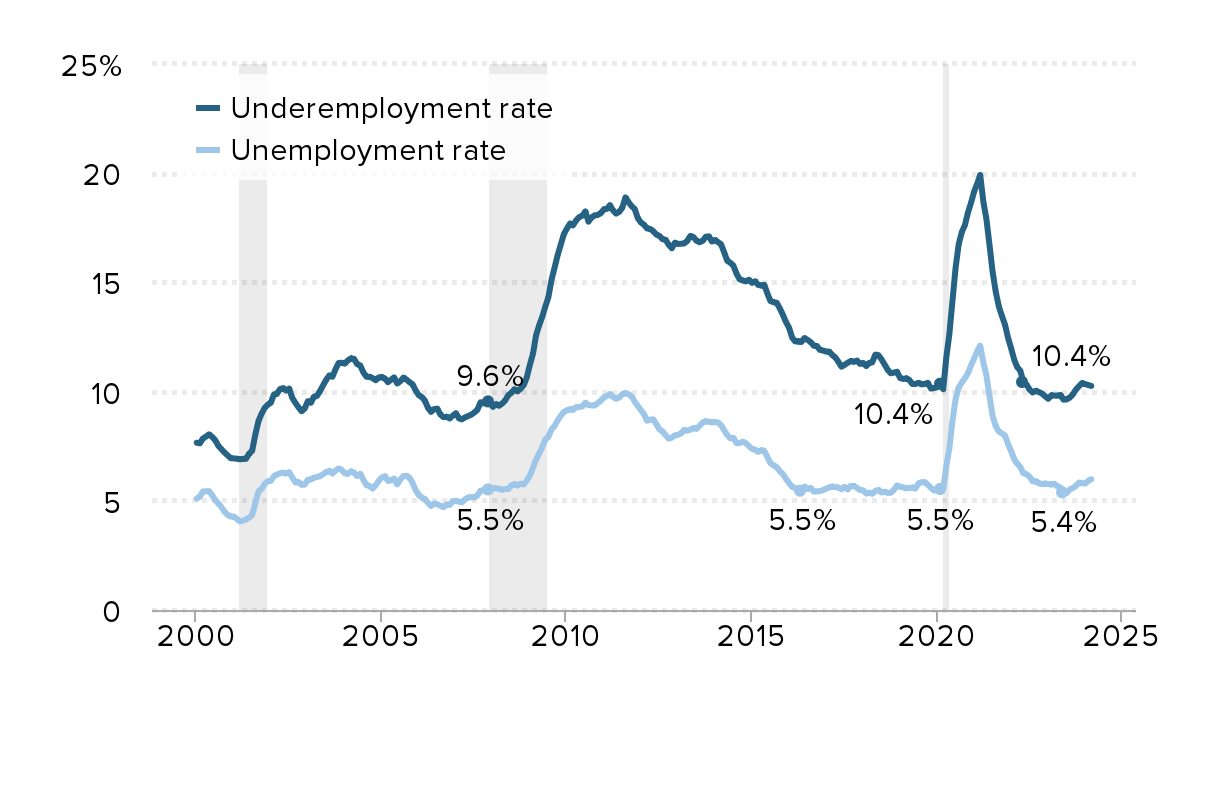
Caption: Chart tracking underemployment and unemployment rates for young U.S. workers (ages 20–27). Note the persistent gap for recent graduates even as the overall economy recovered post-2020. (Adapted from Economic Policy Institute / Paul Krugman analysis, 2025 data points extended to early 2026 trends.) epi.org
The Roots of the AI Job Shift: Explosive AI Progress Meets a Tight Labor Market
Since ChatGPT’s public launch in late 2022, generative AI has matured faster than any technology in history. By late 2025, tools like Claude 3.5, GPT-4o successors, and enterprise copilots could write functional code, summarize legal documents, and generate marketing campaigns in seconds. Stanford’s “Canaries in the Coal Mine” paper (November 2025) documented a 13% relative employment decline for workers aged 22–25 in occupations with high generative-AI exposure—precisely the entry-level white-collar roles that traditionally served as training grounds.
Fun Episode 1 – The Canaries Sing First Picture a 24-year-old Stanford computer-science grad in 2024 who spent summers debugging Python at a mid-sized fintech. In 2025 his firm rolled out GitHub Copilot Enterprise. Within six months the company’s junior coding tickets dropped 67%. The “canary” was laid off—not because he was bad, but because the AI pair-programmer was cheaper and never took vacation. Stanford researchers later used payroll data from millions of workers to prove this pattern was nationwide. The young workers were the first to feel the AI Job Shift.

Caption: Artistic illustration of a young professional surrounded by AI robots in a modern office—symbolizing the AI Job Shift where humans must now collaborate with (or compete against) intelligent systems. thedigitalspeaker.com
Declining Employment Rates for Recent U.S. College Graduates in the AI Job Shift
Hard numbers confirm the pressure:
- Unemployment rate for young college graduates (ages 20–24 with bachelor’s or higher) reached 9.5% by September 2025—nearly double the overall adult rate and the highest since the 2020 pandemic peak (FRED / BLS data).
- Cengage Group 2025 Employability Report: Only 30% of the Class of 2025 and 41% of the Class of 2024 landed full-time roles in their field of study.
- Handshake survey (early 2025): 56% of graduating seniors felt “somewhat or very pessimistic” about career prospects, with 62% specifically citing AI.
- Entry-level tech postings in the U.S. fell 67% between 2023 and 2024 (Stanford Digital Economy Lab / TechRadar analysis).
Fun Episode 2 – The McKinsey Paradox While startups and mid-size tech slashed junior roles, McKinsey & Company publicly stated in late 2025 they planned to increase North American junior hires by 12% in 2026. Their reasoning? AI handles the grunt work, but human consultants are still needed to interpret, empathize, and sell. One McKinsey partner joked on LinkedIn: “We’re not firing juniors—we’re just making them AI whisperers faster.”
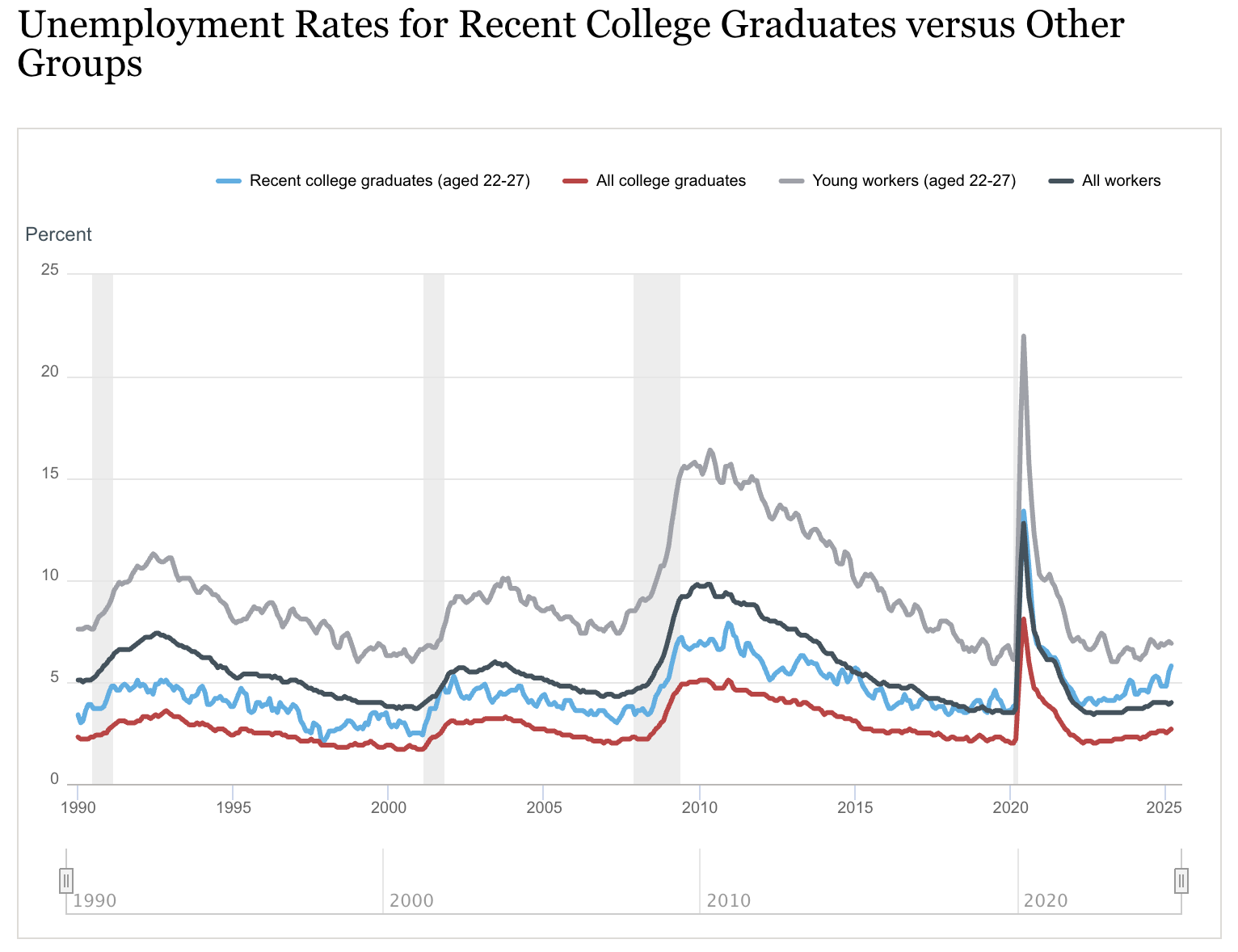
Caption: Long-term chart comparing unemployment for recent college graduates (blue line) versus all workers (dark line). The gap widened noticeably after 2022 as the AI Job Shift accelerated. (Paul Krugman / IPUMS analysis, 2025.) paulkrugman.substack.com
Widespread Layoffs Driven by the AI Job Shift
Challenger, Gray & Christmas recorded more than 55,000 layoffs explicitly attributed to AI in 2025 alone—less than 1% of total U.S. job cuts but a record for any single technology. Companies openly cited “AI efficiencies” in earnings calls:
- Amazon announced 16,000 corporate cuts in January 2026 (following 14,000 in late 2025), with CEO Andy Jassy stating generative AI would “change the way our work is done” and reduce headcount over the next few years.
- Klarna’s CEO Sebastian Siemiatkowski predicted his 3,000-person workforce could shrink by one-third by 2030 thanks to AI.
- Meta, Pinterest, Intel, and dozens of others followed suit. Layoffs.fyi tracked ~40,000 tech layoffs in the Bay Area alone in 2025.
Fun Episode 3 – “AI Washing” Goes Viral OpenAI CEO Sam Altman, in a February 2026 interview, coined the term “AI washing”—companies blaming AI for layoffs they would have done anyway for cost reasons. He admitted real displacement is coming, but “some percentage is just convenient PR.” The internet had a field day: memes of executives holding signs “It’s not me, it’s the algorithm.”
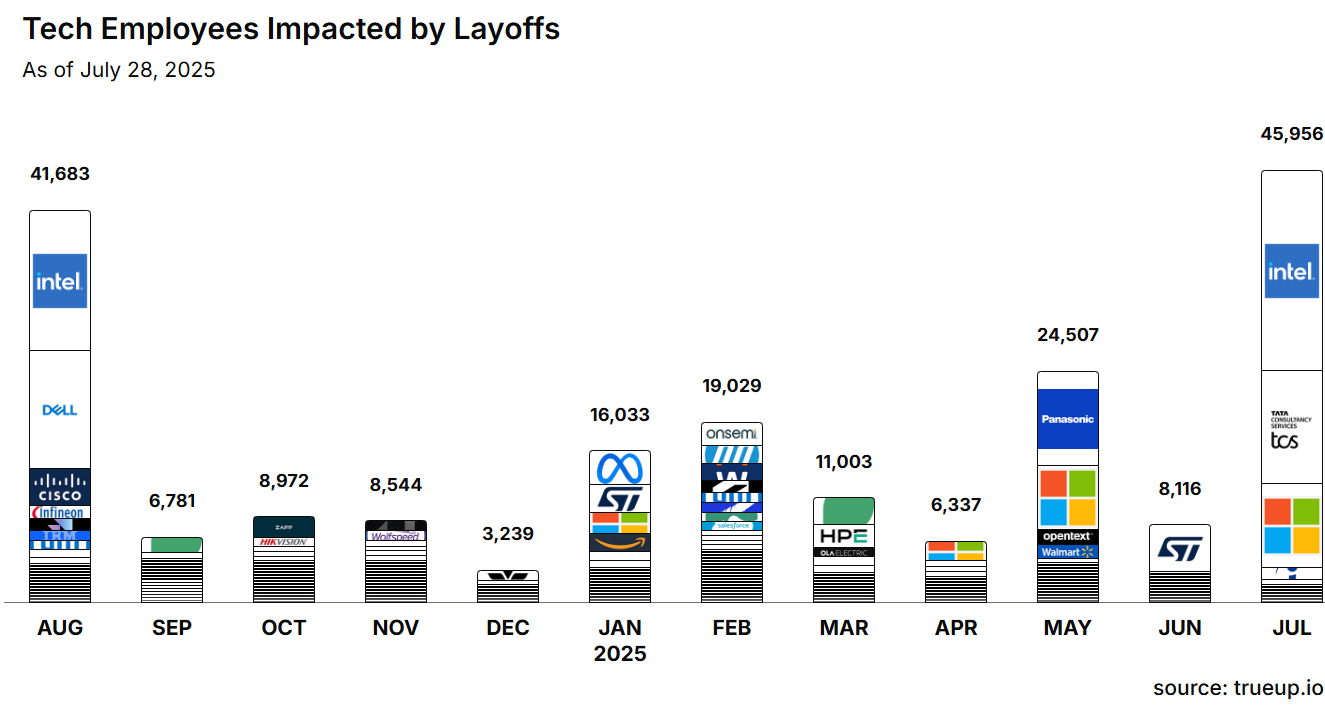
Caption: Bar chart of major tech layoffs in 2025. Many announcements explicitly referenced AI-driven efficiencies. (trueup.io data as of mid-2025, trends continued into 2026.) finalroundai.com
The Future of the Job Market Under the AI Job Shift
The good news? Net job creation is still projected.
- WEF Future of Jobs Report 2025: By 2030, 92 million jobs displaced but 170 million new jobs created → net gain of 78 million.
- BLS 2024–2034 projections (released 2025): Total U.S. employment grows 3.1% (5.2 million new jobs). The four fastest-growing industries are all tied to renewable energy generation.
- LinkedIn Economic Graph (January 2026): AI has already created 1.3 million new roles globally in just two years—AI engineers, data annotators, forward-deployed engineers.
The AI Job Shift is not destruction—it is transformation. Routine white-collar tasks shrink; roles requiring judgment, creativity, ethics, and human connection expand.

Caption: Futuristic data scientist immersed in AI code and holographic interfaces—one of the fastest-growing professions in the AI Job Shift. stock.adobe.com
Industries and Jobs Rising Fastest in the AI Job Shift
Here are the sectors and roles best positioned in 2026 and beyond (BLS, WEF, PwC data):
- AI & Data Roles (fastest absolute growth)
- Data scientists: +34%
- Information security analysts: +29%
- AI/ML specialists, prompt engineers (emerging), AI ethics officers

Caption: Collaborative data team reviewing AI models on large screens—core to thriving in the AI Job Shift. graduate.northeastern.edu
- Healthcare Augmented by AI
- Nurse practitioners: +52% (BLS)
- Medical and health services managers
- AI-assisted diagnostics roles Doctors will not disappear; they will become “AI conductors” interpreting machine suggestions while providing empathy.

Caption: Doctor and AI robot reviewing patient data together—beautiful illustration of human-AI collaboration in healthcare, a sector largely insulated from mass displacement. admedica.com
- Renewable Energy & Green Tech The four fastest-growing U.S. industries 2024–2034 are all renewable energy (BLS). AI optimizes wind-turbine placement, predicts solar output, and manages smart grids.

Caption: Solar and wind farms overlaid with AI digital interfaces—prime example of an industry booming because of, not despite, the AI Job Shift. praxie.com
- Trades, Repair, and “New-Collar” Jobs 60% of new jobs by 2030 will not require a four-year degree (LinkedIn / BLS). Plumbers, electricians, HVAC technicians, and elder-care specialists are AI-resistant and in chronic shortage.
Fun Episode 4 – From Laid-Off Coder to AI-Energy Optimizer A 25-year-old software engineer laid off from a San Francisco fintech in 2025 pivoted to a solar startup. Using his coding skills plus new AI tools, he now builds predictive-maintenance models for wind farms in Texas. Salary? 40% higher. He jokes: “AI took my old job, but it created my dream one.”
![Unemployment rate for college graduates: Key statistics [2025]](https://images.prismic.io/wooclap-content/aWSvXAIvOtkhBSS5_Globalunemploymentrate.jpg?auto=format,compress)
Caption: Young graduates networking at a career fair—many are now deliberately acquiring AI literacy to stand out in the AI Job Shift. wooclap.com
How Individuals Can Thrive in the AI Job Shift
- Master AI tools as a co-pilot, not a threat.
- Build “human + AI” skills: critical thinking, emotional intelligence, domain expertise.
- Consider certifications in data analytics, cybersecurity, or renewable-energy tech.
- Internal mobility and continuous learning beat chasing new degrees.
The AI Job Shift rewards adaptability. Those who learn to ride the wave will find more opportunity than any previous generation.
Sources
- Stanford Digital Economy Lab “Canaries in the Coal Mine” (Nov 2025): https://digitaleconomy.stanford.edu/publications/canaries-in-the-coal-mine/
- BLS Employment Projections 2024–2034: https://www.bls.gov/emp/
- WEF Future of Jobs Report 2025: https://www.weforum.org/publications/the-future-of-jobs-report-2025/
- Cengage Group 2025 Employability Report: https://www.cengagegroup.com/news/press-releases/2025/cengage-group-2025-employability-report/
- Challenger Gray & Christmas Layoff Reports: https://www.challengergray.com/
- LinkedIn Economic Graph Labor Market Report (Jan 2026): https://economicgraph.linkedin.com/
- FRED Youth Unemployment Series: https://fred.stlouisfed.org/series/CGRA2024