In the ever-evolving landscape of U.S. federal benefits, a significant shift in SSA overseas travel records access has captured the attention of millions of seniors relying on Supplemental Security Income (SSI). Effective in early January 2026, the Social Security Administration updated its Evidence of Foreign Travel – Foreign Travel Data Application, moving beyond self-reporting to leverage direct data from the Department of Homeland Security (DHS). This change formalizes DHS data sharing for verifying entry and exit records through systems like the Arrival and Departure Information System (ADIS), directly impacting enforcement of the longstanding SSI 30-day rule.
For SSI recipients—many of whom are low-income seniors or disabled individuals—this means automated cross-checks can now flag absences exceeding 30 consecutive days outside the United States, even without voluntary disclosure. The policy aims squarely at curbing improper payments, a persistent challenge for SSA, while sparking debates about privacy, oversight, and the realities of senior life in a globalized world. This article dives deep into the verified facts behind the update, key precautions for beneficiaries, and the broader implications, all grounded in official SSA policies, recent regulatory notices, and public reports.
Why Did SSA Overseas Travel Records Access Become a Priority?
The roots of this policy trace back to SSA’s ongoing efforts to combat improper payments, which have totaled billions over the years according to agency audits. Under Title XVI of the Social Security Act, SSI is a needs-based program strictly tied to U.S. residency. Federal rules have long stated that beneficiaries become ineligible for payments during any full calendar month spent entirely outside the U.S. or after 30 consecutive days abroad. Reinstatement requires 30 consecutive days of physical presence back in the country, with benefits resuming the following month.
Historically, enforcement depended heavily on self-reporting. Beneficiaries were expected to notify SSA before or after extended trips, but compliance varied, leading to overpayments when individuals forgot, misunderstood the rules, or intentionally withheld information. By late 2025, SSA collaborated with DHS and Customs and Border Protection (CBP) to transition from ad-hoc queries to batch processing via a Computer Matching Agreement. The January 2026 update expanded the Foreign Travel Data Application to cover more claims, redeterminations, and non-citizen cases, creating a seamless verification loop between SSA benefit records and DHS border data.
This SSA overseas travel records access enhancement aligns with broader payment integrity initiatives pushed by SSA’s Office of the Inspector General. The goal? Ensure taxpayer-funded benefits reach only eligible U.S. residents, reducing fraud and errors without adding undue burden on honest recipients. As one official notice emphasized, the system collects details like travel dates, passport data, and departure/arrival timestamps solely for eligibility determinations—not general surveillance.
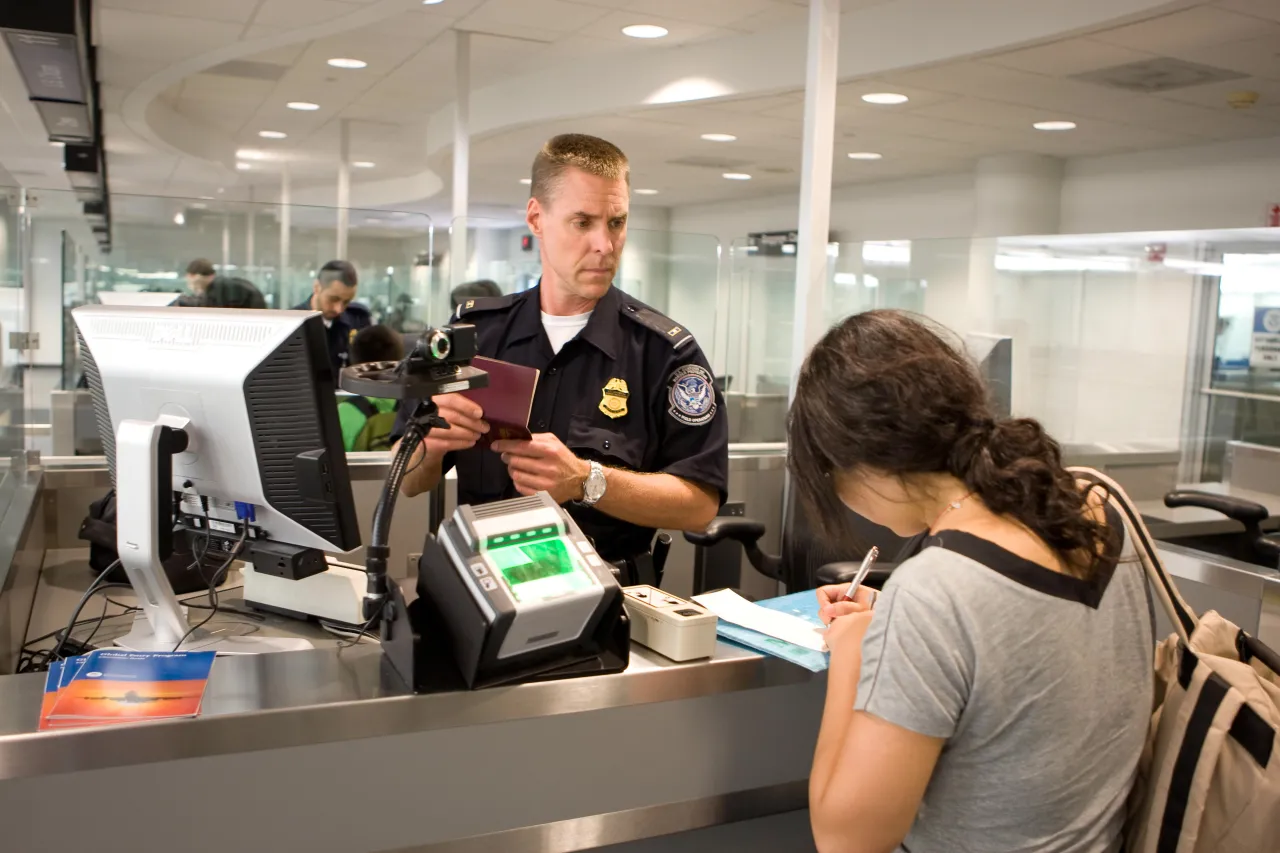
Image: A U.S. Customs and Border Protection officer examining a passport at an airport checkpoint, illustrating the data sources now integrated into SSA verifications (source: ACLU via CBP/Flickr).

What Exactly Changed with DHS Data Sharing and the SSI 30-Day Rule?
Prior to 2026, SSA might request proof of travel only during audits or if discrepancies arose. Now, DHS data sharing enables proactive, automated checks. When a beneficiary’s records show an extended absence via ADIS (which logs passport scans, airline manifests, and border crossings), SSA can suspend payments accordingly. This applies primarily to SSI but also supports residency verification for other programs.
Key facts remain unchanged:
- Trips under 30 days are fine if not spanning a full calendar month.
- Cruises count days in international waters or foreign ports.
- Exceptions exist for military dependents or certain students, but these rarely apply to typical senior retirees.
The sophistication lies in the automation—reducing reliance on memory or paperwork while flagging issues faster.
Image: Elderly seniors relaxing on a beach as “snowbirds,” a common retirement travel scenario now requiring extra caution under the updated rules (source: AARP via Yahoo Creators).

Special Precautions: What SSI Seniors Must Watch Under SSA Overseas Travel Records Access
Seniors receiving SSI should treat SSA overseas travel records access as a call to heightened vigilance. Here are the critical details:
- Track Every Day Precisely: The clock starts the day you depart and stops upon return. Even a one-day overrun due to flight delays can trigger suspension. Keep digital or physical records—boarding passes, hotel receipts, passport stamps—as proof.
- Report Proactively, But Expect Verification: Notify SSA of planned absences over 30 days via phone, online my Social Security account, or in-person. However, with DHS data sharing, unreported trips will likely surface automatically.
- Plan for Reinstatement Delays: If suspended, expect no payments until 30 full days back in the U.S., plus processing time. Budget accordingly, especially for fixed-income households.
- Understand Exceptions and Edge Cases: Brief border hops (e.g., to Canada or Mexico) under 30 days are usually safe, but full-month absences abroad halt benefits entirely.
- Monitor Communications: SSA sends notices via mail or my Social Security alerts. Review your account regularly to avoid surprises.
These steps ensure compliance without panic, turning SSI 30-day rule awareness into a simple habit.
Image: An elderly couple reviewing travel documents at a bustling international airport terminal (source: Dreamstime stock photography).

Real-Life Episodes: Stories That Highlight the SSI 30-Day Rule in Action
To bring the SSA overseas travel records access changes to life, consider these verified or commonly reported anecdotes from beneficiary forums and news:
- The Overzealous Grandma’s Cruise Mishap: One retiree’s grandmother notified SSA of a 29-day Caribbean cruise but still faced a temporary suspension due to a paperwork glitch in the old self-reporting system. It took nearly a year—and family intervention—to resolve and reimburse the missed payment. With today’s DHS data sharing, such delays could shrink dramatically as automated records provide instant clarity.
- The Snowbird Who Overstayed by a Day: A Florida retiree wintering in Mexico extended his stay by 24 hours for a family wedding. A delayed flight pushed him over the 30-day mark. Under the prior rules, he self-reported and appealed successfully with receipts. Now, SSA overseas travel records access would flag it via ADIS immediately, underscoring the need for buffer days in plans.
- The Grandkids Visit That Turned Costly: A California senior flew to the Philippines to see family, intending a three-week trip. Weather and health issues stretched it to 32 days. Unaware of the exact counting rules, she continued receiving SSI deposits—only to face overpayment recovery later. The new system prevents such “innocent” overpayments through real-time cross-checks, but it also highlights how life’s unpredictability intersects with the SSI 30-day rule.
- The Cruise Critic’s Cautionary Tale: Online forums buzz with stories of seniors on extended voyages who assumed “at sea” didn’t count as abroad. One couple learned the hard way when SSA cross-referenced their return date against border logs, leading to a multi-month benefit gap. Fun fact: Many now joke about packing “SSI compliance calendars” alongside sunscreen!
These episodes reveal the human side—travel as joy for seniors, not evasion—while reinforcing why DHS data sharing exists: to protect the program’s integrity without punishing honest mistakes.
Image: U.S. Customs and Border Protection officer verifying documents at a secure airport kiosk, representing the data pipeline now linked to SSA (source: Office for International Students & Scholars via institutional resources).
Looking Ahead: How SSA Overseas Travel Records Access Will Shape Senior Lives
The future under enhanced SSA overseas travel records access promises greater efficiency but demands adaptation. For SSI seniors, long family visits or dream retirements abroad may require more planning, potentially limiting spontaneous extended stays. On the positive side, reduced improper payments free up funds for those truly in need, and faster verifications could streamline appeals with concrete data.
Critics raise privacy concerns about DHS data sharing, yet SSA limits use to eligibility only, with Privacy Act safeguards in place. Overall, the policy modernizes a decades-old framework for a digital age, affecting roughly 5-7 million SSI recipients alongside broader Social Security programs.
Seniors can thrive by staying informed: Use SSA’s Payments Abroad Screening Tool online, consult local offices, and embrace the SSI 30-day rule as a guideline for balanced living.
Sources and Further Reading:
- Yahoo Finance: “US government passes surprising tracking rule for millions…” (January 25, 2026) – Read here
- SSA Official: “Your Payments While You Are Outside the United States” PDF – Download here
- SSA POMS on Absence from the U.S. – View policy
- Sainik School Sambalpur summary of SSA-DHS updates (January 29, 2026) – Read here
- SSA International Programs: Payments Outside US Tool – Use the tool