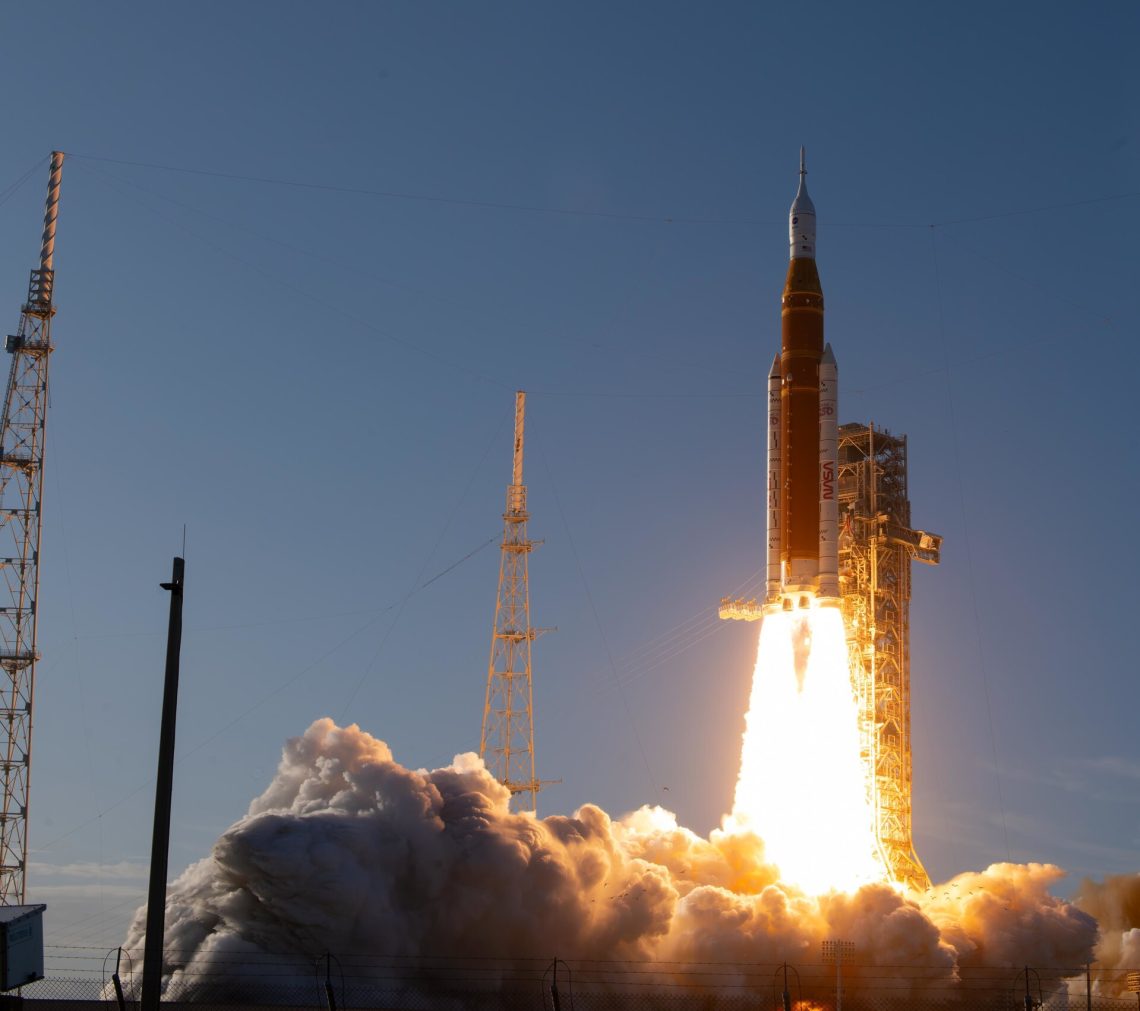
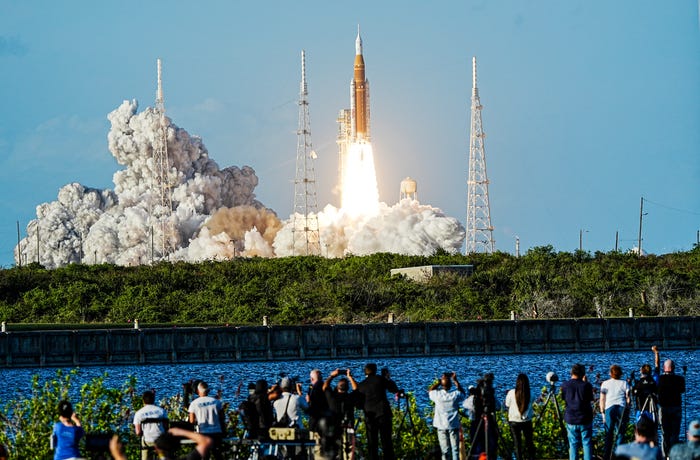
The Artemis II mission has ignited a new chapter in lunar exploration, marking the first time humans have ventured beyond low Earth orbit in over half a century. Launched on April 1, 2026, aboard NASA’s powerful Space Launch System (SLS) rocket from Kennedy Space Center in Florida, this Moon mission represents a pivotal test flight for the Orion spacecraft with a full crew. As the Artemis II mission continues its approximately 10-day journey around the Moon and back, it underscores the enduring importance of lunar exploration in advancing human knowledge, technology, and strategic capabilities in space.
Image: Spectacular liftoff of the Artemis II SLS rocket from Launch Complex 39B at Kennedy Space Center, with massive plumes of smoke and fire illuminating the Florida sky at sunset (NASA/Bill Ingalls via Florida Today).
The Rich History of Lunar Exploration Leading to Artemis II
Lunar exploration dates back millennia through human observation, but the Space Age transformed it into a scientific and engineering triumph. Early uncrewed probes like the Soviet Luna 1 in 1959 and NASA’s Ranger series in the 1960s provided the first close-up images, revealing a cratered, airless world. These missions laid the groundwork for crewed flights by confirming safe landing sites amid the Moon’s rugged terrain.
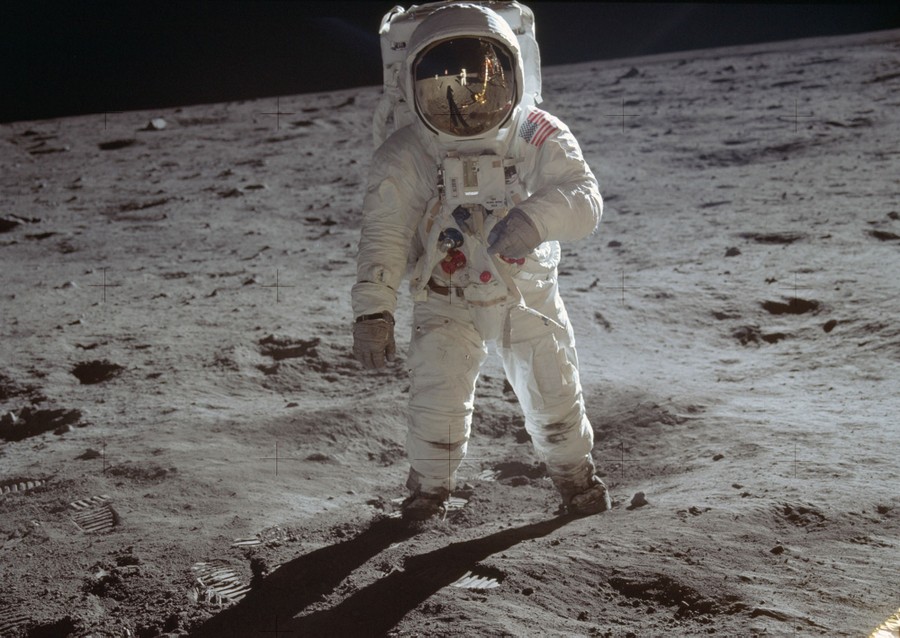
The Apollo program, born from President John F. Kennedy’s 1961 challenge, delivered the pinnacle of lunar exploration. Apollo 11’s historic landing on July 20, 1969, saw Neil Armstrong utter the immortal words, “That’s one small step for [a] man, one giant leap for mankind,” as he planted the American flag on the Sea of Tranquility. Buzz Aldrin joined him, and together they collected 47.5 pounds of lunar samples while conducting experiments on the Moon’s surface. A fun anecdote from that mission: Aldrin later revealed he had to use a pen to fix a broken circuit breaker in the lunar module to ensure their safe ascent—pure ingenuity under pressure!
Image: Iconic Apollo 11 photograph of Buzz Aldrin standing on the lunar surface next to the American flag, with the lunar module Eagle in the background and crisp footprints in the regolith (NASA).
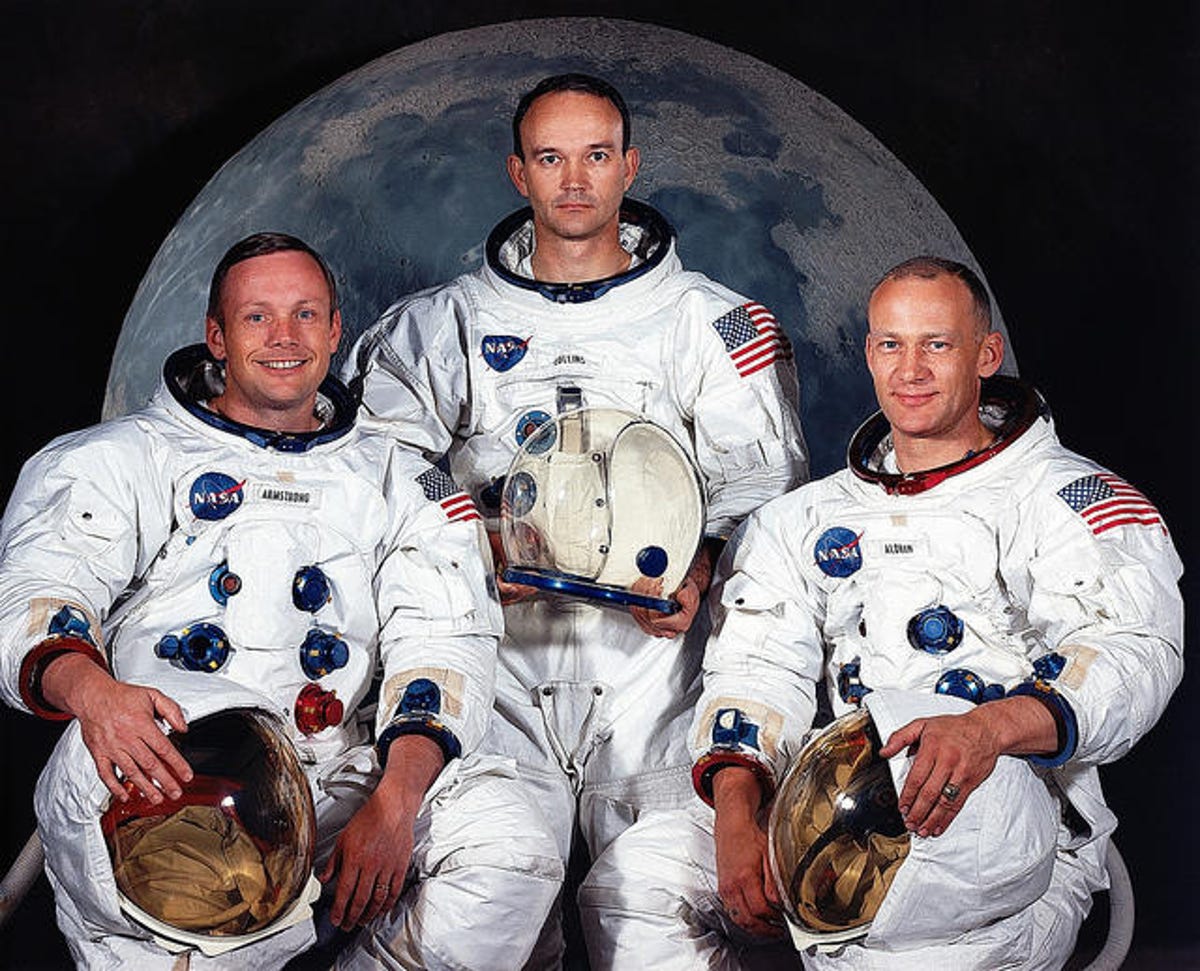
Subsequent Apollo missions expanded our understanding. Apollo 13’s dramatic “Houston, we’ve had a problem” moment in 1970 turned a potential disaster into a legendary tale of survival, as astronauts Jim Lovell, Jack Swigert, and Fred Haise used the lunar module as a lifeboat after an oxygen tank explosion. They safely returned thanks to ground teams’ quick thinking. Apollo 17 in 1972, the last crewed landing, featured geologist Harrison Schmitt and included the only lunar rover drive exceeding 22 miles. These Moon missions returned 842 pounds of samples, revealing the Moon’s ancient volcanic past, lack of tectonic recycling, and clues to Earth’s formation.
A lesser-known episode: During Apollo 15, astronaut David Scott dropped a hammer and a feather simultaneously on the Moon, proving Galileo’s theory of gravity in vacuum—both hit the surface at the same time. Such hands-on demonstrations captivated the world and highlighted lunar exploration‘s educational power. After Apollo, lunar exploration shifted to robotic efforts, including China’s Chang’e probes and NASA’s Lunar Reconnaissance Orbiter, which mapped water ice deposits and prepared for future returns.
The Artemis II Moon Mission: Process, Success, and Real-Time Achievements
The Artemis II mission builds directly on Artemis I’s uncrewed success in 2022. On launch day, April 1, 2026, at 6:35 p.m. EDT, the SLS rocket propelled the Orion spacecraft—carrying NASA astronauts Reid Wiseman (commander), Victor Glover (pilot), Christina Koch, and Canadian Space Agency astronaut Jeremy Hansen—into orbit. After separation, the crew conducted system checkouts in high Earth orbit before the critical translunar injection burn on April 2, which sent them on a precise trajectory toward the Moon.
As of April 5, 2026, the Artemis II mission is performing flawlessly, with the crew more than 180,000 miles from Earth and approaching the lunar far side. They have captured stunning images, including the first human-eyed view of the entire Orientale basin. Commander Wiseman described the views as “absolutely spectacular,” while Koch noted the far side’s unique sensory impact. The crew practices manual piloting, tests life support systems, and shares real-time observations, proving Orion’s human-rated capabilities.
Image: Artemis II crew inside the Orion spacecraft during flight day activities, with Victor Glover capturing photos amid floating equipment and Christina Koch smiling during a group moment (NASA).
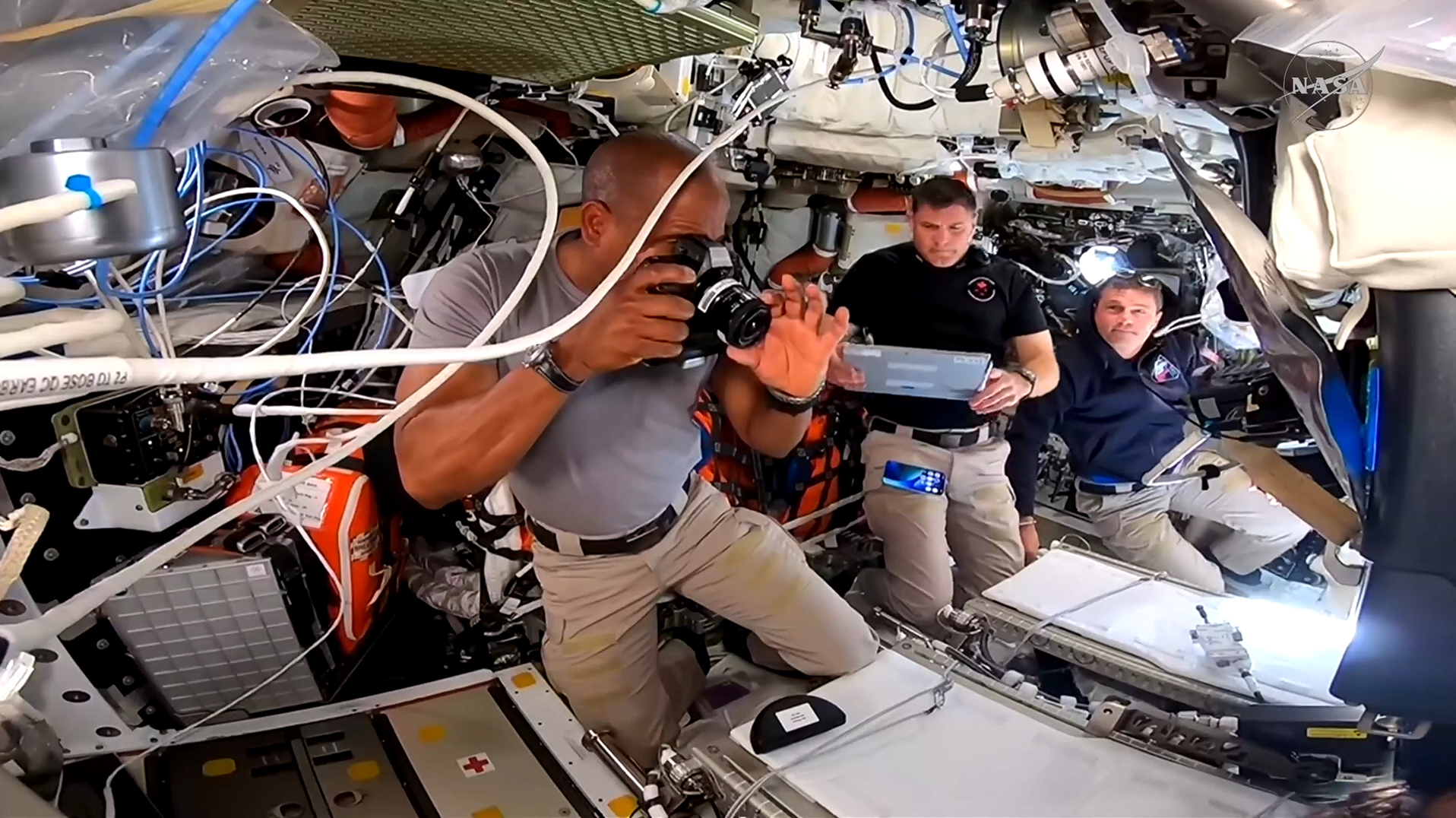
The Moon mission‘s success so far—flawless engine firings, stable communications, and crew in high spirits—validates decades of engineering. No landing occurs; instead, Orion will fly within 4,000 miles of the lunar surface on April 6 before gravity slings it home for a Pacific splashdown around April 10-11. This trajectory tests deep-space navigation, radiation shielding, and reentry at 25,000 mph.
Image: Portrait of the diverse Artemis II crew—Reid Wiseman, Victor Glover, Christina Koch, and Jeremy Hansen—in their orange flight suits, showcasing international collaboration (NASA).

Purpose of the Artemis II Mission in Advancing Lunar Exploration
The primary goal of the Artemis II mission is to demonstrate Orion and SLS with humans aboard for the first time, gathering data on crew performance in deep space. It verifies life support, communication, and abort systems under real conditions, paving the way for sustainable lunar exploration. International participation via Hansen highlights NASA’s Artemis Accords, signed by over 40 nations for peaceful, cooperative Moon use.
This Moon mission also prepares for landings by testing hardware that will support Artemis IV’s crewed touchdown. Fun fact: Christina Koch holds the record for the longest single spaceflight by a woman (328 days on the ISS), making her ideal for evaluating long-duration effects in this lunar exploration milestone.
Future Schedule: Roadmap for Sustained Lunar Exploration
Following the Artemis II mission, NASA targets Artemis III in mid-2027 for low-Earth orbit tests of commercial lunar landers from SpaceX or Blue Origin. Artemis IV, planned for early 2028, aims for the first crewed lunar landing since 1972, docking with the Gateway station in lunar orbit. Subsequent missions will establish annual landings, enabling a permanent outpost.
Image: Artist’s concept of the NASA Gateway lunar orbiting space station, with solar arrays and modules against the Moon’s backdrop (NASA).
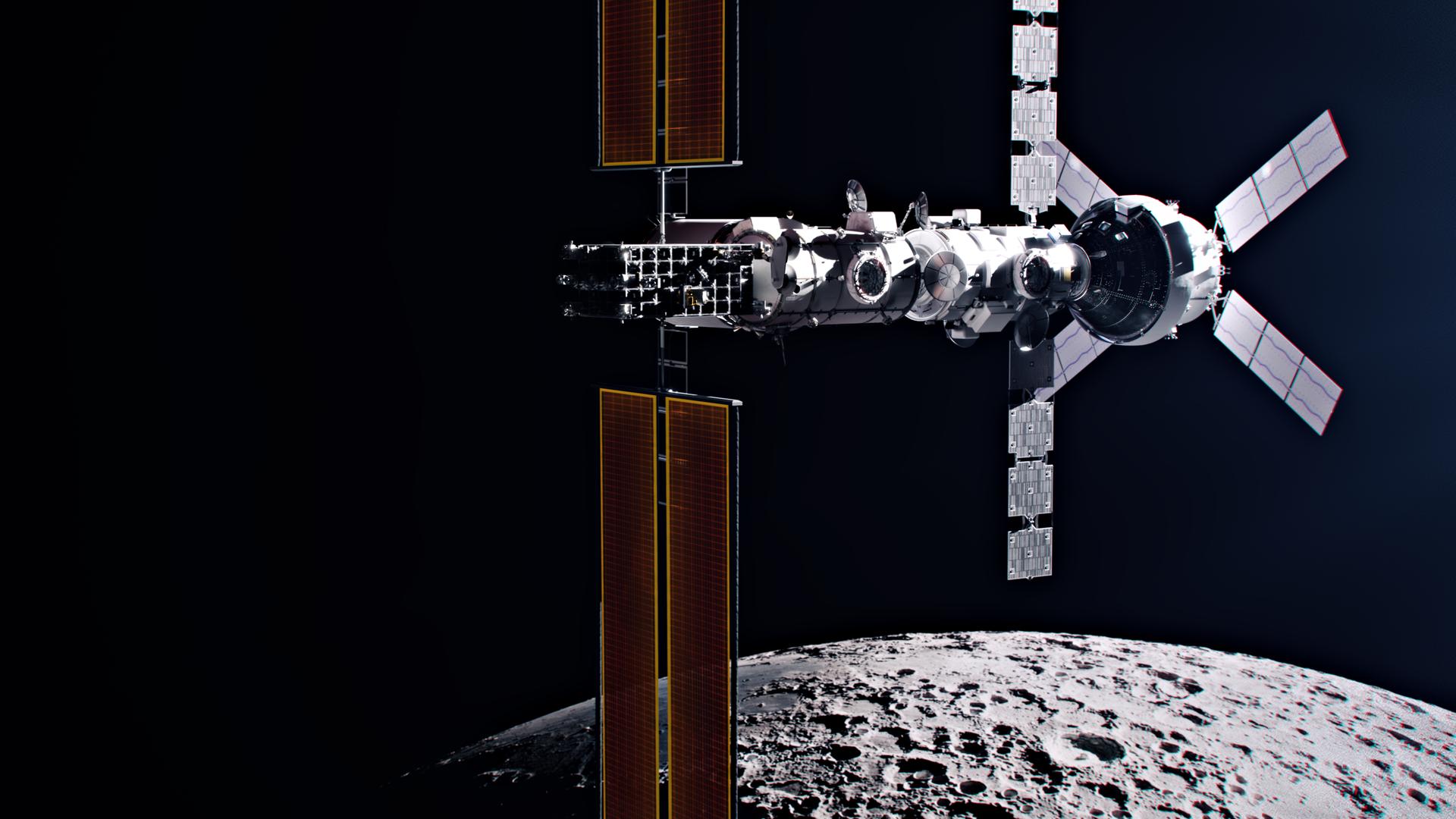
Gateway will serve as a hub for science, refueling, and Mars preparation, with contributions from ESA, JAXA, and CSA. This phased approach ensures lunar exploration evolves from flybys to habitats.
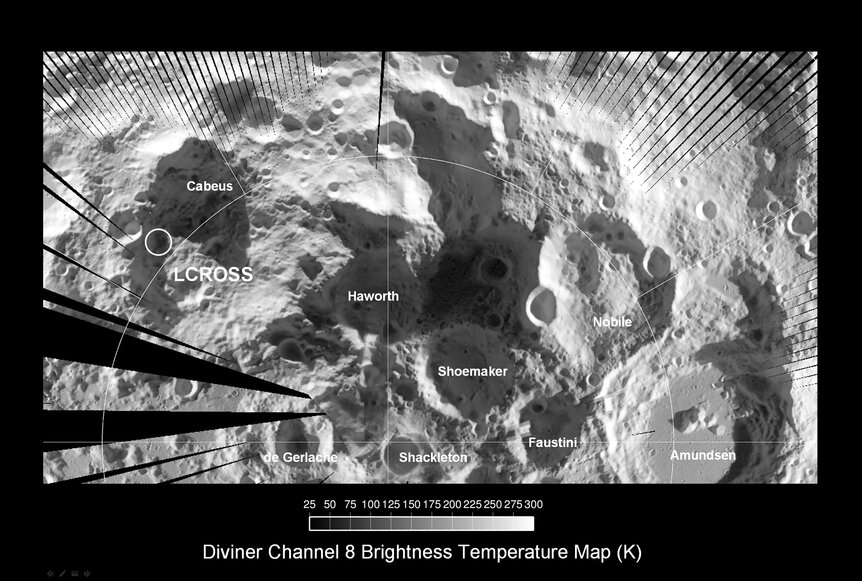
Image: Topographic map highlighting water ice potential at the Moon’s south pole, including Shackleton Crater and surrounding permanently shadowed regions (NASA).
Why Lunar Exploration Remains Strategically Vital
Lunar exploration is not nostalgia—it’s essential for humanity’s future. Scientifically, the Moon preserves 4.5 billion years of Solar System history in its regolith, offering insights into Earth’s origins and asteroid impacts. Water ice at the south pole, confirmed by missions like LCROSS, could yield oxygen, drinking water, and rocket fuel via electrolysis, reducing Earth dependency.
Strategically, the Artemis II mission and program position the U.S. and partners as leaders in space resource utilization and exploration. The Artemis Accords promote transparent operations, contrasting with non-signatory approaches, while technologies developed here—advanced propulsion, habitats, robotics—directly enable Mars missions. Economically, a lunar economy could spur trillions in innovation, from mining to tourism. A memorable Apollo-era echo: The program inspired an entire generation of engineers; today’s Moon missions will do the same for diverse STEM fields.
In essence, every milestone in the Artemis II mission reinforces why lunar exploration matters: it expands knowledge, fosters global cooperation, secures strategic advantages, and inspires the next “giant leap.”
Image: Historic Apollo astronauts exploring the lunar surface with the lunar module and scientific equipment, capturing the pioneering spirit of early Moon missions (NASA).
Sources :
- NASA Official Artemis II Mission Page: https://www.nasa.gov/mission/artemis-ii/
- Live Launch Day Updates: https://www.nasa.gov/blogs/missions/2026/04/01/live-artemis-ii-launch-day-updates/
- NASA News Release on Translunar Injection: https://www.nasa.gov/news-release/nasas-artemis-ii-mission-leaves-earth-orbit-for-flight-around-moon/
- Wikipedia Artemis II Summary (cross-verified with NASA): https://en.wikipedia.org/wiki/Artemis_II
- History of Lunar Exploration (NASA Science): https://science.nasa.gov/solar-system/moon/history-of-lunar-exploration/
- Artemis Program Timeline: https://www.nasa.gov/humans-in-space/artemis/
- Gateway Concepts: https://www.nasa.gov/gallery/gateway-artists-concepts/