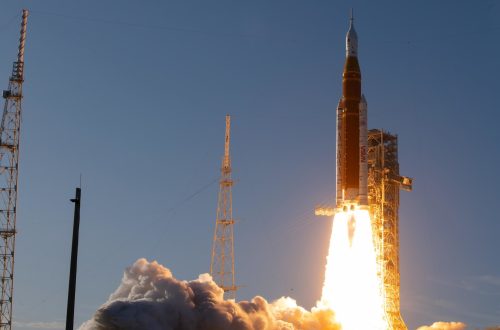
In the golden glow of a Florida sunrise on April 1, 2026, the world held its breath as NASA’s Artemis II mission roared skyward on the mighty Space Launch System rocket. This wasn’t just another spaceflight—it marked humanity’s triumphant return to deep space after more than half a century. The Artemis II crewed lunar flyby, the first with astronauts aboard Orion, successfully looped around the Moon and splashed down safely in the Pacific on April 10, etching a new chapter in exploration history. As a space enthusiast chronicling these milestones for my blog, I find the Artemis II lunar flyby not only a technical marvel but a profound reminder of our boundless curiosity and collaborative spirit.
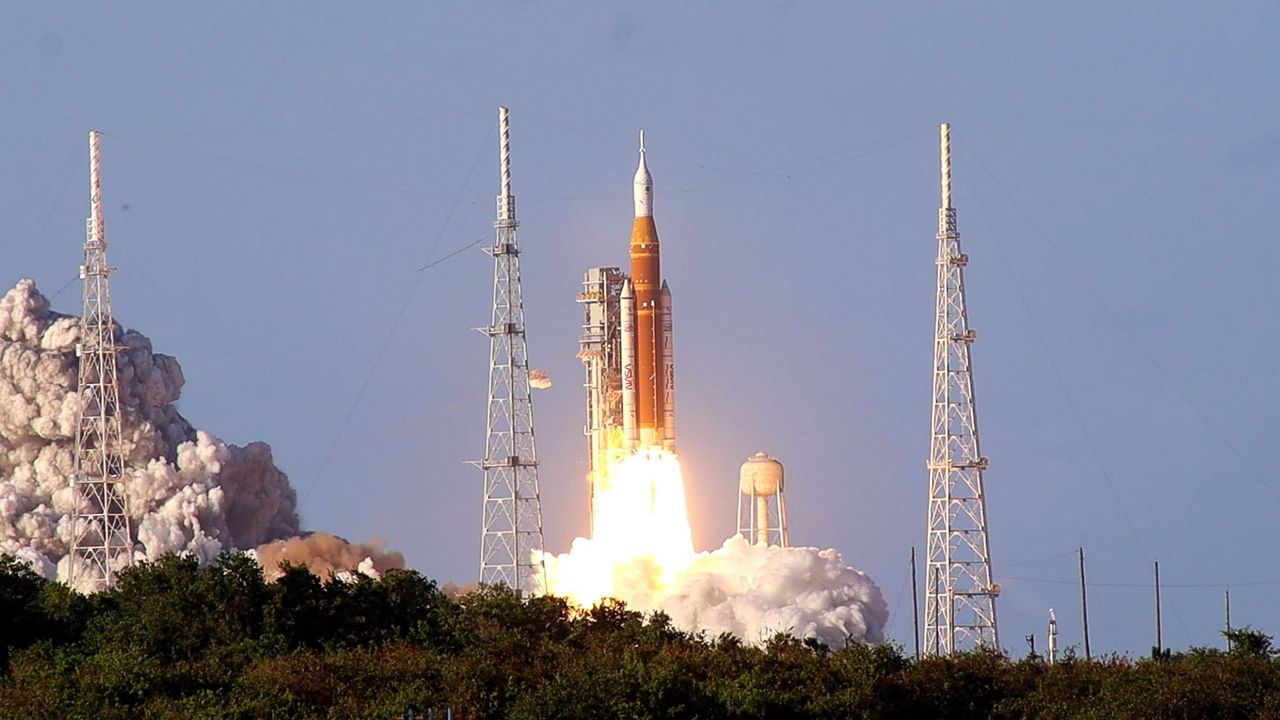
Image: Dramatic liftoff of the SLS rocket carrying Artemis II from Kennedy Space Center, flames illuminating the night sky. (NASA/Kim Shiflett via mynews13.com)
The Core Purpose of the Artemis II Lunar Flyby
At its heart, the Artemis II crewed lunar flyby was a rigorous test flight designed to validate every system of the Orion spacecraft in the unforgiving vacuum of deep space—far beyond low Earth orbit. Unlike the uncrewed Artemis I, this mission put four astronauts through their paces to confirm life support, propulsion, thermal control, navigation, and re-entry capabilities with humans aboard. The primary goal? To ensure Orion could sustain a crew on the multi-week journeys required for future Moon landings and, eventually, Mars. By flying a free-return trajectory around the Moon’s far side, the Artemis II lunar flyby gathered irreplaceable data on how the spacecraft performs under real lunar gravity assists and high-speed atmospheric re-entry.
No landing occurred, but the Artemis II crewed lunar flyby pushed boundaries: the crew ventured farther from Earth than any humans in history, reaching 252,756 miles (406,771 km) and shattering Apollo 13’s 1970 record. This Artemis II lunar flyby profile perfectly simulated the outbound and return legs of future missions, practicing manual piloting, trajectory corrections, and communications delays—critical skills for the Artemis II lunar flyby team’s successors.
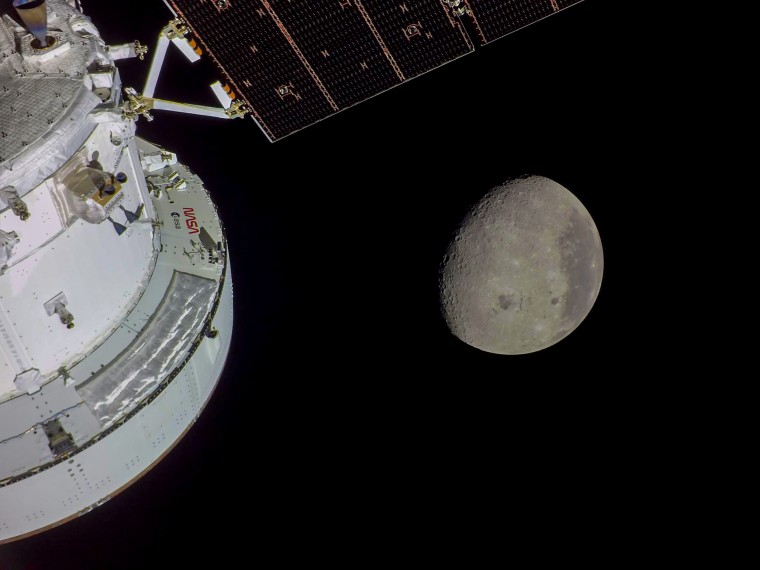
Image: Orion spacecraft captured against the stark backdrop of the Moon during the Artemis II lunar flyby, highlighting its solar arrays and crew module. (NASA via nbcnews.com)
Meet the Trailblazing Crew of the Artemis II Crewed Moon Mission
Diversity defined the Artemis II crewed lunar flyby team, a quartet whose stories embody progress. Commander Reid Wiseman, a veteran Navy test pilot and former ISS astronaut, led with quiet confidence—bringing a blank notecard to jot personal reflections amid the wonder. Pilot Victor Glover became the first person of color to venture into deep space, piloting Orion with the precision that earned him the nickname “Ike” (I Know Everything). Mission Specialist Christina Koch, record-holder for the longest single spaceflight by a woman (328 days on the ISS), added her expertise in engineering and human factors. Rounding out the international flavor, Canadian Space Agency astronaut Jeremy Hansen made history as the first non-American on a lunar mission, his fighter-pilot background and undersea analog experience proving invaluable.

Image: Official portrait of the Artemis II crew—Reid Wiseman, Victor Glover, Christina Koch, and Jeremy Hansen—posing proudly in blue flight suits with the SLS in the distance. (NASA via gpb.org)
These astronauts didn’t just fly; they lived the Artemis II lunar flyby. Inside Orion (affectionately named “Integrity” by the crew), they conducted CPR demonstrations in microgravity, tested wearable sensors for health monitoring, and even shared a ship-to-ship call with the International Space Station. One lighthearted moment? The crew floating a plush toy mascot during a live broadcast, turning serious deep-space ops into relatable human connection.
Scientific Insights and Data Harvested from the Artemis II Lunar Flyby
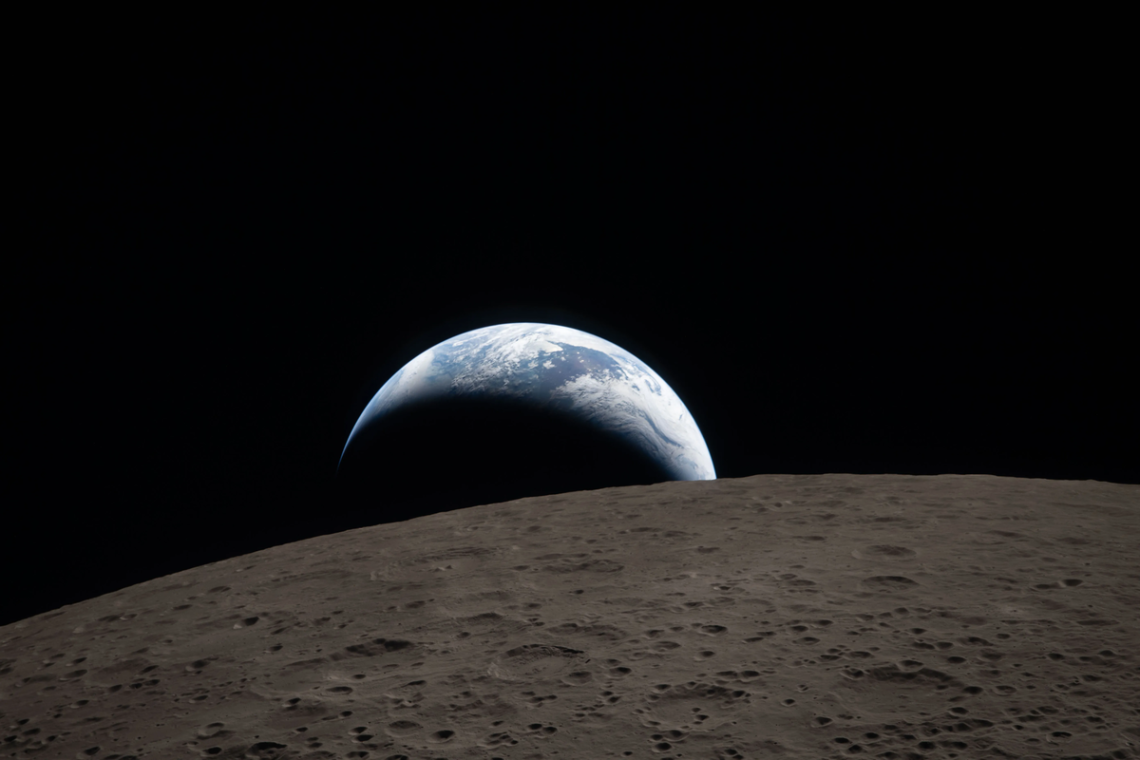
The Artemis II crewed lunar flyby wasn’t just a joyride—it delivered a treasure trove of data. Over 175 gigabytes of imagery and observations poured in as the crew photographed never-before-seen details of the lunar far side, captured breathtaking “Earthset” views (Earth rising or setting over the Moon’s horizon), and documented how the Moon appears basketball-sized from 4,000-6,000 miles away. Human health studies were paramount: saliva swabs tracked stress hormones, radiation exposure was meticulously logged, and orthostatic intolerance garments were tested to combat re-entry dizziness.
The Artemis II lunar flyby also advanced lunar science by practicing remote observation techniques for future crews—spotting geological features from afar and refining how we’ll map the south pole’s ancient terrain. These insights from the Artemis II crewed lunar flyby directly inform habitability, crew performance, and even radiation shielding for Artemis III and beyond. One standout: the crew’s manual piloting demos proved Orion’s systems are robust, giving engineers confidence for sustained lunar presence.

Image: Stunning Earthset captured during the Artemis II lunar flyby, with our blue planet peeking over the Moon’s rugged horizon in a first-of-its-kind frame. (NASA via sciencenews.org)
Unforgettable Episodes That Made the Artemis II Lunar Flyby Legendary
What elevates the Artemis II crewed lunar flyby from textbook success to unforgettable saga are the human moments. Imagine losing contact with Earth for 40 minutes behind the Moon—radio silence broken only by the crew’s awe-struck voices upon re-emerging. They described the far side’s craters as “otherworldly,” flipping perspectives on our familiar lunar face.
Victor Glover’s analytical checklists kept everything humming, while Christina Koch marveled at the views that inspired environmental awakenings back in Apollo days. Reid Wiseman later quipped about solo parenting being tougher than commanding a Moon mission, and Jeremy Hansen’s Canadian pride shone through in every update. A quirky highlight: the crew’s space-food tasting session and zero-G CPR practice turned into viral moments, humanizing the Artemis II lunar flyby for millions watching live. They even broke the farthest-distance record live, with mission control erupting in cheers at 252,756 miles.

Image: Iconic view of Earth rising over the lunar surface from Artemis II, evoking the spirit of Apollo 8 but with modern crewed lunar flyby flair. (NASA via houstonpublicmedia.org)
The Bright Horizon: Future of Lunar Exploration Post-Artemis II
With the Artemis II crewed lunar flyby complete, the path forward gleams. Artemis III (targeted for 2027-2028) will test human landing systems in Earth orbit before a south pole touchdown, while Artemis IV (early 2028) aims for the first sustained lunar landing and Gateway station docking. These build directly on Artemis II lunar flyby lessons, enabling a lunar economy, science outposts, and Mars precursor tech. International partners like Canada and private firms (SpaceX, Blue Origin) ensure the Artemis II momentum propels us toward a multi-planetary future.
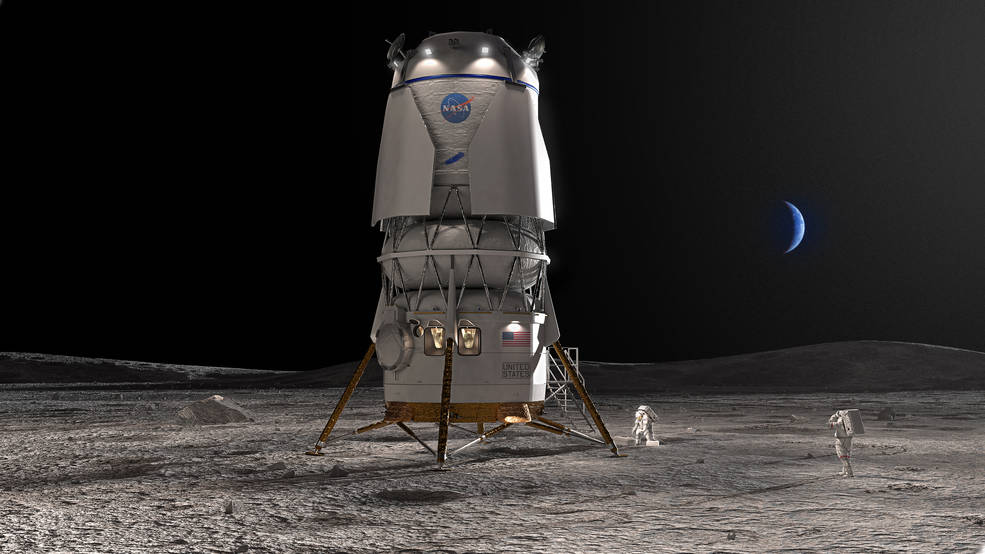
Image: Artist’s concept of a future Artemis lunar lander on the Moon’s south pole, with astronauts exploring—visionary blueprint inspired by Artemis II successes. (NASA via nasa.gov)
The Artemis II lunar flyby wasn’t an endpoint; it’s the spark for humanity’s next giant leaps. As we reflect on this crewed Moon mission’s flawless execution, one truth resonates: the stars have never felt closer.
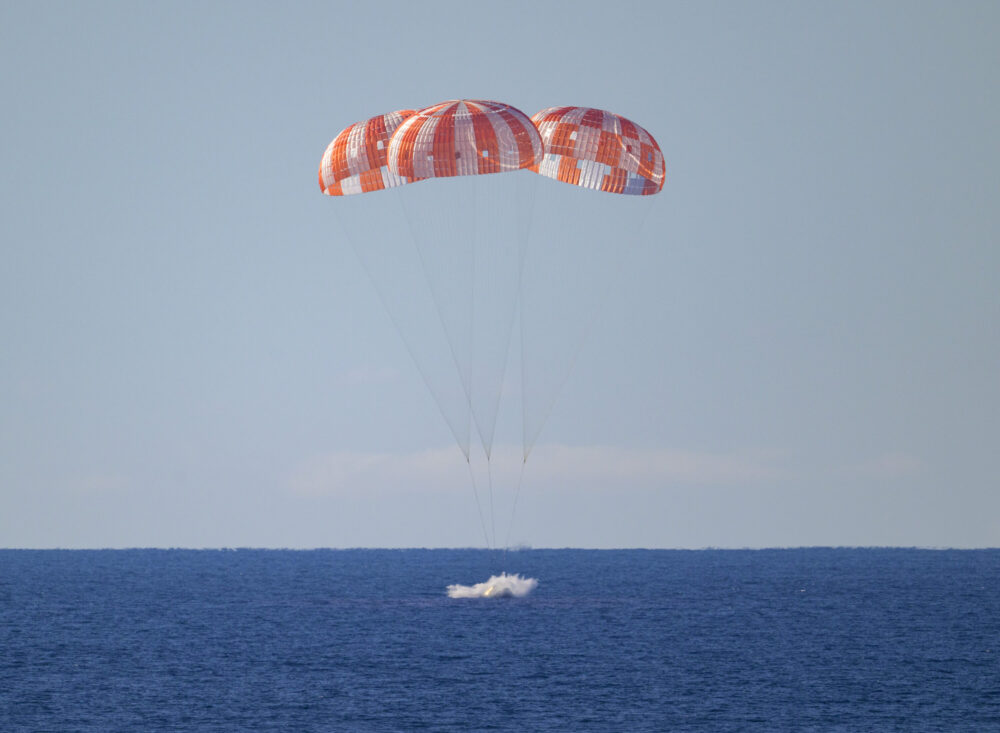
Image: Orion’s dramatic splashdown in the Pacific Ocean, parachutes billowing as recovery teams approach—perfect finale to the Artemis II crewed lunar flyby. (NASA via houstonpublicmedia.org)
Sources and Further Reading:
- NASA Official Artemis II Mission Page: https://www.nasa.gov/mission/artemis-ii/
- NASA Artemis II Crew and Goals FAQ: https://www.nasa.gov/missions/nasa-answers-your-most-pressing-artemis-ii-questions/
- Wikipedia Artemis II Summary (with timelines): https://en.wikipedia.org/wiki/Artemis_II
- Space.com Live Updates and Photos: https://www.space.com/news/live/artemis-2-nasa-moon-mission-updates-april-9-2026
- NBC News Crew Profiles and Highlights: https://www.nbcnews.com/science/space/artemis-ii-astronauts-names-who-are-nasa-moon-mission-rcna265105