The Shocking “Washington Hilton Incident” and Its Historical Parallel
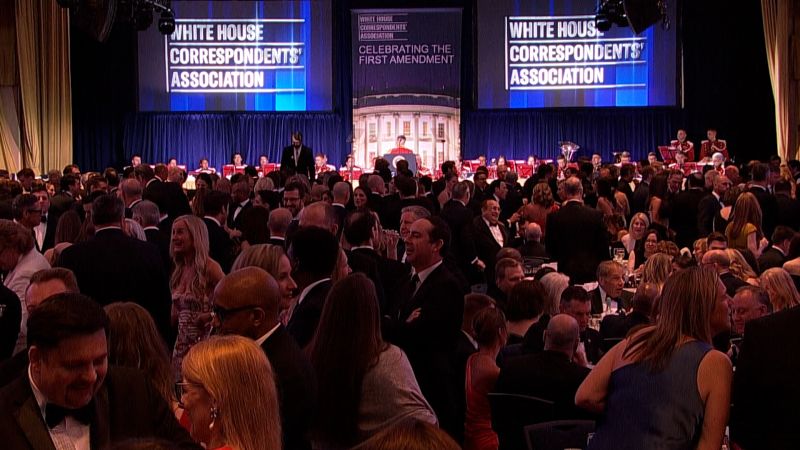
The Washington Hilton has once again become the stage for a dramatic security breach involving a U.S. president. On April 25, 2026, during the annual White House Correspondents’ Dinner, gunfire erupted near the main security screening area outside the ballroom where President Donald Trump, First Lady Melania Trump, Vice President JD Vance, and senior administration officials were gathered. This Trump assassination attempt at the White House Correspondents’ Dinner sent shockwaves through the black-tie event, forcing rapid evacuation and reviving painful memories of a similar attack decades earlier at the exact same venue.
This was the first time President Trump attended the dinner as a sitting president. Attendees described chaos as shots rang out around 8:34 p.m. EDT. Guests ducked under tables amid spilled wine and broken plates, while Secret Service agents rushed the president and his party to safety. Remarkably, Trump and other key figures emerged unharmed, though one Secret Service agent was struck in the vest and is recovering.
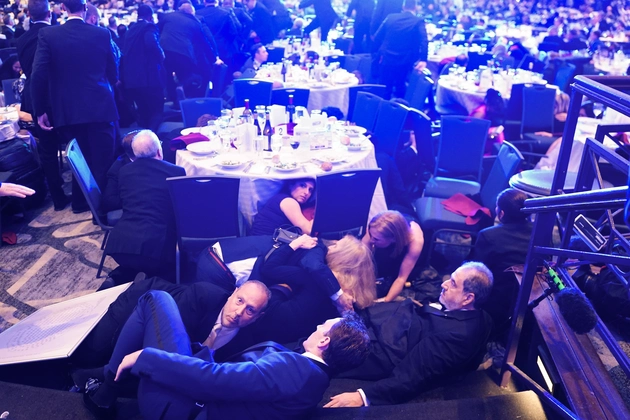
Image: Chaos inside the ballroom as security responds to the gunfire at the 2026 White House Correspondents’ Dinner.
Who Carried Out the Trump Assassination Attempt at the White House Correspondents’ Dinner?
The suspect in this Trump assassination attempt is Cole Tomas Allen, a 31-year-old tutor, computer engineer, and amateur video game developer from Torrance, California. Allen was arrested at the scene after charging past a security checkpoint near the metal detectors. He was armed with a shotgun, a handgun, knives, and reportedly attempted to breach the area where dinner was underway.
Allen exchanged fire with security, leading to several shots being heard inside the ballroom (estimates range from five to eight). He was quickly subdued. Federal authorities charged him with attempted assassination of the president, using a firearm during a crime of violence, and related gun charges. He appeared in federal court on April 27, 2026.
A key detail emerged from a message Allen sent to family members about 10 minutes before the attack. He referred to himself as a “Friendly Federal Assassin” and expressed opposition to Trump administration policies, railing against recent government actions without naming the president directly in every line. Investigators believe the plan had been in development for several weeks, pointing to a politically motivated lone actor.

Image: Law enforcement securing the area outside the Washington Hilton following the security breach.
How the Trump Assassination Attempt at the White House Correspondents’ Dinner Unfolded
The incident occurred as the glamorous dinner—known for its comedy roasts, celebrity guests, and journalistic pomp—was getting underway in the Washington Hilton’s main ballroom. Allen, who had checked into the hotel as a guest, approached the security screening area on a level connected to the event space. He rushed past barricades and opened fire when confronted.
Secret Service agents and other law enforcement responded swiftly, yelling “shots fired” and pursuing him. President Trump was rushed off the stage, with the entire high-profile group evacuated efficiently. The ballroom descended into momentary panic, but the multi-layered security prevented a worse outcome. Multiple layers of protection, including metal detectors and armed personnel, contained the threat outside the main dining area.
This Washington Hilton incident highlights both the vulnerabilities and the professionalism of protective details under pressure.
Why Did Cole Tomas Allen Attempt the Attack? Verified Facts on Motive
According to court documents and reporting, Allen’s actions stemmed from deep opposition to the policies of the Trump administration. His pre-attack note to family framed the act as a perceived “duty” against certain government directions. He is described as highly educated but ideologically driven against the sitting administration. No broader conspiracy has been publicly confirmed; authorities treat him as a lone gunman with political grievances.
Investigators continue to examine his background, online activity, and any writings or manifesto-like materials for deeper insights into the “why” behind this Trump assassination attempt at the White House Correspondents’ Dinner.
Historical Echo: Ronald Reagan Assassination Attempt at the Same Washington Hilton
The Washington Hilton carries a haunting legacy. On March 30, 1981—45 years earlier—John Hinckley Jr. attempted to assassinate President Ronald Reagan as he exited the hotel after delivering a speech to the Construction Trades Council. Hinckley fired six shots from a .22 caliber revolver outside the hotel.
Reagan was struck by a ricocheted bullet that lodged near his heart, narrowly escaping death. Press Secretary James Brady was severely wounded and left paralyzed. Secret Service agent Timothy McCarthy and D.C. police officer Thomas Delahanty were also hit. Hinckley’s motive was not political ideology but a delusional desire to impress actress Jodie Foster, whom he had stalked. He was later found not guilty by reason of insanity and institutionalized for decades.
The hotel earned the grim nickname “Hinckley Hilton” among locals. The eerie coincidence of two presidential-level attacks at the same venue decades apart has fueled discussion about security at high-profile Washington events and the building’s layout.
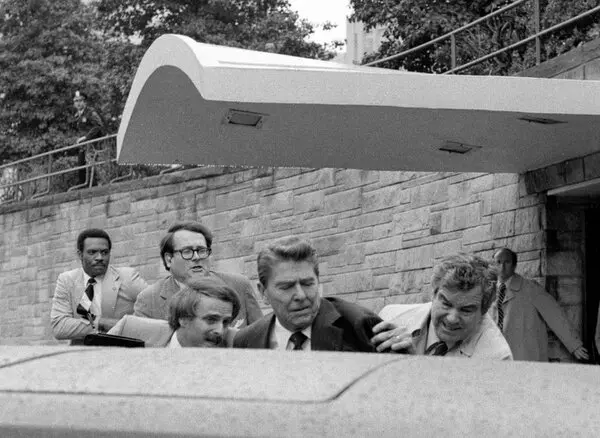
Image: Historical photo of the 1981 Reagan assassination attempt outside the Washington Hilton.
Interesting and Entertaining Episodes from These Events
The White House Correspondents’ Dinner is traditionally a night of sharp political humor, celebrity sightings, and unlikely pairings. In 2026, the evening turned from roast to real peril, with comedian hosts and journalists suddenly diving for cover—creating a surreal contrast between the event’s witty tradition and raw danger.
One attendee, sports commentator Stephen A. Smith, later recounted being on the phone with his son when shots rang out, describing the disbelief and instinct to take cover. UFC Chairman Dana White and Senator John Fetterman were noted for relatively calm reactions amid the evacuation, adding a touch of stoic humor to survivor stories.
In the 1981 Reagan case, a famous lighthearted moment came later: Reagan, ever the optimist and performer, quipped to surgeons before his operation, “I hope you’re all Republicans.” His wife Nancy’s famous “Honey, I forgot to duck” exchange with him became iconic. Hinckley’s obsession with Jodie Foster inspired dark cultural references, including in films, though the tragedy itself was no joke.
These episodes underscore the resilience of American political figures—Trump continuing public appearances shortly after, much like Reagan’s remarkable recovery and return to the Oval Office.
Image: President Reagan waving after his recovery from the 1981 assassination attempt. (Description: Ronald Reagan smiling and waving to supporters during his convalescence period, showcasing his characteristic optimism.) (Source: White House archival photos)
Broader Context and Security Reflections
The 2026 Trump assassination attempt at the White House Correspondents’ Dinner marks at least the third known attempt on Trump’s life in recent years, following incidents in Butler, Pennsylvania, and a Florida golf course. It has prompted reviews of Secret Service protocols, especially for large indoor events with media and political mixes.
The shared venue with the Reagan attempt adds a layer of historical irony to discussions on political violence in America. While motives differ—one ideological, one delusional—the location’s repeated role raises questions about venue security planning for presidential appearances.
This event also briefly united attendees across political and media lines in a moment of shared vulnerability, even as it sparked online debates and conspiracy theories (which authorities and fact-checkers have pushed back against with evidence).
Final Thoughts on the Washington Hilton Incidents
The Washington Hilton stands as a silent witness to the thin line between celebration and crisis in American democracy. The 2026 Trump assassination attempt at the White House Correspondents’ Dinner and the 1981 Reagan shooting remind us of the persistent challenges of protecting leaders while preserving open traditions like the press dinner.
Facts remain the foundation: swift security action prevented tragedy in 2026, just as heroism and luck played roles in 1981. As investigations continue into Cole Tomas Allen’s full background and planning, the focus stays on verified details rather than speculation.
For a personal blog, this piece aims to deliver depth, historical connection, and engaging anecdotes while staying grounded in reported facts—setting it apart through its balanced narrative and vivid storytelling.
Sources and Further Reading:
- Wikipedia entry on the 2026 White House Correspondents’ Dinner shooting: https://en.wikipedia.org/wiki/2026_White_House_Correspondents%27_dinner_shooting
- AP News coverage of charges and details: https://apnews.com/article/trump-correspondents-dinner-shooting-suspect-d4111facf965aaaa10334eb5c12901db
- NBC News on suspect background: https://www.nbcnews.com/news/us-news/shooting-suspect-white-house-correspondents-dinner-cole-thomas-allen-rcna342146
- Coverage of Reagan parallel: https://www.nytimes.com/2026/04/26/us/politics/correspondents-dinner-shooting-washington-hilton-reagan.html
- PBS and BBC live updates for court and timeline details.