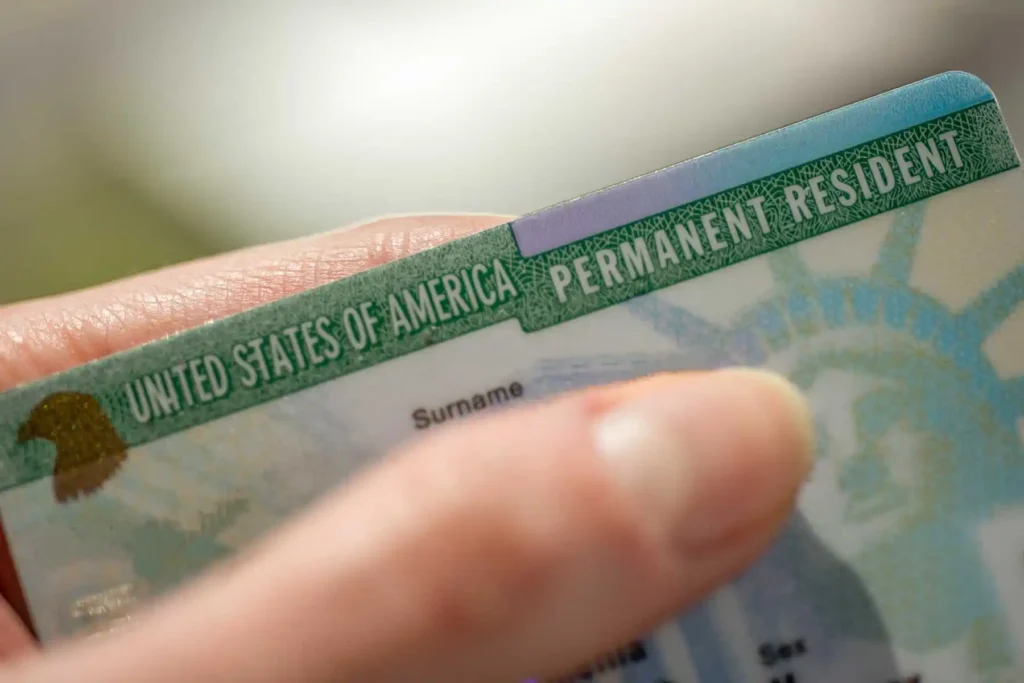
The high-skilled green card denials have become a hot topic in U.S. immigration debates. A recent analysis by the National Foundation for American Policy (NFAP) highlights a sharp increase in denial rates for employment-based immigrant visas shortly after the current Trump administration took office. This report, titled “Analysis of USCIS Denial Rates for High-Skilled Immigrants and Temporary Visas,” draws directly from official U.S. Citizenship and Immigration Services (USCIS) data for fiscal year 2025 (FY 2025, ending September 30, 2025). It shows policy shifts making it tougher for even the most accomplished foreign professionals to secure permanent residency in America.
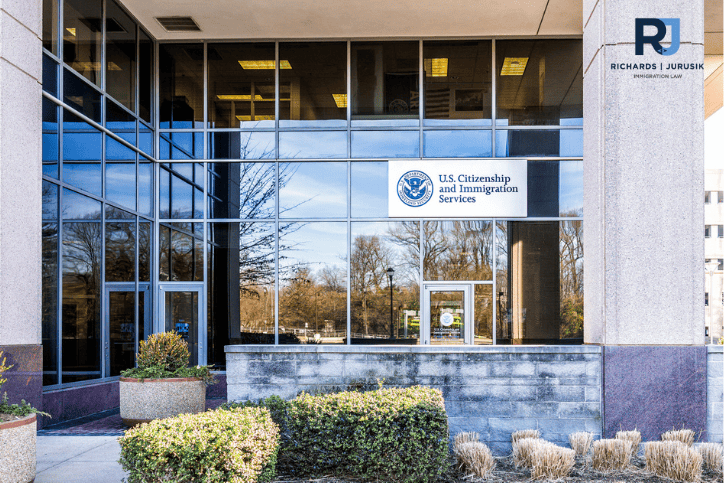
Image: Exterior of a U.S. Citizenship and Immigration Services (USCIS) field office, where high-skilled green card applications are processed. (Source: Richards | Jurusik Immigration Law website)
What the NFAP Report on High-Skilled Green Card Denials Actually Says
NFAP’s detailed examination of USCIS quarterly data reveals notable jumps in denial rates between the fourth quarter of FY 2024 and the fourth quarter of FY 2025:
- EB-1 category (for aliens with extraordinary ability): Denial rates nearly doubled, rising from 25.6% to 46.6%.
- EB-2 National Interest Waiver (NIW): Denial rates climbed from 38.8% to 64.3%.
- Over a longer view, NIW denials skyrocketed from just 4.3% in FY 2022 to 44.8% in FY 2025.
Temporary visa categories saw smaller but still significant increases:
- O visas (extraordinary ability): Up 46%, from 5.0% to 7.3%.
- L-1A (intracompany transferees – executives/managers): From 8.0% to 9.6%.
- L-1B (specialized knowledge): From 8.1% to 9.2%.
Interestingly, H-1B denial rates for initial employment stayed relatively stable at around 2.5–2.8% in FY 2025, far below the peaks of 21–24% seen during Trump’s first term (FY 2018–2019). Analysts attribute this stability to a 2020 legal settlement that limited USCIS from unilaterally tightening adjudication standards without formal rulemaking.
The report frames these changes as deliberate policy choices aimed at restricting high-skilled immigration, even for individuals who contribute to key sectors like technology, medicine, and innovation. NFAP Executive Director Stuart Anderson noted that the data indicate an intent to make it difficult for top global talent to work and stay in the United States.
Key context on high-skilled green card denials: These categories (EB-1 and EB-2 NIW) target “extraordinary ability” researchers, Nobel-level scientists, top executives, and professionals whose work serves the national interest. Denials often stem from stricter scrutiny of evidence, more Requests for Evidence (RFEs), or shifts in how officers interpret qualifications.
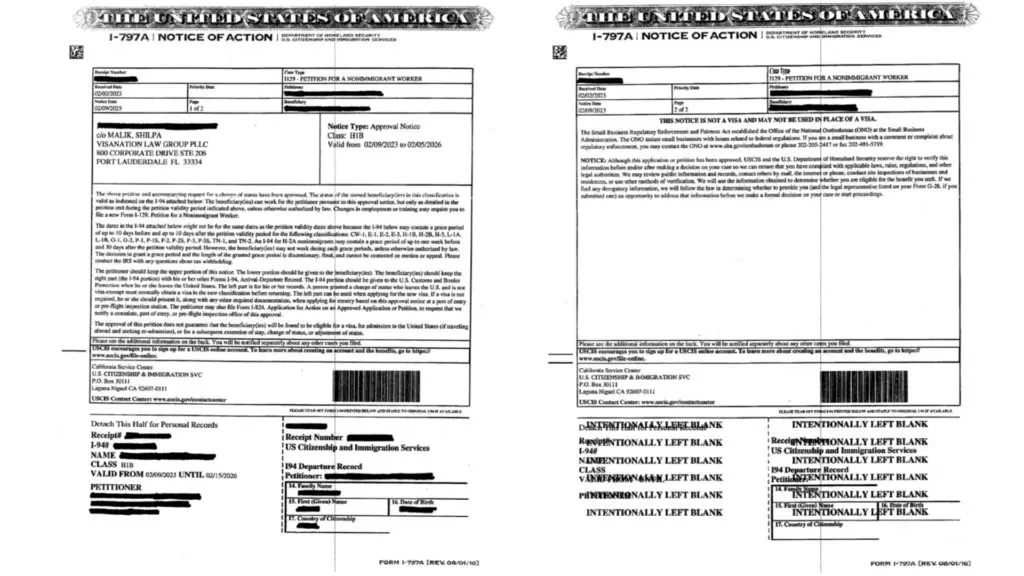
Image: Sample H-1B and employment-based petition approval notices (I-797 forms), the critical paperwork in high-skilled green card pathways. (Source: VisaNation)
Who Is the National Foundation for American Policy (NFAP)?
The National Foundation for American Policy (NFAP) is a 501(c)(3) non-profit, non-partisan public policy research organization founded in 2003 and based in Arlington, Virginia. It focuses on immigration, international trade, globalization, and economic issues. NFAP describes itself as practical yet principled, aiming to expand debate on government’s role while citing foundational American values like life, liberty, and property.
NFAP has produced over 75 research reports, frequently cited in major outlets such as The Wall Street Journal, The New York Times, and The Washington Post. Its executive director, Stuart Anderson, previously served in senior roles at the Immigration and Naturalization Service (now part of DHS) and on Capitol Hill immigration subcommittees. The organization analyzes official government data (like USCIS statistics) and often advocates for policies that facilitate high-skilled immigration and legal pathways, arguing they boost U.S. competitiveness, innovation, and labor force growth. Critics sometimes view its pro-high-skilled immigration stance as leaning toward business interests, but it positions itself as non-partisan and data-driven.
NFAP does not appear to be a traditional “foundation” with massive endowments; it relies on research grants and operates as a think tank producing policy briefs.
Image: Diverse professionals overlooking a modern tech skyline, symbolizing the innovation hubs that rely heavily on high-skilled immigrant talent. (Source: TechSpring)
Fun and Insightful Episodes from the High-Skilled Immigration World
High-skilled green card denials and visa battles have produced memorable stories that highlight the human side of policy:
- Tesla’s H-1B Surge: In FY 2024 data (pre-spike in some green card categories), Tesla—led by Elon Musk—dramatically increased its approved H-1B petitions for initial employment, jumping to among the top users after lower numbers in prior years. This underscores how even cutting-edge American companies in electric vehicles and AI depend on global talent pipelines, sometimes navigating the same high-skilled green card denials challenges for permanent staff retention.
- Courtroom Drama from Trump’s First Term: During the first Trump administration, restrictive H-1B policies led to denial rates hitting 24% in FY 2018. Federal judges ruled some changes unlawful because they altered criteria without proper rulemaking. A resulting 2020 legal settlement forced USCIS to ease practices, dropping denials sharply. This “legal whiplash” shows how courts can act as a check on rapid policy shifts affecting high-skilled green card denials.
- The International Student Pipeline: U.S. universities host massive numbers of foreign graduate students in STEM fields (often 70%+ in computer science and engineering). Many transition via H-1B to green cards. Stories abound of brilliant PhDs in AI or biotech who build startups or join labs, only to face backlogs or sudden scrutiny—turning dream careers into years of uncertainty.
- Anecdotal “Near Misses”: Immigration attorneys often share tales of extraordinary ability petitions denied over seemingly minor evidentiary gaps (e.g., insufficient “international acclaim” documentation), only for the same candidate to succeed on appeal or re-filing with better-prepared evidence. One recurring theme: a researcher with groundbreaking publications denied initially because officers questioned the “impact,” despite citations in top journals.
These episodes illustrate that while data shows rising high-skilled green card denials, individual outcomes often depend on strong legal representation, thorough documentation, and timing.

Image: Diverse young professionals collaborating in a bustling tech office environment, representing the global talent pool impacted by immigration policies. (Source: Rest of World)
The Future for Immigrants: What Lies Ahead for High-Skilled Pathways?
Looking forward, the trajectory for high-skilled green card denials and related visas remains uncertain but leans toward continued pressure. The NFAP report and related analyses suggest additional tools in play, including proposed prevailing wage increases, new fees (e.g., a $100,000 fee discussed for certain new H-1B entries from abroad), and potential rulemaking that could mirror first-term restrictions.
Broader context includes:
- Persistent per-country caps and annual limits on employment-based green cards, creating massive backlogs (especially for India and China-born professionals).
- Emphasis on “Buy American, Hire American” principles, which could translate into stricter adjudications.
- Countervailing economic realities: Many economists argue high-skilled immigration fuels growth in AI, semiconductors, healthcare, and startups. Immigrant-founded companies have created significant U.S. jobs and innovation.
For prospective immigrants, the outlook may involve longer waits, higher legal costs, and the need for exceptional documentation. Employers might explore alternatives like expanding domestic talent pipelines, offshoring certain roles, or advocating for legislative reform. Some talent could shift to more welcoming countries like Canada, Australia, or emerging European tech hubs.
However, U.S. strengths—world-class universities, venture capital, and market size—continue to attract ambitious individuals. The coming years could see legal challenges, congressional debates, or adjustments if economic data shows talent shortages harming competitiveness.
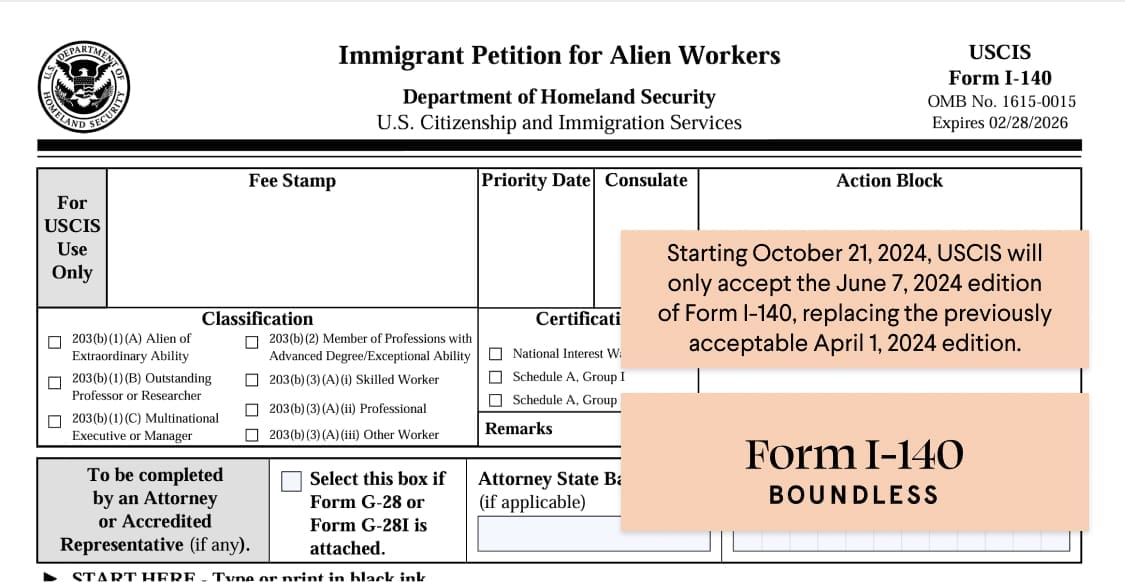
Image: Sample Form I-140 (Immigrant Petition for Alien Worker), the key filing for employment-based green cards like EB-1 and EB-2. (Source: Boundless Immigration)
Sources and Further Reading
- Primary NFAP Policy Brief (April 21, 2026): Analysis of USCIS Denial Rates for High-Skilled Immigrants and Temporary Visas and press release.
- Forbes coverage by Stuart Anderson: U.S. Immigration Service Increases Denials For High-Skilled Immigrants.
- NFAP official site: https://nfap.com/ for all reports and about section.
- Additional context from Times of India and other outlets summarizing the same USCIS data trends.
This analysis sticks strictly to publicly available USCIS data interpretations via NFAP and mainstream reporting. Immigration policy evolves quickly—always consult official USCIS sources or qualified legal counsel for personal cases.