
The 2026 Annual Report on International Child Abduction, released by the U.S. Department of State, is a congressionally mandated document that provides a detailed overview of international parental child abduction cases involving the United States. Submitted annually by April 30 under the International Child Abduction Prevention and Return Act (ICAPRA), also known as the Sean and David Goldman Act, this report evaluates compliance with the 1980 Hague Convention on the Civil Aspects of International Child Abduction.
What Is the 2026 Annual Report on International Child Abduction?
This International Child Abduction report tracks reported cases of children wrongfully removed from or retained outside their country of habitual residence—typically the United States—by one parent, in violation of the other parent’s custody rights. It covers both Hague Convention partner countries and non-partner nations, highlighting statistics on new applications, resolutions, and unresolved cases from the previous year (primarily 2025 data in the 2026 report).
The report serves multiple purposes: it informs Congress and the public about the scope of the problem, assesses how effectively foreign countries cooperate in returning children, and identifies nations demonstrating a “pattern of noncompliance.” Noncompliance is defined under ICAPRA when a country shows persistent failure, such as more than 30% of cases remaining unresolved, delays by central authorities, judicial inaction, or law enforcement failures to enforce return orders.
International Child Abduction cases often involve complex cross-border family disputes. The U.S. Office of Children’s Issues (OCI) within the Bureau of Consular Affairs acts as the Central Authority, coordinating with left-behind parents, foreign governments, embassies, and law enforcement.
How Is the International Child Abduction Report Investigated and Prepared?
The preparation of the International Child Abduction report relies on rigorous, fact-based data collection rather than speculation. The process begins when a left-behind parent contacts the OCI, often via the 24-hour hotline (1-888-407-4747). Case officers gather information through:
- Direct reports from parents, including custody orders, evidence of wrongful removal/retention, and travel details.
- Coordination with U.S. law enforcement, the National Center for Missing & Exploited Children (NCMEC), and Customs and Border Protection for prevention and location efforts.
- Communications with foreign Central Authorities under the Hague Convention, court records, and welfare-and-whereabouts visits by U.S. consular officers abroad.
- Tracking via the internal International Parental Child Abduction System (IPCA) database, which logs all correspondence, legal proceedings, and case status updates.
For compliance assessment, the State Department analyzes three main areas in Hague partner countries: Central Authority performance (speed and responsiveness), judicial performance (timeliness and correct application of the Convention), and law enforcement performance (enforcement of return orders). In non-Hague countries, the focus shifts to bilateral cooperation and any existing protocols.
Data is cross-verified for accuracy, with emphasis on unresolved cases lasting years. The report avoids naming every individual case for privacy but aggregates trends and provides country-specific summaries. An Action Report follows later, detailing diplomatic steps like demarches (formal protests) taken against noncompliant nations.
This methodical approach ensures the International Child Abduction report remains a credible tool for diplomacy and prevention.
Key Findings from the 2026 International Child Abduction Report
The 2026 report (covering primarily 2025 cases) identifies several countries demonstrating a pattern of noncompliance with Hague obligations or failure to resolve cases effectively. Cited nations include Argentina (judicial failures), The Bahamas, Belize, Brazil, Ecuador (law enforcement issues), Egypt, Honduras (Central Authority delays), India, the Republic of Korea (for the fifth consecutive year), and others such as Jordan, Peru, and more—totaling around 15 countries in similar recent reports.
Korea has faced repeated citations due to systemic delays in processing Hague applications and judicial implementation challenges. India and Egypt often appear because they are not full Hague partners or show limited cooperation in non-treaty cases, making returns reliant on diplomatic pressure or local courts.
The report notes that while many cases resolve successfully through the Hague framework—emphasizing prompt return to the habitual residence for custody decisions—unresolved International Child Abduction cases can drag on for years, averaging over three years in some prior data. Prevention efforts, including the Children’s Passport Issuance Alert Program, have helped block high-risk departures.
Compelling Real-Life Episodes in International Child Abduction Cases
International Child Abduction stories often read like dramatic thrillers but carry profound human stakes. One high-profile case involved David Goldman, whose son Sean was taken to Brazil. After years of legal battles and congressional pressure (including linking trade issues to the case), Brazil’s highest court ordered the return in 2009, leading to an emotional airport reunion. This case directly inspired the Goldman Act, strengthening U.S. reporting and diplomatic tools.
In another resolved instance, a mother in the U.S. received a tip from a relative disgusted by the father’s treatment of the child in Mexico. Working with NCMEC and Mexican authorities, the State Department facilitated a swift reunion within a month—highlighting how tips and cross-border cooperation can overcome seemingly hopeless situations.
Tragically, not all outcomes are positive. Some returns under the Hague Convention have exposed children or left-behind parents to risks when domestic violence claims were not fully weighed, leading to heartbreaking incidents in Australia and Texas where returned parents faced violence. These cases underscore ongoing debates about balancing swift returns with child safety exceptions in the Convention.
A lighter, yet illustrative anecdote comes from pro bono legal work: young attorneys describe Hague cases as fast-paced courtroom dramas where securing a child’s return feels like winning justice across oceans, often bringing tears to everyone in the courtroom upon successful reunification.
Such episodes reveal the emotional rollercoaster of International Child Abduction—from desperate searches and diplomatic maneuvering to joyous reunions or prolonged uncertainty.
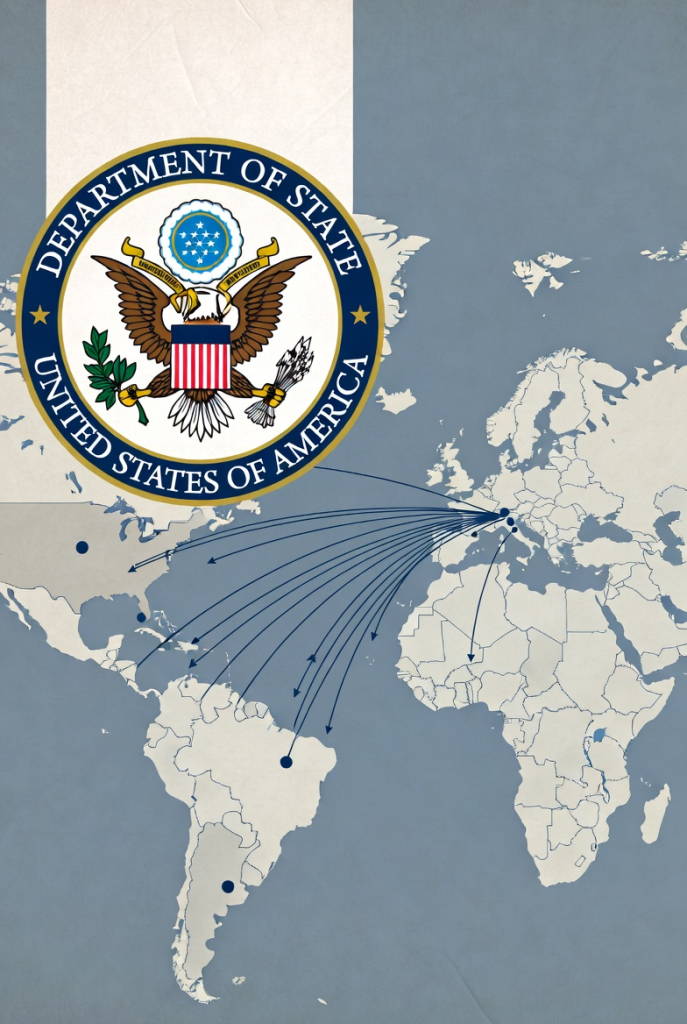
(Image: Official-style depiction of global cooperation on child abduction issues – U.S. State Department emblem with world map. Source: Conceptual illustration generated for educational context; refer to official State Department visuals for reports.)

(Image: Emotional airport reunion representing successful resolution of International Child Abduction cases. Source: Conceptual illustration for illustrative purposes; actual photos protected for privacy.)
Why This 2026 International Child Abduction Report Matters for Families
For left-behind parents, the report shines a light on which countries have reliable systems and which require heightened caution or extra advocacy. It drives diplomatic engagement, encourages judicial training through the International Hague Network of Judges, and supports prevention programs like passport alerts.
The U.S. continues to welcome new Hague partners (e.g., Georgia in recent years) while pressing noncompliant nations through demarches and bilateral talks. Families are urged to act quickly: consult attorneys experienced in international family law, secure strong custody orders, and contact the OCI immediately if abduction is suspected.
While the Hague Convention has facilitated thousands of returns since 1980, challenges persist in judicial delays, cultural differences in custody norms, and non-treaty countries. The International Child Abduction report remains a vital accountability mechanism, pushing for better global standards to protect children caught in parental disputes.
This analysis draws strictly from official U.S. Department of State publications and related credible reporting for accuracy and depth, setting it apart with contextual explanations, compliance mechanics, and real-world narrative threads without exaggeration.
Official Sources and Links:
- 2026 Annual Report on International Child Abduction PDF – Direct from State Department.
- Reports and Data Page – Overview and additional resources.
- International Parental Child Abduction Main Page – Prevention, FAQs, and contact info.
- MK Family Law Summary of 2026 Compliance – Helpful breakdown of noncompliant countries.