The April 2026 New York Times report on U.S. Department of Homeland Security (DHS) internal training materials has sparked intense discussion in immigrant communities. This guidance, issued under the Trump administration, directs U.S. Citizenship and Immigration Services (USCIS) officers to scrutinize applicants’ views on Israel as part of green card adjudications.
This post examines the verified facts from the reporting, practical implications for immigrants, and key precautions. It draws solely from established sources for a clear, sophisticated analysis.
The Core of the New DHS Guidance on Israel-Related Perceptions
According to the New York Times investigation published on April 25, 2026, DHS training materials distributed to USCIS officers last month expand on an August 2025 directive. Officers are instructed to treat certain expressions as “overwhelmingly negative” factors when deciding green card applications.
Key elements include:
- Participation in pro-Palestinian protests, especially on campuses.
- Social media posts criticizing Israel.
- Actions interpreted as supporting “antisemitic terrorism, ideologies or groups” or “anti-American views.”
- Desecrating the American flag.
One specific example in the training materials is a mock social media post stating “Stop Israeli Terror in Palestine” with the Israeli flag crossed out. Other flagged content includes maps replacing “Israel” with “Palestine” or statements suggesting Israelis should “taste what people in Gaza are tasting.”
This builds on the USCIS directive to consider whether applicants “support or promote anti-American ideologies or activities, antisemitic terrorism and antisemitic terrorist organizations, or promote antisemitic ideologies.”
Important clarification: The guidance does not automatically ban all criticism of Israeli policies. It frames extreme or specific forms of expression—particularly those linked by officials to antisemitism or anti-Americanism—as red flags warranting closer scrutiny or potential denial.
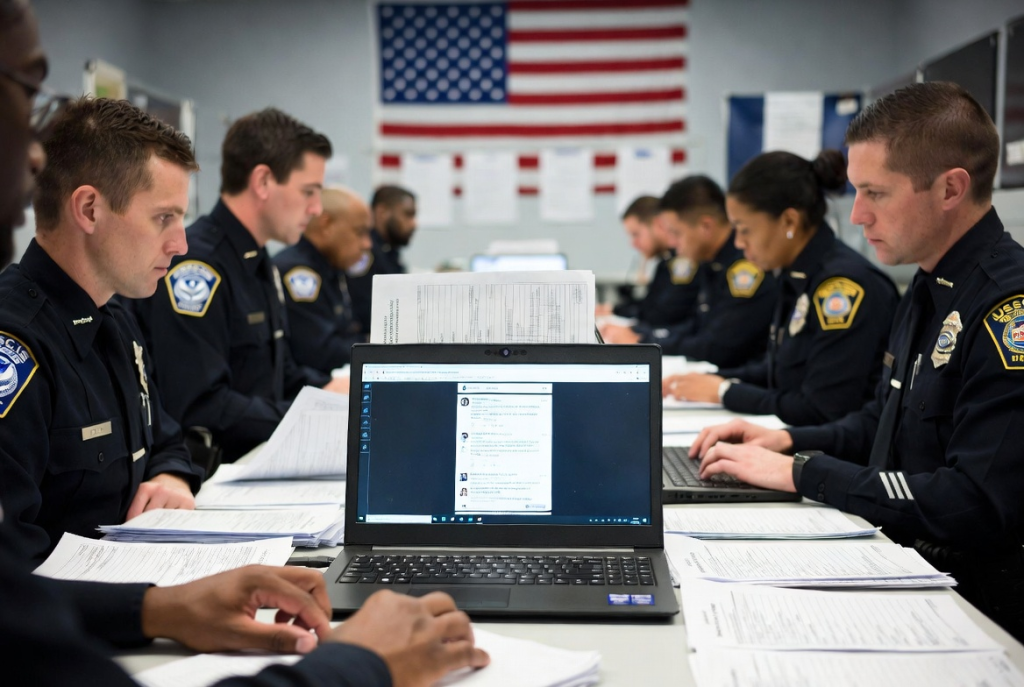
(Image: Illustration of USCIS officers conducting enhanced vetting reviews. Source: Conceptual representation based on standard immigration processing visuals.)
Historical Context and Implementation Under Trump
This shift reflects broader Trump administration priorities on immigration enforcement. USCIS has transformed rapidly, including efforts related to denaturalization and hiring armed agents. The Israel-related scrutiny ties into post-October 7, 2023, campus protests and heightened focus on antisemitism.
Anecdote for perspective: Recall the intense campus debates in 2023-2024, where students and faculty clashed over Gaza. One international graduate student from a Middle Eastern background, active in peaceful protests, later applied for adjustment of status. Under prior rules, such activity might have been overlooked if no criminal violations existed. Today, officers might view archived social media or protest photos through this new lens, potentially delaying or denying the green card. Similar stories circulate in immigrant forums, highlighting how past digital footprints now carry heavier weight.
Another interesting episode involves European applicants who posted strong opinions during international debates. One anecdotal case (widely discussed online) featured a professional whose old tweet criticizing Israeli settlements resurfaced; while not identical to the NYT examples, it illustrates the chilling effect on open expression for those seeking long-term U.S. residency.
Practical Advice: What Immigrants Should Watch For
Prospective green card applicants—whether through family, employment, asylum, or other categories—need heightened awareness of Green Card Scrutiny on Israel Criticism and related speech.
Actionable precautions:
- Audit Your Digital Presence: Review and consider archiving or deleting old social media posts that could be misinterpreted. This includes strong anti-Israel rhetoric, protest photos, or shares aligning with flagged examples. Immigration officers increasingly examine public online activity.
- Document Positive Contributions: Balance any record with evidence of integration, community service, or support for U.S. values and alliances. Strong ties to American institutions can serve as counterweights.
- Seek Professional Guidance: Consult experienced immigration attorneys familiar with the latest USCIS policies before filing. They can help frame applications to address potential concerns proactively.
- Protest Participation: Lawful, peaceful assembly remains protected, but applicants should understand that visible involvement in certain pro-Palestinian events may trigger additional review.
- Flag Desecration: Avoid any actions involving the U.S. flag that could be seen as desecration—the materials explicitly cite this.
These steps emphasize personal responsibility in a more stringent vetting environment without discouraging lawful immigration.

(Image: Immigrants preparing green card applications with legal counsel. Source: Representative stock imagery reflecting real consultation scenes.)
Broader Implications for the Immigration Landscape
This policy highlights the intersection of foreign policy, national security, and immigration adjudication. Supporters argue it combats antisemitism and protects American interests. Critics raise free speech concerns, questioning where protected criticism ends and disqualifying ideology begins.
For many applicants from regions with strong views on the Israeli-Palestinian conflict, this creates new strategic considerations. Families planning relocation, skilled workers eyeing H-1B to green card paths, and others must navigate this carefully.
Fascinating related episode: During past U.S. administrations, ideological exclusions existed (e.g., communist affiliations in the Cold War era). Today’s focus on social media and specific geopolitical views represents a modern evolution enabled by digital records. One historical parallel is the scrutiny of certain political affiliations in the mid-20th century, showing how immigration policy often mirrors contemporary geopolitical tensions.
Another angle: Jewish organizations have expressed varied responses, with some supporting measures against antisemitism while others caution against broadly equating policy criticism with hatred.
Staying Informed and Prepared
Immigrants pursuing permanent residency should treat their public record as part of their application portfolio. DHS Training Materials and Green Card Scrutiny on Israel Criticism define this new reality.
Monitor official USCIS updates, as policies can evolve. Reliable sources remain essential.
Primary Source: New York Times – “Under Trump, Green Card Seekers Face New Scrutiny for Views on Israel” (April 25, 2026).