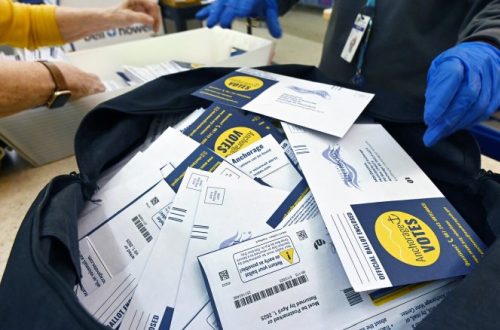
The USCIS Immigration Backlog: A Deep Dive into the 11.6 Million Pending Applications
The USCIS immigration backlog has reached a staggering scale that captures headlines and personal stories alike. According to a recent NPR analysis of data from U.S. Citizenship and Immigration Services (USCIS), there are approximately 11.6 million pending applications in the agency’s “backlog” — cases that have been received and categorized but await a final decision. Add to that roughly 248,000 applications in the separate “frontlog” — unopened submissions, often mailed ones not yet assigned — and the total pending workload approaches 12 million.
This USCIS immigration backlog has more than doubled over the past decade, with a sharp acceleration in recent years. NPR’s review of USCIS data from October 2016 onward highlights steady growth, but a notable jump of about 2 million cases in the first year of the second Trump administration — exceeding the total increase across his entire first term. By the end of fiscal year 2025 (September 2025), USCIS reported around 11.65 million pending cases, reflecting a 23% increase from the prior year.
USCIS immigration backlog figures encompass critical forms: naturalization (N-400 for citizenship), adjustment of status (I-485 for green cards), petitions for alien relatives (I-130), employment authorization (I-765 for work permits), and affirmative asylum applications. These are not court cases (handled separately by EOIR immigration courts, which have their own multi-million backlog), but benefit applications processed by USCIS under the Department of Homeland Security.
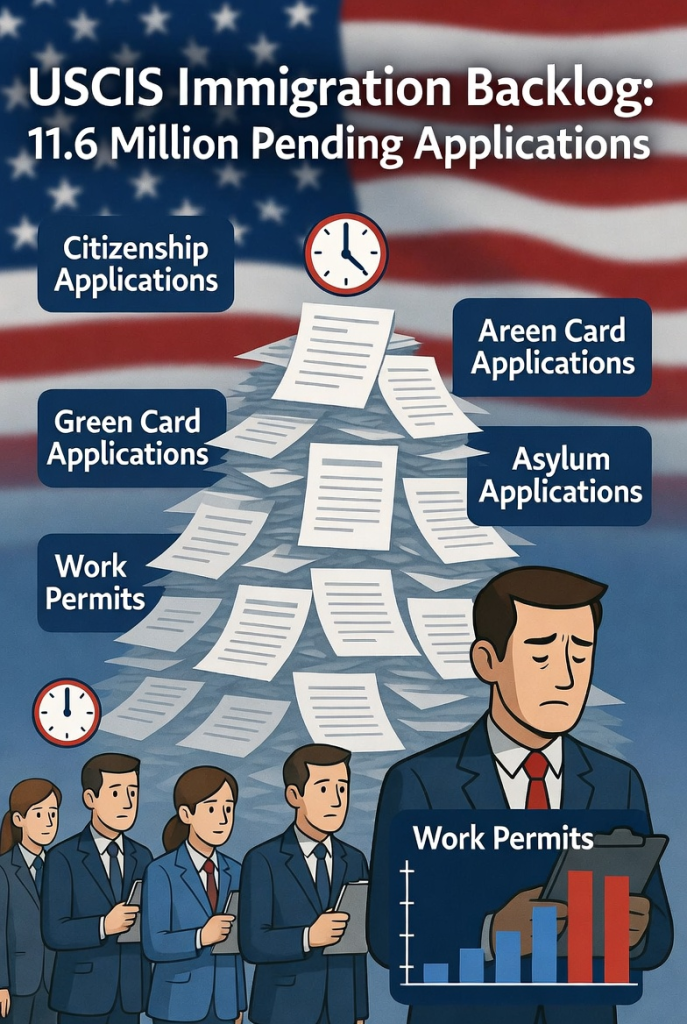
(Image: Visual representation of the overwhelming USCIS immigration backlog with categorized paperwork stacks and waiting applicants. Generated via Grok Imagine.)
Breaking Down the USCIS Immigration Backlog: Key Forms and Real Impacts
The USCIS immigration backlog is not a monolith. Different forms experience varying delays, often exacerbated by policy shifts, staffing levels, vetting requirements, and surges in filings.
- Naturalization (Citizenship): Applications for U.S. citizenship have seen fluctuating volumes. In 2025, early months showed high submissions and approvals, but later periods recorded sharp drops, with January 2026 approvals hitting lows. Heightened scrutiny and pauses for certain nationalities contributed to this.
- Green Cards (I-485 Adjustment of Status): Processing times vary by category (family-based vs. employment-based), with some now stretching 8–14 months or longer depending on the service center. Green card replacement (I-90) has also slowed in spots.
- Work Permits (I-765): Delays here directly affect applicants’ ability to work legally. Some reports noted processing times doubling in a single quarter, pushing many into financial uncertainty.
- Family Petitions (I-130): These foundational approvals can take 12–35+ months before visa availability even enters the picture, especially for preference categories with annual caps.
- Asylum: Affirmative asylum cases with USCIS have hit record highs exceeding 1.5 million in recent fiscal data, with additional holds on applications from high-risk countries for national security reviews.
Processing completions dropped significantly — by 22% in Q4 FY2025 compared to the prior year — while cases pending over six months surged. The net “backlogged” cases (within government control) reached about 6.28 million by late FY2025.
USCIS immigration backlog realities translate into human stories. Imagine a skilled H-1B professional whose work permit renewal languishes: without timely I-765 approval, they risk job loss despite legal presence. Or a long-married couple where one spouse awaits I-485 adjustment while their interim status expires, creating anxiety over potential enforcement actions amid broader policy priorities.
One memorable anecdote shared in immigration circles involves a family that filed for a child’s green card years ago. By the time approval neared, the child had aged out of one category, forcing re-filing and restarting parts of the clock — a classic illustration of how USCIS immigration backlog compounds with per-country visa limits and priority dates from the monthly Visa Bulletin.
Another lighter-yet-frustrating tale: applicants receiving “Request for Evidence” (RFE) notices after months of silence, only to discover the original submission was complete but buried in the queue. Some joke that the thickest file in the USCIS immigration backlog might be the one containing endless proof of a bona fide marriage — wedding photos, joint bills, and affidavits piled high enough to qualify as its own paper monument.
(Image: Family enduring the long wait amid the USCIS immigration backlog paperwork mountains. Generated via Grok Imagine. Inspired by common applicant experiences.)
Why Has the USCIS Immigration Backlog Grown So Dramatically?
Several factors drive the USCIS immigration backlog:
- Volume vs. Capacity: USCIS is fee-funded for many operations, but surges in applications (post-pandemic recovery, policy announcements) outpace staffing and automation efforts. Some internal programs for streamlined processing were paused or adjusted.
- Enhanced Vetting and Policy Pauses: Under the current administration, executive actions emphasized stricter screening, leading to holds on applications from certain high-risk countries, diversity visa adjustments, and asylum reviews. This prioritizes security but slows throughput.
- Frontlog Growth: The unopened “frontlog” tripled in one recent quarter, pointing to intake bottlenecks.
- Historical Momentum: The backlog more than doubled in a decade; recent years amplified it through reduced completion rates (down 18–22% in key quarters) and external pressures like border-related filings.
Critics argue the system is “not manageable” at current scales, while supporters of tighter controls see deliberate pauses as necessary for integrity. Data shows USCIS has periods of efficiency gains in prior years, but 2025–2026 trends reversed some of those.
What Lies Ahead for the USCIS Immigration Backlog and Future Immigration Procedures?
Predicting the trajectory of the USCIS immigration backlog is challenging amid evolving policies. Possible developments include:
- Prioritization: Agencies often focus resources on high-impact categories like naturalization for long-term residents or critical employment roles, potentially deprioritizing others.
- Technology and Staffing: USCIS has historically invested in digitization and premium processing (extra fees for faster service on select forms). Expansion could help, though security reviews may limit full automation.
- Legislative or Executive Fixes: Broader reforms — from fee adjustments to congressional funding or backlog reduction targets — have been proposed in past administrations, with mixed success. Current emphasis on enforcement and vetting may sustain slower paces for certain streams.
- Individual Strategies: Applicants can check case status online, use premium processing where available, respond promptly to RFEs, and consult attorneys for complex cases. However, systemic USCIS immigration backlog issues mean even perfect filings face waits.
For many, the USCIS immigration backlog creates a limbo where legal pathways feel blocked, heightening vulnerability discussions in policy debates. Others view it as a necessary recalibration to ensure benefits go to those meeting rigorous standards.
Immigration procedures will likely remain form-heavy and documentation-intensive. Expect continued use of the USCIS online account system for tracking, periodic processing time updates on the official site, and potential shifts in interview requirements or biometrics.
A poignant real-world parallel: during earlier backlogs, some naturalization ceremonies were delayed, turning what should be a joyful oath into a prolonged wait. One story from years past described a veteran who served in the U.S. military waiting years for citizenship due to administrative hurdles — only to finally swear in alongside others whose patience mirrored a marathon rather than a sprint.
Navigating the USCIS Immigration Backlog: Practical Takeaways
While the USCIS immigration backlog of 11.6 million pending applications underscores systemic strain, individuals can stay proactive: monitor official USCIS processing times, maintain valid status where possible, and document everything meticulously. The human element — families building lives, professionals contributing skills, dreamers pursuing the American promise — remains at the heart of these statistics.
This analysis draws strictly from public data and reporting as of April 2026. Numbers fluctuate quarterly, so always verify directly.
Primary Sources:
- NPR Analysis (April 17, 2026): https://www.npr.org/2026/04/17/nx-s1-5777632/us-trump-immigration-delay-applications-citizenship-deportation
- USCIS Immigration and Citizenship Data (Quarterly Reports): https://www.uscis.gov/tools/reports-and-studies/immigration-and-citizenship-data
- Niskanen Center Legal Immigration Update (March 2026): https://www.niskanencenter.org/immigrationdata/