In the high-stakes arena of international trade, Trump’s tariff policy stands as one of the most audacious and transformative economic strategies in modern U.S. history. From sweeping reciprocal duties to a dramatic Supreme Court showdown and an immediate pivot to a fresh new global tariff, this approach has captivated headlines, rattled markets, and sparked intense debate. Today, as of February 21, 2026, we dive deep into the verified facts: the core principles and details of Trump’s tariff policy, the precise reasons the Supreme Court struck it down, the specifics of the new global tariff just announced, its measured impacts on the U.S. and world economies, and the strategic purposes driving it all. Packed with fascinating episodes, visual context, and sourced analysis, this piece offers a sophisticated, fact-only perspective perfect for your personal blog.
The Foundations of Trump’s Tariff Policy: Reciprocity, Protection, and Leverage
Trump’s tariff policy rests on three pillars: reciprocity to counter “unfair” foreign barriers, national security and economic emergency justifications, and using duties as powerful negotiation tools. In his first term (2017-2021), President Trump imposed 25% tariffs on steel and 10% on aluminum under Section 232 of the Trade Expansion Act of 1962, citing national security. He then launched Section 301 tariffs on China, escalating to cover roughly $360 billion in goods at rates up to 25%, targeting intellectual property theft and forced technology transfers.
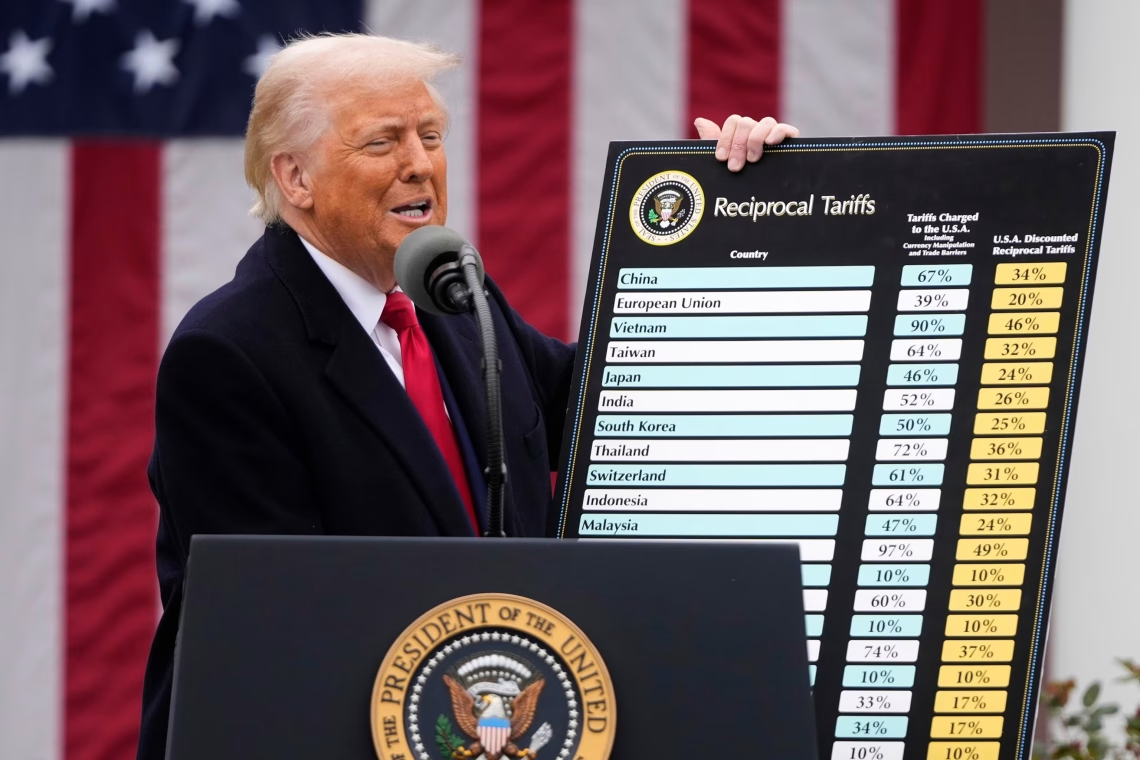
Entering his second term in 2025, Trump’s tariff policy escalated dramatically. Invoking the International Emergency Economic Powers Act (IEEPA) of 1977, the administration declared trade imbalances and issues like fentanyl trafficking a “national emergency.” This enabled broad “reciprocal” tariffs mirroring or exceeding foreign rates on U.S. exports. Rates hit 67% on China in some categories, 39% on the EU, and double-digit figures across allies and adversaries alike. Exemptions existed for critical minerals, energy, and certain agriculture, but the scope was unprecedented—pushing the average effective U.S. tariff rate to historic highs near 17% at peak, the highest since the 1930s Smoot-Hawley era.
A signature episode that perfectly captures the flair: Trump repeatedly declared, “Tariff is the most beautiful word in the dictionary.” During a 2025 rally, he brandished a giant chart of reciprocal rates like a game-show host, turning complex trade math into political theater. Another memorable moment from the first term echoed into 2025: U.S. soybean farmers, hammered by Chinese retaliation that slashed exports by 80%, received $28 billion in federal bailouts—prompting one Iowa farmer to quip on national TV, “We’re growing beans for the government now, not China!”
(Image: President Donald Trump addressing the nation on reciprocal tariffs, holding a detailed rate chart against a patriotic backdrop. Source: ABC News, https://abcnews.com/Politics/trumps-liberation-day-arrives-gambles-big-risky-tariff/story?id=120382209)
(Image: Trump proudly displaying the signed executive order for new tariffs, with the White House seal visible. Source: gCaptain, https://gcaptain.com/trump-slaps-10-global-tariff-using-new-trade-law-after-supreme-court-defeat/)
Why the Supreme Court Ruled Trump’s Tariff Policy Unlawful
On February 20, 2026, in a landmark 6-3 decision (Learning Resources, Inc. v. Trump, consolidated with related cases), the Supreme Court delivered a stunning rebuke to Trump’s tariff policy. Chief Justice John Roberts, writing for the majority, ruled unequivocally: “IEEPA does not authorize the President to impose tariffs.”
The core legal flaw? IEEPA grants the President authority to “regulate” international commerce during declared national emergencies caused by foreign threats—but the statute never mentions “tariffs” or duties explicitly. The challengers (importers, businesses, and states) argued, and the Court agreed, that imposing broad import taxes exceeded the law’s narrow emergency powers. The opinion emphasized separation of powers: only Congress holds the constitutional authority to levy taxes and duties under Article I.
Justices in the minority (the three dissenters) contended that “regulate” could encompass tariffs in extreme cases, but the majority found no textual support for such a sweeping interpretation. The ruling vacated the IEEPA-based tariffs that formed the bulk of 2025’s regime, opening the door for importers to seek refunds on an estimated $142 billion already collected.
Trump’s fiery response became instant legend: in a White House press conference hours later, he labeled the decision “terrible” and the justices “fools and lap dogs.” Markets initially surged on the news of lower tariffs, only for uncertainty to return when the new policy dropped. A humorous episode unfolded on late-night TV: The Daily Show mocked the ruling with a skit portraying Trump as a boxer dodging a SCOTUS punch, yelling “Reciprocal! Reciprocal!” while tariffs “floated like butterflies” out of reach.
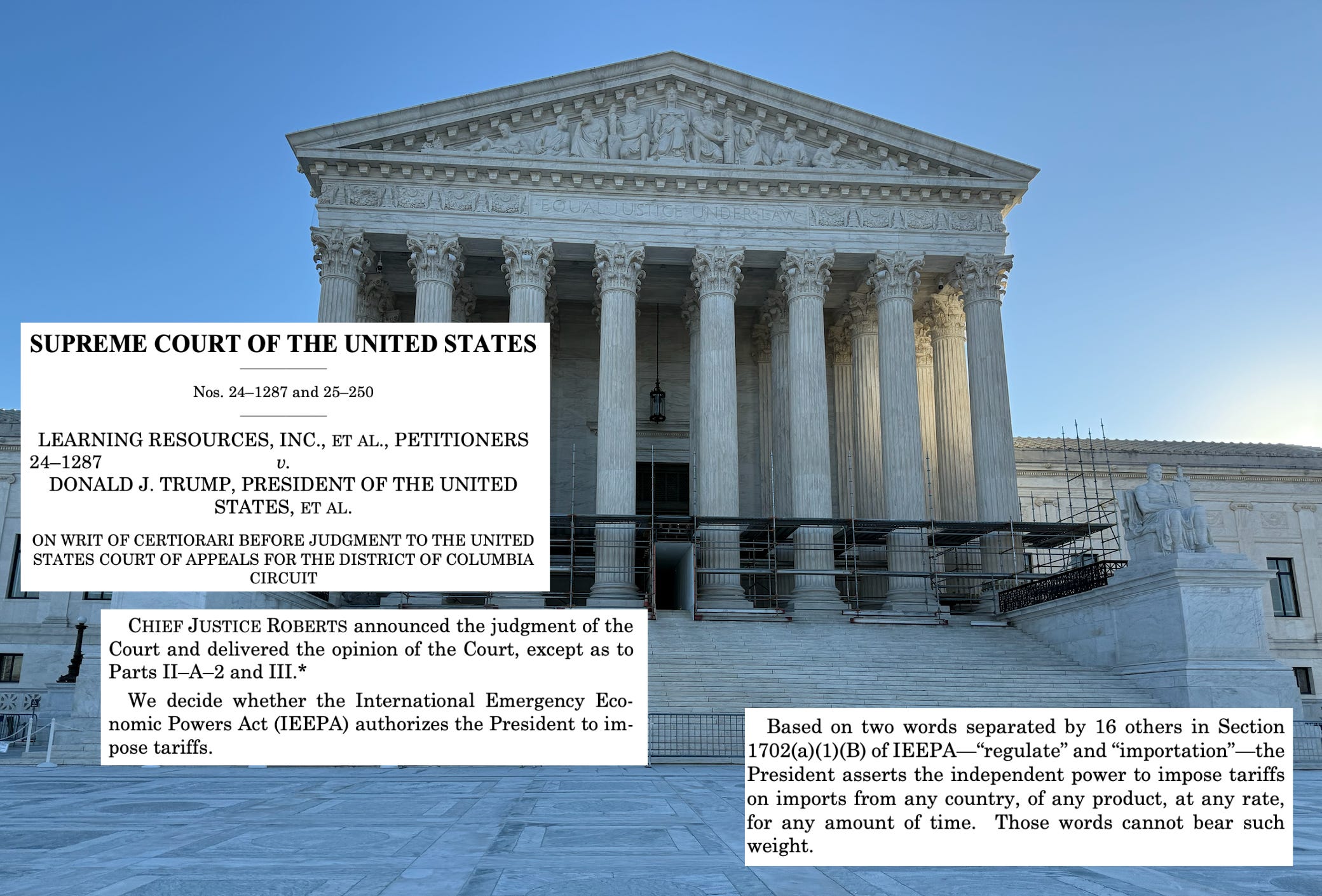
(Image: The majestic U.S. Supreme Court building under clear skies, overlaid with case details from the February 20, 2026, tariff ruling. Source: Law Dork, https://www.lawdork.com/p/supreme-court-on-a-6-3-vote-blocks)
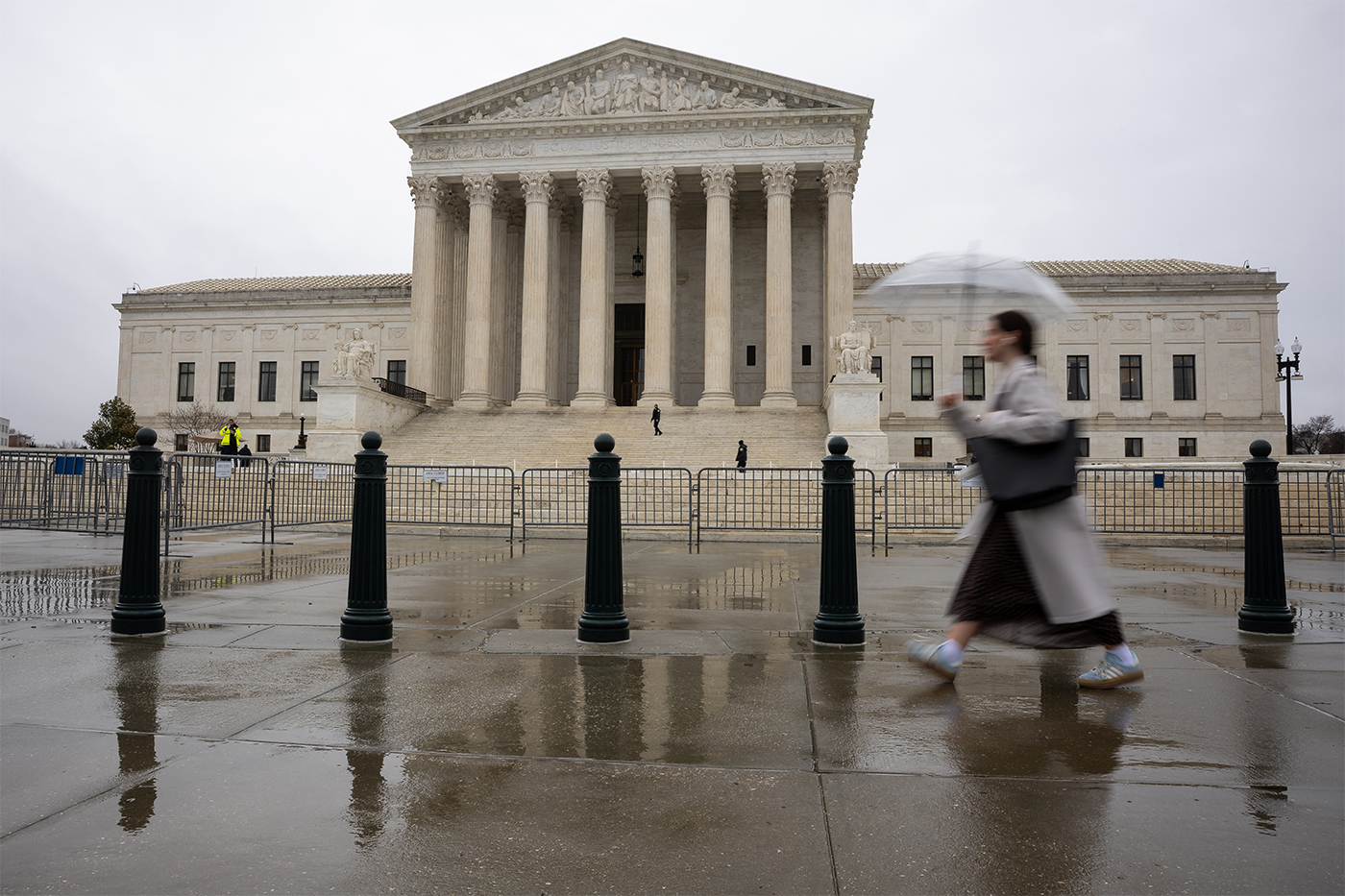
(Image: Supreme Court exterior on a rainy day, capturing the solemn atmosphere post-ruling with pedestrians and barriers. Source: Northeastern University News, https://news.northeastern.edu/2026/02/20/supreme-court-tariff-ruling/)
The New Global Tariff: Trump’s Swift Pivot in Tariff Policy
Undeterred, Trump announced on February 20 a replacement: a 10% across-the-board new global tariff under Section 122 of the Trade Act of 1974, which allows temporary duties (up to 15%, for 150 days max without congressional approval) to address balance-of-payments deficits. Effective February 24, it targeted “fundamental international payment problems.”
By February 21, he hiked it to the legal maximum of 15%, declaring it “effective immediately” via Truth Social and a fresh executive order. Exemptions protect U.S. needs: critical minerals, energy products, fertilizers, key agricultural items (beef, tomatoes, oranges), pharmaceuticals, passenger vehicles, aerospace components, and informational materials.
This new global tariff in Trump’s tariff policy maintains pressure while shifting legal footing. Trump framed it as continuing the “America First” fight, noting it would still generate substantial revenue while buying time for negotiations.
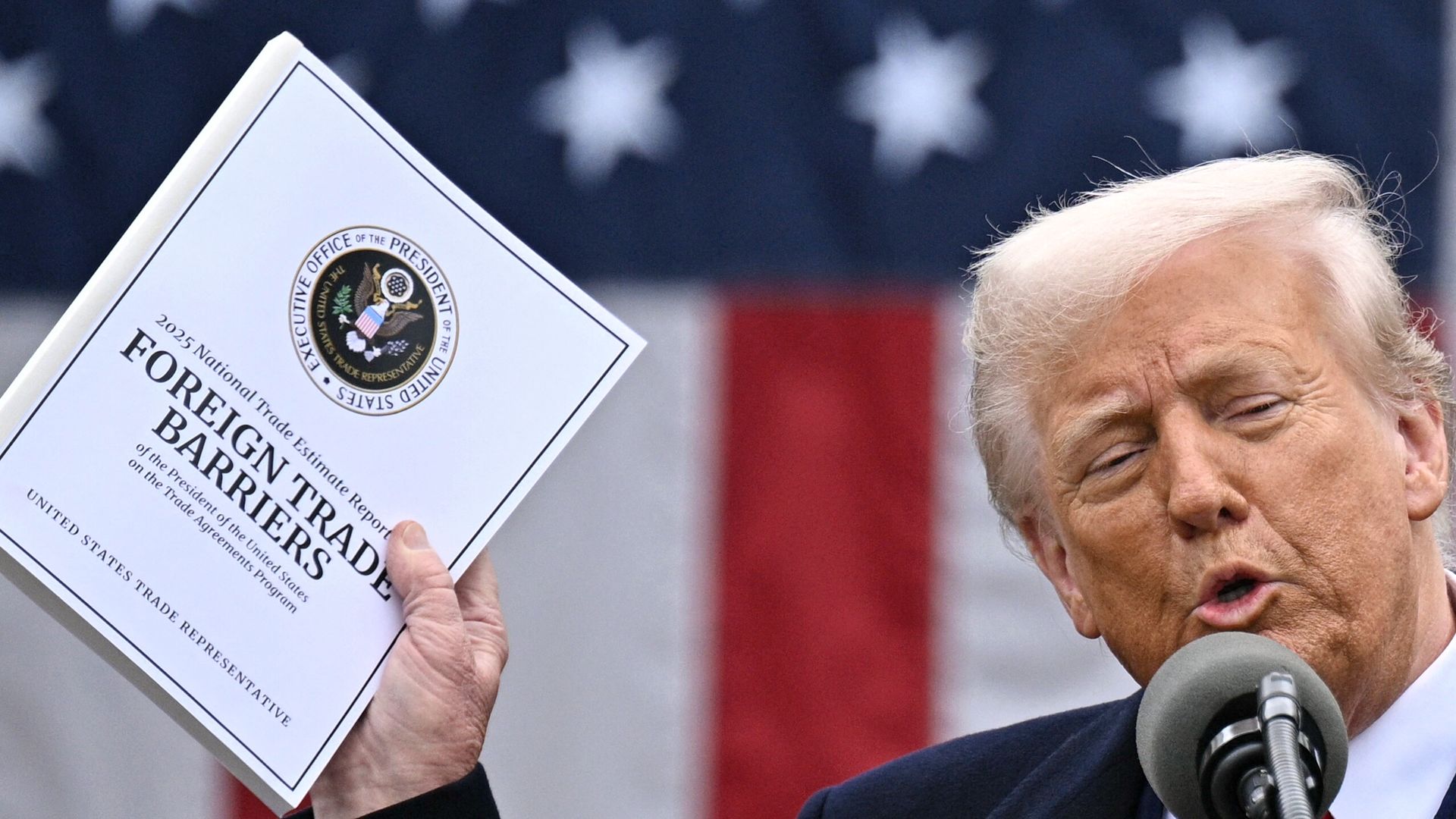
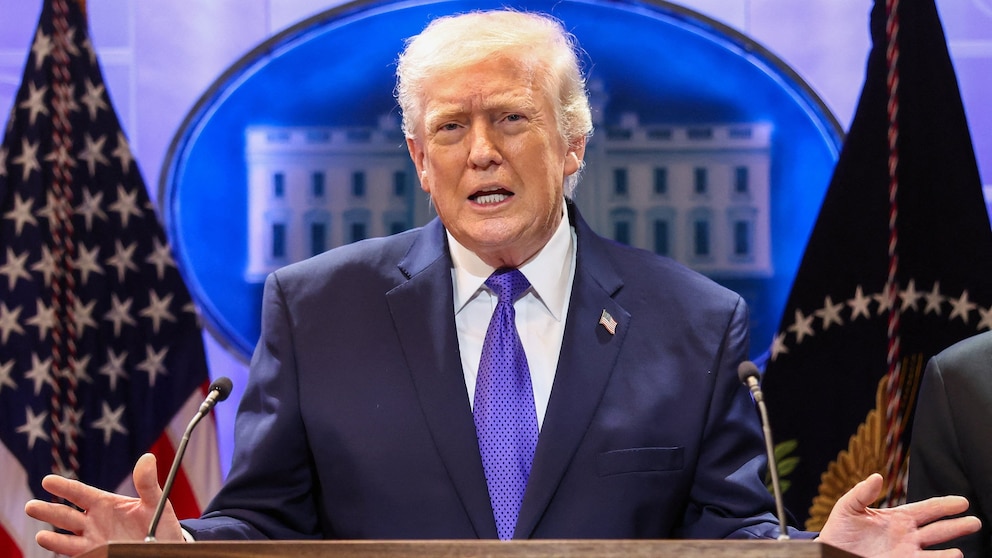
(Image: Trump holding up the 2025 Foreign Trade Barriers report while speaking passionately about tariffs. Source: Le Monde, https://www.lemonde.fr/en/international/article/2025/02/13/trump-announces-reciprocal-tariffs-on-both-allies-and-adversaries_6738135_4.html)
Impacts of Trump’s Tariff Policy on the U.S. Economy: Facts, Not Spin
Empirical data paints a nuanced picture. Trump’s tariff policy raised significant revenue—peaking at $30 billion monthly in 2025—but at a cost. Studies (Tax Foundation, Yale Budget Lab) estimate an average $1,000–$1,500 annual hit per U.S. household through higher prices, as importers passed on nearly 100% of costs. Inflation ticked up 1–1.5% in affected quarters.
The trade deficit shrank modestly (actual 2025 goods/services deficit down just 0.2%, far from Trump’s claimed 78%), while manufacturing saw mixed results: some reshoring in steel but higher input costs hurt downstream industries like autos and construction. Long-run GDP drag from remaining Section 232 tariffs: about 0.2%. Retaliation from partners continued to bruise exporters, echoing the first-term soybean saga.
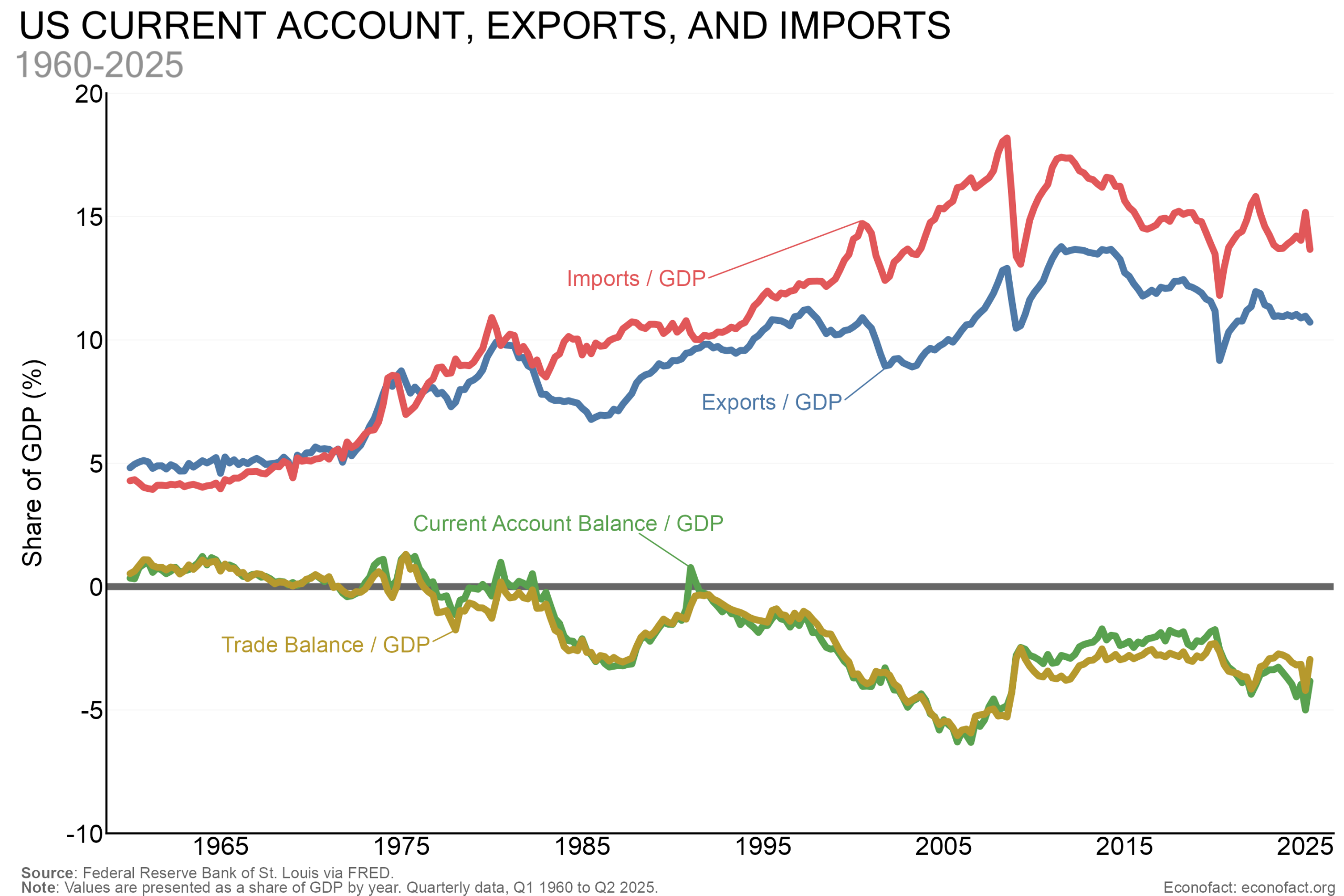
(Image: Long-term chart of U.S. trade balance, exports/imports as % of GDP from 1960–2025, highlighting persistent deficits. Source: Econofact, https://econofact.org/tariff-wars-and-the-united-states-trade-deficit)


(Image: Line graph comparing U.S. trade deficit trends under different administrations, showing limited fix from tariffs. Source: IMD via LinkedIn analysis, https://www.linkedin.com/pulse/did-trumpian-tariffs-fix-americas-trade-deficit-richard-baldwin-la5ue)
A lighter episode: In early 2025, as tariffs bit, one Michigan auto supplier joked to reporters, “We’re not reshoring jobs—we’re reshoring higher prices!”
Global Ripples from Trump’s Tariff Policy: Uncertainty and Retaliation
Worldwide, Trump’s tariff policy injected volatility. Economists (J.P. Morgan, others) project a 1%+ drag on global GDP, amplified by retaliation from China (up to 84% on select U.S. goods), the EU, and others. Supply chains fractured further, with cargo rerouting and higher costs everywhere. Emerging markets faced secondary shocks as U.S. demand softened.

(Image: Symbolic U.S. and Chinese cargo ships facing off across open water, representing trade tensions. Source: SupplyChainBrain, https://www.supplychainbrain.com/articles/41258-trump-proposes-new-ship-fees-to-challenge-chinas-maritime-might)
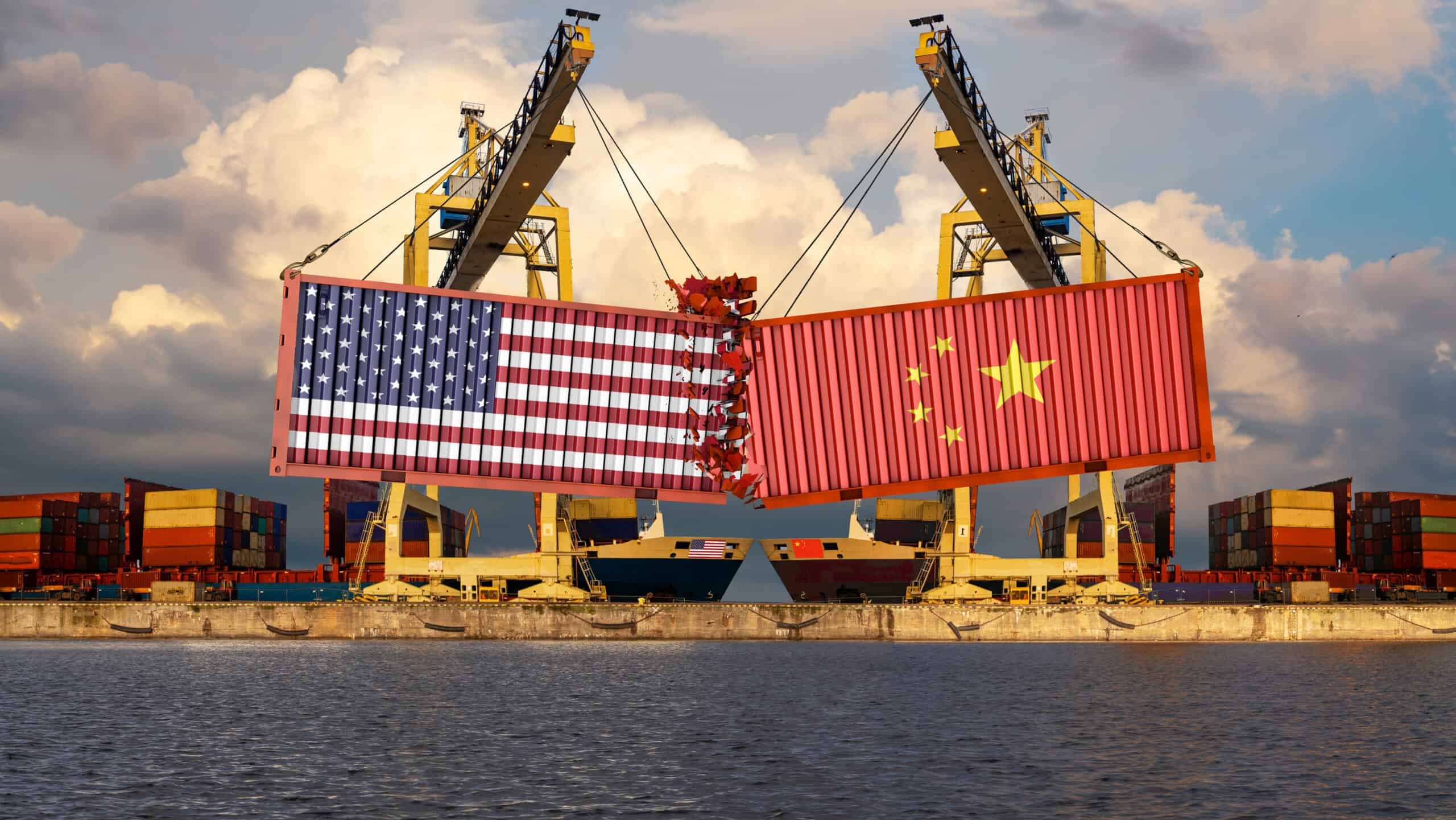
(Image: Dramatic split U.S.-China shipping container being torn apart by cranes, illustrating trade war fallout. Source: Global Finance Magazine, https://gfmag.com/economics-policy-regulation/us-china-tariff-truce/)
![Where Tariffs Are Highest And Lowest Around The World [Infographic]](https://imageio.forbes.com/blogs-images/niallmccarthy/files/2018/03/20180323_Tariff_Map_Forbes.jpg?format=jpg&height=600&width=1200&fit=bounds)
(Image: World map showing average applied tariff rates by country, contextualizing U.S. shifts. Source: Forbes/Statista, https://www.forbes.com/sites/niallmccarthy/2018/03/23/where-global-tariffs-are-highest-and-lowest-infographic/)
Fun global anecdote: A Canadian comedy skit went viral showing shoppers swapping maple syrup for “freedom Brazilian syrup” after retaliatory threats—pure satirical gold that captured bilateral exasperation.
The Real Purpose Behind Trump’s Tariff Policy: Strategy Over Surface
Beyond headlines, the genuine objectives of Trump’s tariff policy blend protectionism with pragmatism: reshoring critical manufacturing for “America’s Golden Age,” using duties as leverage for deals on borders, drugs, and market access, generating revenue to offset tax cuts or fund priorities, and rebalancing chronic deficits rooted in U.S. savings-investment gaps. As one White House fact sheet stated, tariffs “usher in” domestic production while forcing reciprocity. Critics note the consumer burden, but facts show it as a multifaceted tool—not mere isolationism.

(Image: Classic political cartoon of Trump firing a “Trade War” cannon, with humorous backlash effects. Source: AEI Carpe Diem, https://www.aei.org/carpe-diem/cartoon-of-the-day-on-trumps-trade-war-and-its-potential-adverse-effects-on-his-base/)

(Image: Uncle Sam pushing a shopping cart burdened by a giant “Tariffs” wheel, highlighting consumer costs. Source: The Week, https://theweek.com/articles/841571/7-scathingly-funny-cartoons-about-trumps-trade-war-china)
Sources and Further Reading
- Supreme Court Opinion: https://www.supremecourt.gov/opinions/25pdf/24-1287_4gcj.pdf
- White House Fact Sheet on New Tariff: https://www.whitehouse.gov/fact-sheets/2026/02/fact-sheet-president-donald-j-trump-imposes-a-temporary-import-duty-to-address-fundamental-international-payment-problems/
- Tax Foundation Tariff Analysis: https://taxfoundation.org/research/all/federal/trump-tariffs-trade-war/
- Yale Budget Lab SCOTUS Update: https://budgetlab.yale.edu/research/state-us-tariffs-scotus-ruling-update
- BBC Coverage of 15% Hike: https://www.bbc.com/news/articles/cn8z48xwqn3o
- Atlantic Council Tariff Tracker: https://www.atlanticcouncil.org/programs/geoeconomics-center/trump-tariff-tracker/