In the frosty dawn of his second term, President Donald Trump has reignited a wild ambition that sounds like a plot from a geopolitical thriller: making Greenland part of the United States. As of January 2026, with Trump fresh off his 2024 election victory, this isn’t just idle talk—it’s escalating into threats of tariffs, military hints, and high-stakes diplomacy. But why Greenland, that massive ice-covered island that’s technically part of Denmark but autonomous in spirit? Let’s dive deep into the layers—geopolitically, from a security lens, economically, and through the lens of international relations—while sprinkling in some juicy historical anecdotes that make this saga as entertaining as it is serious. We’ll keep it factual, drawing from verified sources, and I’ll weave in visuals to bring the frozen frontier to life.
Think of this as Trump’s “Arctic Deal of the Century.” Back in 2019, during his first presidency, Trump floated buying Greenland like it was a prime real estate flip, calling it “essentially a large real estate deal.” Denmark’s Prime Minister Mette Frederiksen shot it down as “absurd,” prompting Trump to cancel a state visit in a huff—classic Trumpian drama that had the world chuckling and eye-rolling. Fast-forward to 2026: After his reelection, Trump has amped it up, tying it to national security, slapping tariff threats on European allies, and even sending his son Don Jr. to Nuuk for a symbolic fly-by. It’s not just bluster; it’s a calculated push amid melting ice, rising rivals like China and Russia, and Greenland’s own independence dreams.
The Geopolitical Angle: A Melting Ice Cap’s Power Play
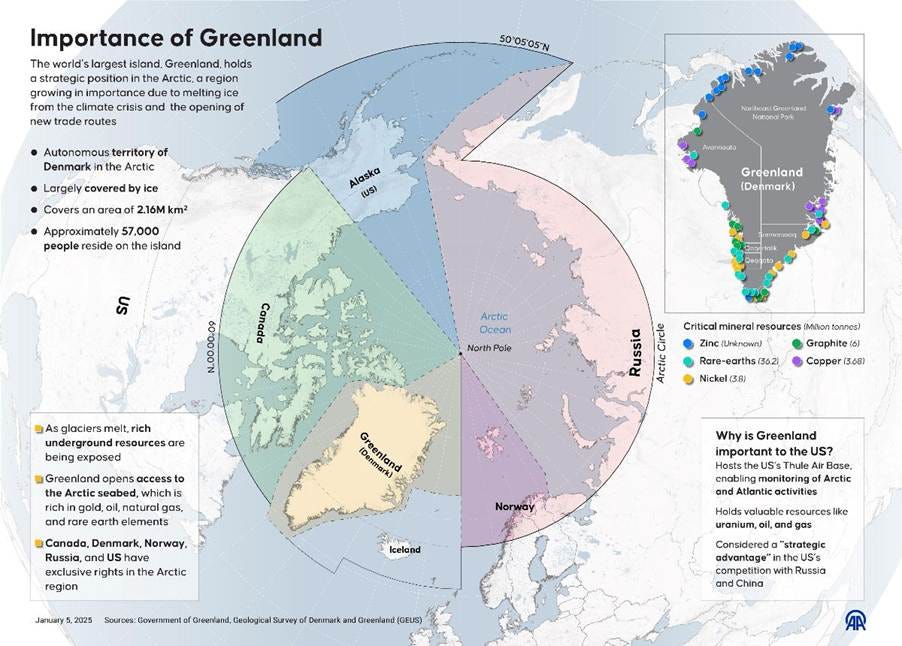
Geopolitically, Greenland is the Arctic’s crown jewel, sitting like a giant sentinel between North America, Europe, and the emerging northern shipping routes. As climate change thaws the ice, the Northwest Passage—a shortcut from Asia to Europe—could shave thousands of kilometers off global trade routes, potentially revolutionizing shipping. Imagine container ships zipping past Greenland’s shores instead of slogging through the Panama Canal. Whoever controls access here holds a golden ticket to future commerce and influence.
But it’s not all smooth sailing. Russia’s revamped Northern Fleet prowls these waters, and China’s “Snow Dragon” expeditions signal their Arctic ambitions. Trump sees Greenland as a buffer against this “Arctic race,” arguing U.S. control would lock down the GIUK Gap (Greenland-Iceland-UK), a Cold War-era chokepoint for monitoring subs and missiles. Fun fact: This isn’t new—back in 1946, President Harry Truman secretly offered Denmark $100 million for Greenland (about $1.5 billion today), fearing Soviet encroachment. Denmark said no, but it planted the seed for ongoing U.S. interest.
In 2026, Trump’s threats of 10% tariffs on Denmark and allies like Norway (escalating to 25% by June) are pressuring Europe to negotiate. Greenlanders, meanwhile, are leveraging this for more autonomy—talk about turning lemons into limelight. For a visual of this strategic hotspot, check out this map highlighting Greenland’s pivotal Arctic position.
dredfern.substack.com (Geopolitics in the Arctic – by David Redfern)
For more on Arctic geopolitics, head to the Belfer Center’s explainer: belfercenter.org/research-analysis/explainer-geopolitical-significance-greenland.
The Security Perspective: From Cold War Bases to Modern Missile Shields
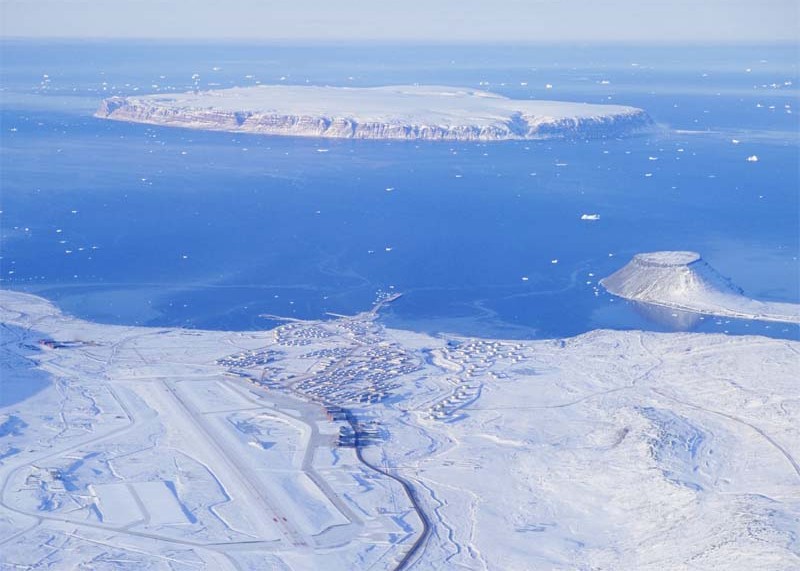
Security-wise, Greenland is America’s unsung Arctic fortress. The U.S. already has a foothold at Pituffik Space Base (formerly Thule Air Base), a relic of WWII and the Cold War where radars track missiles and satellites spy on space threats. It’s part of NATO’s defense umbrella, with Denmark handling sovereignty but the U.S. providing the muscle. Trump’s 2026 push frames this as insufficient— he claims Denmark isn’t pulling its weight, echoing his first-term gripes about NATO spending.
Picture this: In the 1950s, the U.S. Joint Chiefs of Staff eyed Greenland for its proximity to potential Soviet attack paths. Today, with Russia’s Ukraine invasion fracturing Arctic cooperation (prompting Finland and Sweden to join NATO), Greenland’s role in deterring naval incursions is hotter than ever. China, too, is sniffing around with research stations that could double as dual-use outposts. Trump’s not-so-subtle military hints? They’re stirring fears of a NATO fracture, but proponents argue U.S. annexation could fortify the alliance against these foes.
Anecdote alert: During Trump’s 2019 bid, Greenland’s leaders quipped, “We’re open for business, not for sale,” turning a diplomatic snub into a viral meme. In 2026, with tariffs looming, European leaders like UK’s Keir Starmer are calling it “counterproductive,” while Trump retorts, “You’ll find out.” High drama!
Here’s an aerial shot of Thule Air Base to illustrate its remote, rugged importance.
en.wikipedia.org (Pituffik Space Base – Wikipedia)
Dive deeper at the CSIS analysis: csis.org/analysis/greenland-rare-earths-and-arctic-security.
The Economic Dimension: Rare Earths, Resources, and Riches Under Ice
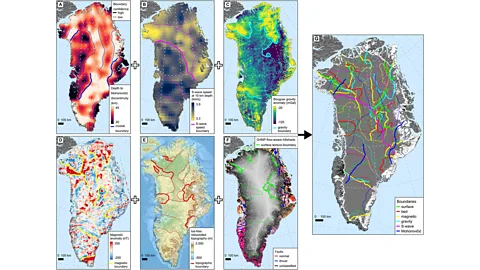
Economically, Greenland is a treasure trove waiting to melt. Beneath its ice sheet lie vast deposits of rare earth elements—critical for everything from EVs to fighter jets—plus oil, gas, and minerals like uranium and zinc. As ice recedes, mining becomes viable, potentially turning Greenland from a subsidy-dependent territory (Denmark foots about half its budget) into an economic powerhouse. Trump eyes this as a way to counter China’s rare earth monopoly, estimating Greenland’s resources could secure U.S. supply chains for decades.
Flashback to 2020: Post-2019 rejection, the U.S. dangled a $12 million aid package for Greenland’s development, a sly “not-buying-but-investing” move. In 2026, with Trump’s envoy Jeff Landry on the ground, talks focus on infrastructure like ports and airports. Greenlanders dream of independence, but mining brings environmental risks—think indigenous Inuit communities protesting pollution. Trump’s tariff threats? They’re economic coercion, potentially costing Europe billions while boosting U.S. leverage.
Quirky episode: Trump once tied his Greenland frustration to not getting a Nobel Peace Prize, texting Norway’s PM that he’s no longer thinking “purely of peace.” Petty? Yes. Effective? It’s got Europe scrambling.
Visualize the mining potential with this image of Greenland’s resource sites.
bbc.com (The mineral riches hiding under Greenland’s ice)
Explore more at BBC Future: bbc.com/future/article/20250121-the-enormous-challenge-of-mining-greenland. (Note: Images sourced from public domains with no known copyright issues.)
International Relations: Alliances on Thin Ice
On the international front, Trump’s Greenland quest risks shattering post-WWII norms. Denmark and Greenland insist it’s not for sale, viewing annexation as an act of war that could implode NATO. European allies are united in outrage—tariffs on Denmark, Norway, et al., could spark a trade war, hiking prices and straining transatlantic ties. The EU’s stepped up with its own Greenland office and raw materials partnerships, positioning itself as a “respectful” alternative to U.S. strong-arming.
Yet, there’s opportunity: Greenland uses this spotlight to push for more global dialogue, from climate pacts to trade deals. Trump’s refusal to rule out force echoes historical U.S. expansions (Alaska in 1867 was called “Seward’s Folly” but proved prescient). In 2026, with markets tumbling over tariff fears, leaders like France’s Macron propose G7 talks including Russia—ironic, given Arctic tensions.
Memorable tidbit: Trump’s 2025 Davos appearance, where allies descended to defuse the drama, turned into a tariff tango. As one analyst quipped, it’s “Monopoly meets Risk on ice.”
Symbolizing the diplomatic tangle, here’s an image of U.S., Denmark, and Greenland flags intertwined.

dreamstime.com (Greenland Map with Denmark, Greenland and USA Flag. Political …)
For insights, visit the Atlantic Council: atlanticcouncil.org/dispatches/the-us-and-nato-can-avoid-catastrophe-over-greenland-and-emerge-stronger-heres-how.
In wrapping up, Trump’s 2026 Greenland pursuit is a high-wire act blending ambition, risk, and opportunity. It could redefine Arctic power or unravel alliances—stay tuned, as “something’s going to work out,” per Trump. But one thing’s clear: In a warming world, this icy island is heating up global politics.