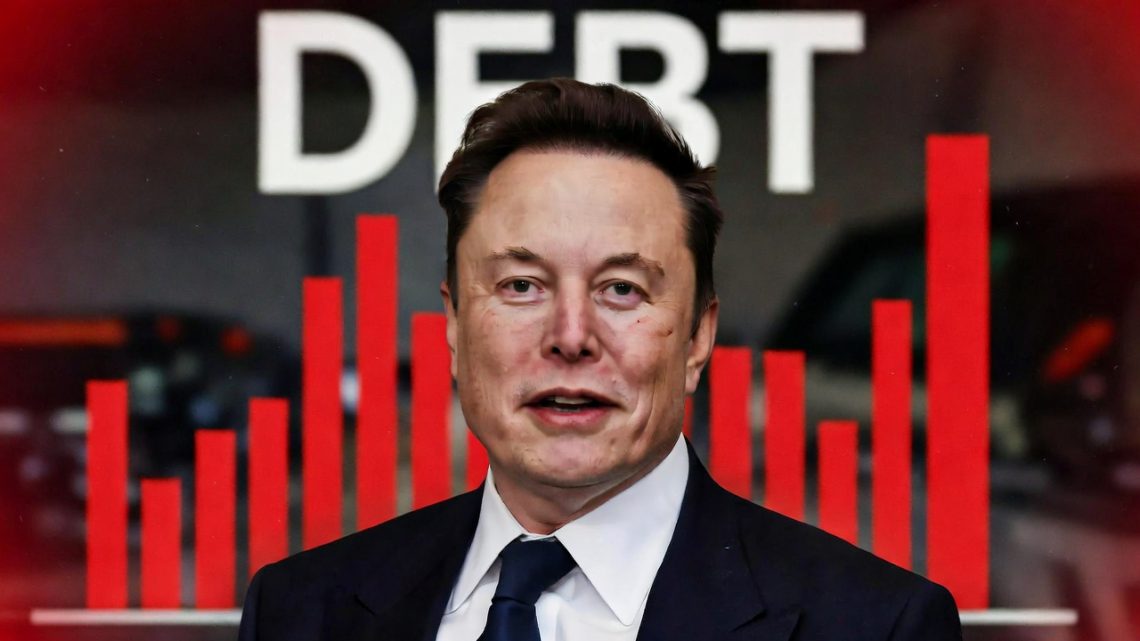
In the midst of a rapidly evolving economic landscape, Elon Musk’s recent stark warning about the US Debt Crisis has captured global attention. Speaking on a podcast in early February 2026, Musk declared that the United States is “1,000% going to go bankrupt” without revolutionary advancements in AI and robotics to fuel economic growth. This Elon Musk Warning underscores the urgency of addressing the Fiscal Reckoning that looms over America’s financial future. As the national debt spirals, understanding the current state, growth rate, repayment strategies, and efforts under the Trump administration is crucial for grasping this impending US Debt Crisis.
(Image Description: Elon Musk in a contemplative pose, highlighting his serious demeanor amid discussions on the US Debt Crisis and Fiscal Reckoning.)
The Current State of the US Debt Crisis: A Ballooning Burden
The US Debt Crisis is no abstract concern—it’s a tangible reality with the national debt surpassing $38.5 trillion as of February 2026. According to the U.S. Treasury’s Fiscal Data, the total gross national debt stands at approximately $38.587 trillion, comprising $30.974 trillion in debt held by the public and $7.613 trillion in intragovernmental holdings. This staggering figure equates to about $115,395 per U.S. citizen, a per-capita burden that amplifies the Fiscal Reckoning Musk warns about.
Interest payments alone on this debt have eclipsed $1 trillion annually, exceeding the U.S. military budget—a point Musk emphasized in his Elon Musk Warning. The Joint Economic Committee reports that net interest as a share of outlays is projected at 13.85% in FY2026, rising to 14.52% by FY2028. This means that roughly 25% of federal tax revenue is now devoured by interest, leaving less for essential services and exacerbating the US Debt Crisis. The debt-to-GDP ratio has hit 100%, a precarious milestone that the Committee for a Responsible Federal Budget warns could trigger financial, inflation, or default crises without intervention.
An intriguing historical episode that mirrors today’s US Debt Crisis is the “Black Friday” gold panic of 1869. Financiers Jay Gould and Jim Fisk attempted to corner the gold market, driving prices sky-high until the government intervened, crashing the market and causing widespread ruin. This Gilded Age scandal, satirized in political cartoons showing Fisk “stirring up the animals” in the gold room, highlights how unchecked speculation and debt can lead to Fiscal Reckoning—much like Musk’s concerns about modern fiscal irresponsibility.

(Image Description: A vintage cartoon depicting the 1869 gold panic, illustrating early warnings of financial instability akin to today’s US Debt Crisis.)
Acceleration of the US Debt Crisis: Growth Rate Signals Imminent Fiscal Reckoning
The speed at which the US Debt Crisis is intensifying is alarming. Over the past year, the debt has grown by $2.35 trillion, averaging $6.43 billion per day or $74,378 per second. From $36 trillion in late 2025 to over $38.5 trillion now, this trajectory suggests the debt could hit $39 trillion by April 2026 if unchecked. Elon Musk’s Warning points to this exponential rise as “insane,” noting that without intervention, all tax revenue could soon service interest alone, leading to de facto bankruptcy.
The Bipartisan Policy Center’s Deficit Tracker reveals that interest payments on public debt have surged 13-14% in recent months, making it the fastest-growing federal expense amid elevated interest rates around 3.348%. This growth rate, fueled by persistent deficits exceeding $1 trillion annually, amplifies the Fiscal Reckoning. A fun yet sobering anecdote: In 2008, New York’s National Debt Clock ran out of digits when the debt hit $10 trillion, forcing a hasty upgrade. Today, with debt nearly quadrupling, it’s a reminder of how quickly the US Debt Crisis can escalate beyond control.
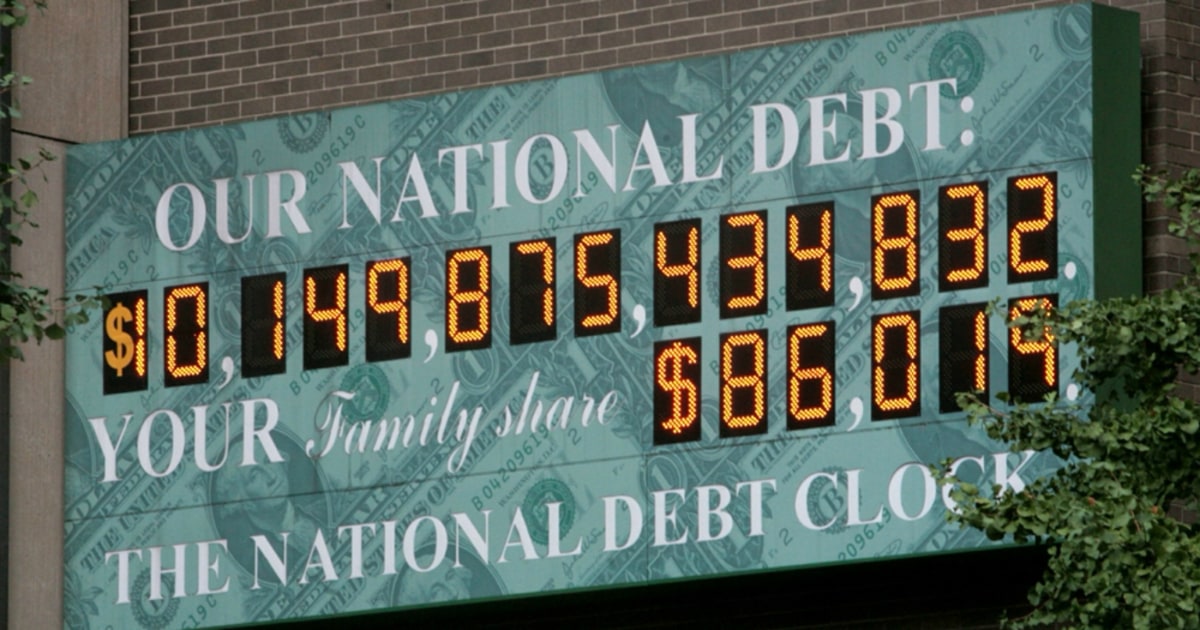
(Image Description: The iconic National Debt Clock in New York, symbolizing the relentless tick of the US Debt Crisis toward Fiscal Reckoning.)
Pathways to Repay the Debt: Averting Fiscal Reckoning Amid Elon Musk’s Warning
Addressing the US Debt Crisis requires multifaceted strategies to avoid the Fiscal Reckoning Musk predicts. Traditional methods include spending cuts, tax increases, and economic growth boosters. The RAND Budget Model outlines four core approaches: boosting GDP growth, raising revenue, cutting spending, or (as a last resort) defaulting—though Musk advocates AI and robotics as the “only” savior for the US Debt Crisis.
Spending cuts could target discretionary areas, but entitlements like Social Security and Medicare, which consume major portions, are politically thorny. The Committee for a Responsible Federal Budget’s Debt Fixer tool suggests $9.9 trillion in deficit reductions to stabilize debt at 100% of GDP by 2036. Tax hikes, such as a 5% VAT or limiting deductions, could generate trillions, per CBO options. Economic growth via innovation aligns with Elon Musk’s Warning: AI could offset deficits by supercharging productivity.
A whimsical historical parallel: During World War II, the U.S. debt-to-GDP ratio soared to 119%, but post-war growth and fiscal discipline reduced it. Today’s US Debt Crisis demands similar resolve to prevent Fiscal Reckoning. Public contributions, like gifts to the Treasury, exist but are drops in the ocean—over $1 million in FY2026 so far.
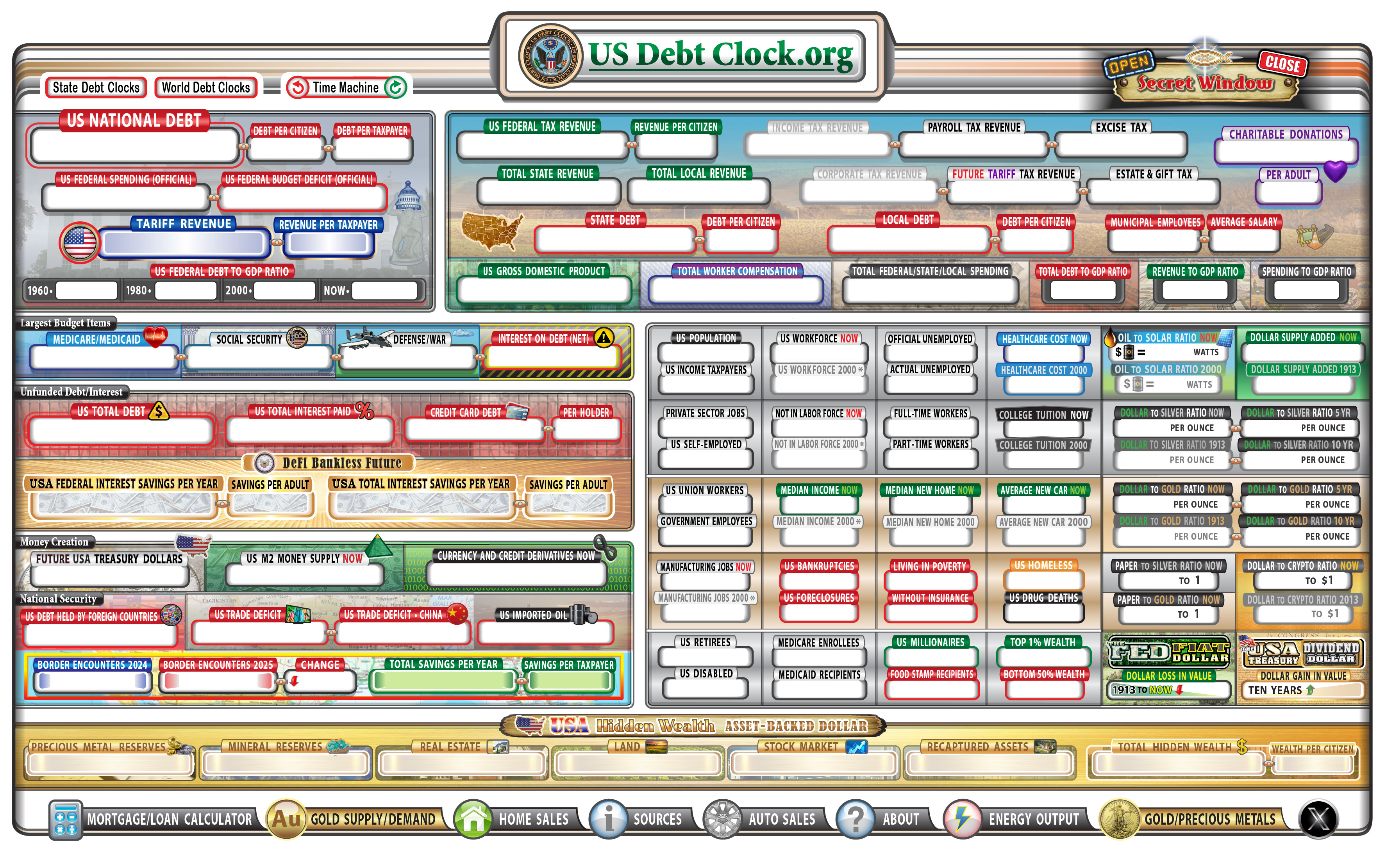
(Image Description: A detailed US National Debt Clock dashboard, visualizing the scale of the US Debt Crisis and impending Fiscal Reckoning.)
Trump Administration’s Efforts: Battling the US Debt Crisis Under Elon Musk’s Scrutiny
The Trump administration’s approach to the US Debt Crisis has been mixed, drawing scrutiny in light of Elon Musk’s Warning. The One Big Beautiful Bill Act (OBBBA), passed in 2025, added up to $3 trillion to the debt over a decade, per CBO estimates, by extending tax cuts and increasing spending. However, it aimed to slash deficits through growth, projecting a drop in debt-to-GDP to 94% by 2034 via tariffs and deregulation.
Tariffs have boosted revenue to $300-400 billion annually, but analysts note they cover only a fraction of interest costs. The Department of Government Efficiency (DOGE), co-led by Musk, has identified waste, such as pausing student debt collections (costing $5 billion/year) and cutting foreign aid, including to Australian universities—a move Musk quipped about on X, highlighting global subsidies amid the US Debt Crisis.
An entertaining episode from Trump’s first term: In 2017, he claimed the debt fell $12 billion in his first month, but it was a routine fluctuation. Today, with debt at WWII levels without a war, as David Sacks noted, the administration’s Fiscal Reckoning efforts via DOGE aim to trace “insane” waste. Despite adding $2.25 trillion in his first year back, Trump’s team emphasizes tariffs and efficiency to mitigate the US Debt Crisis.
:max_bytes(150000):strip_icc()/TrumpImages2-48eed3e751694461848df9a4b93a452a.jpg)
(Image Description: Collage of Donald Trump with fiscal elements like taxes and tariffs, representing efforts against the US Debt Crisis.)
Conclusion: Heeding Elon Musk’s Warning to Sidestep Fiscal Reckoning
Elon Musk’s Warning serves as a clarion call: The US Debt Crisis, with its $38.5 trillion burden and relentless growth, demands immediate action to avert Fiscal Reckoning. By blending spending discipline, revenue enhancements, and growth via AI, America can navigate this storm. The Trump administration’s initiatives, though imperfect, offer a starting point. As Musk urges, innovation may be our salvation—lest the debt consume us all.
A lighter note: Remember the 2011 debt ceiling cartoon showing Uncle Sam eyeing a “Fiscal Crisis” bomb atop the Capitol? It’s a timely reminder that political brinkmanship has long fueled the US Debt Crisis, but collective resolve can defuse it.

(Image Description: A political cartoon of Uncle Sam facing a fiscal crisis bomb, echoing the ongoing US Debt Crisis and Fiscal Reckoning.)
Sources and Links
- Fortune on Musk’s Warning: https://fortune.com/2026/02/07/elon-musk-us-bankruptcy-ai-robotics-economic-growth-national-debt-crisis
- U.S. Treasury Fiscal Data: https://fiscaldata.treasury.gov/datasets/debt-to-the-penny
- Joint Economic Committee: https://www.jec.senate.gov/public/index.cfm/newsroom?ID=306E21B5-175A-4812-805F-EAC5EEDEB800
- CRFB on Fiscal Crisis: https://fortune.com/2026/01/22/how-big-national-debt-when-recession-financial-crisis-could-hit
- RAND on Debt Reduction: https://www.rand.org/pubs/research_reports/RRA2614-4.html
- CRFB Debt Fixer: https://www.crfb.org/debtfixer
- CBO Options: https://www.pgpf.org/article/76-options-for-reducing-the-deficit
- White House on OBBBA: https://www.whitehouse.gov/articles/2025/06/the-one-big-beautiful-bill-slashes-deficits-national-debt-while-unleashing-economic-growth
- Fortune on Trump Debt Addition: https://fortune.com/2026/01/20/how-much-national-debt-grew-trump-first-year-back-in-office-president
- Musk’s X Post on DOGE: https://x.com/elonmusk/status/1890893763645481118