In the whirlwind of American history, few monetary marvels are as peculiar as the US 3-cent fractional currency note. This tiny slip of paper, born from the desperation of the Civil War, bridged a gaping coin shortage and kept everyday life ticking. Far from a dusty relic, it’s packed with tales of ingenuity, scandal, and survival hacks that make it a standout in numismatic lore. We’ll explore its depths with verified facts, laced with lively anecdotes, all while crafting this as a sleek blog post primed for search engines. Think of it as your gateway to understanding how three measly cents shaped a nation’s pocket change—without a yawn in sight.
The Spark: How a War Turned Coins into Ghosts
The Civil War (1861-1865) didn’t just divide the nation; it vaporized its small change. Panicked citizens hoarded gold, silver, and copper coins for their metal value, leaving merchants and post offices in a bind. By 1862, buying a simple 3-cent stamp—set at that price since 1851—became a hassle without exact coins. Congress fired back with the Act of July 17, 1862, birthing Fractional Currency: paper notes under $1 to plug the gap.
The 3-cent note emerged solely in the Third Issue, spanning December 5, 1864, to August 16, 1869. Part of five total issues running until 1876, these notes totaled $368 million in face value, with millions of 3-cent pieces printed—though their fragile paper meant many vanished over time. Nicknamed “shinplasters” for their thin, easily torn quality, they were jokingly said to line shoes or patch wounds—Civil War soldiers reportedly used them as impromptu bandages in the field! Picture a Union trooper fumbling for first aid, only to improvise with his spare change—what a testament to wartime grit.
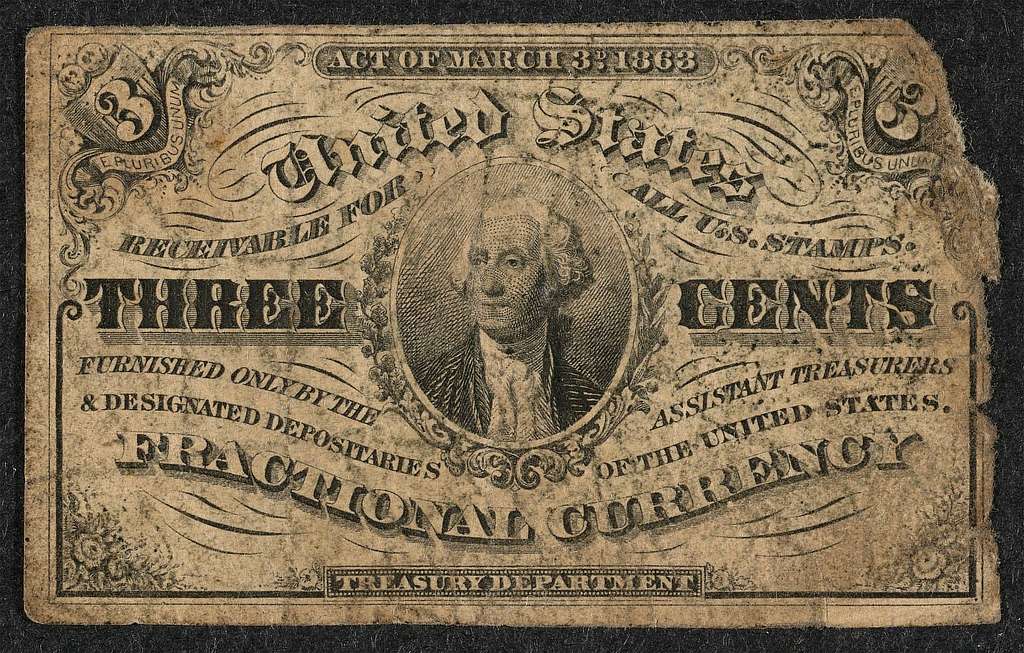
1863 Fractional Currency 3 THREE Cents George Washington Nice Note! JRFL | eBay (A classic depiction of the Third Issue 3-cent note, featuring George Washington’s steady gaze—public domain for historical enthusiasts.)
Crafted for Crisis: Design Details That Deterred Deceit
Measuring a compact 2.5 by 1.5 inches, the 3-cent note was a design triumph amid chaos. Its front showcased George Washington’s portrait—the only denomination in the Third Issue to exclusively honor the first president. Printed on plain or fiber paper by the American Bank Note Company and others, it bore “Act of March 3d, 1863” and a pledge for stamp redeemability. The back featured a green wreath encircling “THREE,” a clever anti-counterfeiting measure in an era rife with fakes.
Innovation shone through with hand-signed signatures from Treasury officials, adding a layer of authenticity. But drama lurked nearby: In the same issue, Spencer M. Clark, head of the National Currency Bureau, cheekily placed his own likeness on the 5-cent note after a vague “Clark” directive (meant for explorer William Clark). This self-portrait sparked congressional fury, birthing a law against living people on currency! The 3-cent note dodged the bullet by sticking with Washington, but the scandal underscores the wild creativity of the time.
In Action: From Stamps to Survival
These notes weren’t mere stand-ins; they powered daily life, from postage to petty purchases, amid inflation that sometimes slashed their value to a third. Yet by 1865, nickel tycoon Joseph Wharton pushed for a copper-nickel 3-cent coin (the “trime”) to phase them out, targeting the unpopular paper versions. The last Fractionals bowed out by 1876, with nearly $1.8 million still unredeemed and oddly legal tender today.
Anecdotes add flavor: Troops repurposed the lightweight notes as poker chips during camp lulls, injecting levity into grim days. Counterfeiters pounced, forcing swift redesigns. And trace its roots? The 3-cent concept echoed the 1848 California Gold Rush, proposed alongside a $20 gold coin to manage the metal boom. It’s a reminder that even tiny tender ties into golden epics.
Collector’s Corner: Value in the Vintage
For modern hunters, the 3-cent note is an accessible treasure. Everyday examples trade for $20-$50, but pristine Fr#1226 variants in top grades like PMG 65 EPQ can command $200 or more, prized for fiber paper or signature quirks. Their rarity owes to that notorious fragility—think “fish scales” for the related silver coins, but paper-thin here.
TV twists: On Pawn Stars-style shows, these notes have stunned with appraisals up to $2,000, revealing forgotten fortunes in attics. And fun fact—the silver 3-cent predecessor earned “trime” for its trim size, mirroring the note’s compact charm.
Lasting Legacy: Three Cents of Timeless Insight
The US 3-cent fractional note transcends its era, symbolizing how adversity fuels adaptation—from hoarded coins to paper lifelines laced with scandal and savvy. It’s a nudge that small change can spark big stories. Dive into collecting one; it might just pocket you a piece of history.