The US $10 Eagle gold coin stands as more than just currency—it’s a gleaming artifact of America’s economic evolution, artistic prowess, and adventurous spirit. Spanning from 1795 to 1933, this coin has witnessed gold rushes, wars, and presidential visions, making it a favorite among 40s and 50s enthusiasts searching for terms like “US gold coin value,” “rare Eagle gold coins,” “gold coin investment strategies,” “vintage American gold eagles,” “Liberty Head Eagle history,” “Saint-Gaudens gold coin,” and “collectible US coins appraisal.” Let’s uncover the allure of this iconic coin without a dull moment.
The Origins: Birth of the Eagle in America’s Early Days (1795-1804)
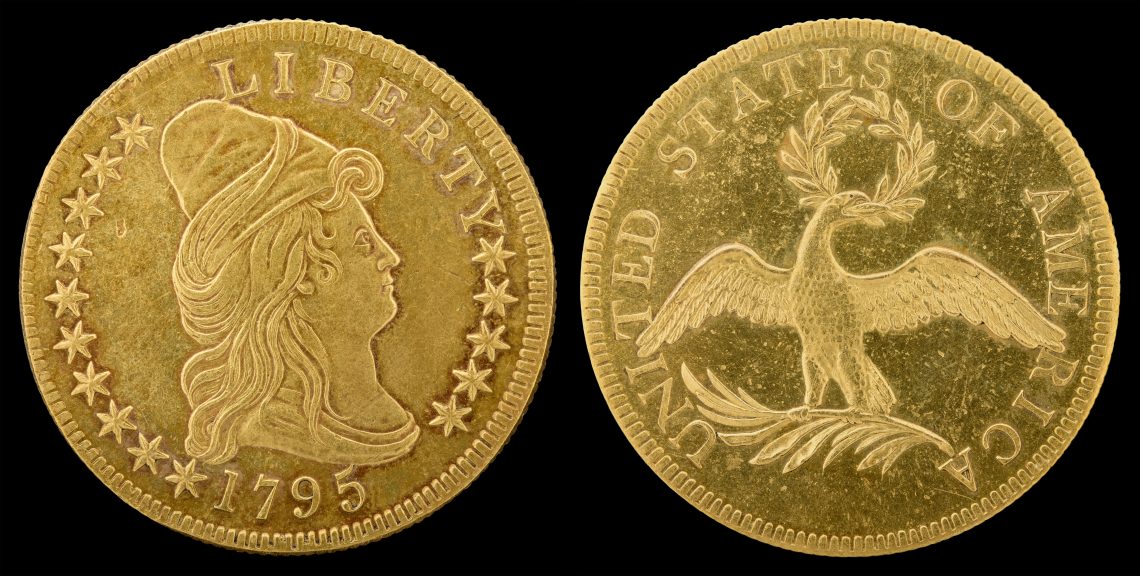
The $10 Eagle was born from the Coinage Act of 1792, establishing the US dollar and its gold counterpart—the Eagle—as the foundation of American currency. Named after the majestic bird symbolizing freedom, it contained 0.48375 troy ounces of gold (91.67% pure, alloyed with copper for durability). The first minting occurred in 1795 at the Philadelphia Mint, with designs by Robert Scot: Liberty wearing a turban-like cap on the obverse (earning it the “Turban Head” nickname) and a small eagle on the reverse.
Production was limited—only about 5,583 coins in 1795—due to early economic instability and gold shortages. By 1804, international gold price fluctuations led President Jefferson to halt minting, as coins were melting abroad for profit. This gap created rarities; the 1804 Eagle, with just a handful known, fetched over $5 million at auction in recent years, a testament to its scarcity.
A fun episode: Legend has it that some 1804 Eagles were struck later as diplomatic gifts, turning them into “numismatic mysteries.” Imagine a coin minted in the 1830s but dated 1804—it’s like a time-traveling artifact! Collectors in their 40s and 50s, often seeking “rare US gold coins history,” prize these for their intrigue and investment potential. Values today? Circulated examples start at $50,000, while uncirculated can exceed $1 million.
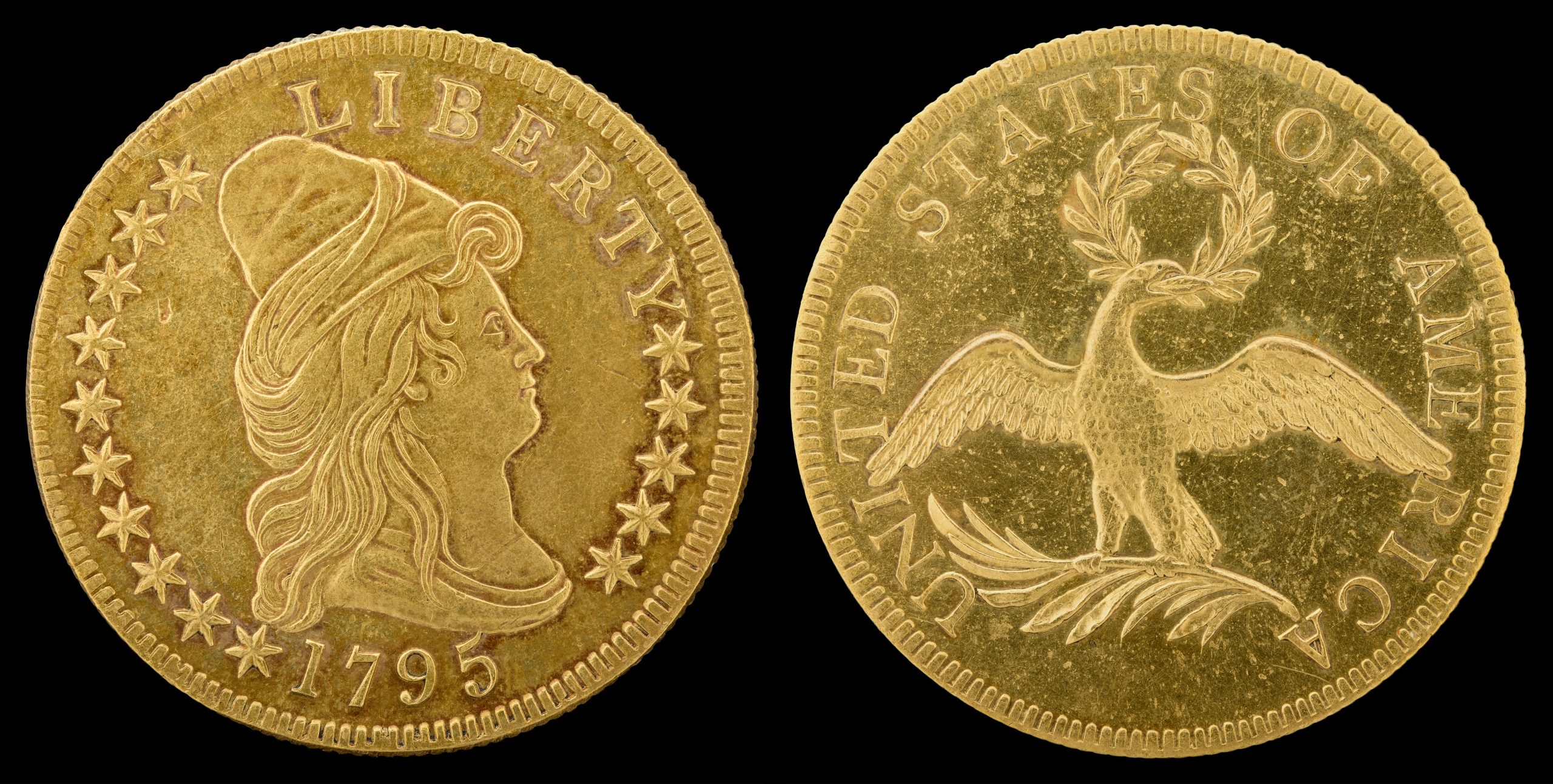
File:NNC-US-1795-G$10-Turban Head (small eagle).jpg – (This public domain image showcases the classic Turban Head design, evoking the raw ambition of young America. Source: Wikimedia Commons)
Revival and Refinement: The Liberty Head Era (1838-1907)
After a 34-year hiatus, the Eagle soared back in 1838 amid the California Gold Rush’s bounty. The Coinage Act of 1834 adjusted gold content to prevent melting, and Christian Gobrecht’s Liberty Head design debuted: a coronet-crowned Liberty on the front, with a heraldic eagle on the back. This era splits into subtypes—No Motto (1838-1866) and With Motto (1866-1907), the latter adding “IN GOD WE TRUST” post-Civil War for national unity.
Minted in Philadelphia, New Orleans (O mintmark), San Francisco (S), and Denver (D), these coins fueled westward expansion. The 1854-S Eagles, born from Gold Rush gold, embody frontier tales—miners trading them in saloons or hiding them in claim stakes. One quirky story: In 1875, only 100 Philadelphia Eagles were struck due to economic woes, making them ultra-rare; a PCGS AU53 sold for $1.02 million in 2022, shattering records until surpassed by an 1870-CC.
Values vary by date and condition. Common No Motto pieces in About Uncirculated (AU) fetch $1,000-$2,000, while rarities like the 1873 (mintage 100) climb to $100,000+. With Motto types, abundant yet elegant, offer entry points for “gold coin collecting beginners” at $1,200+ in AU. Their longevity—nearly 70 years—mirrors America’s industrial rise, a draw for mid-life investors eyeing “stable gold investments 2026.”
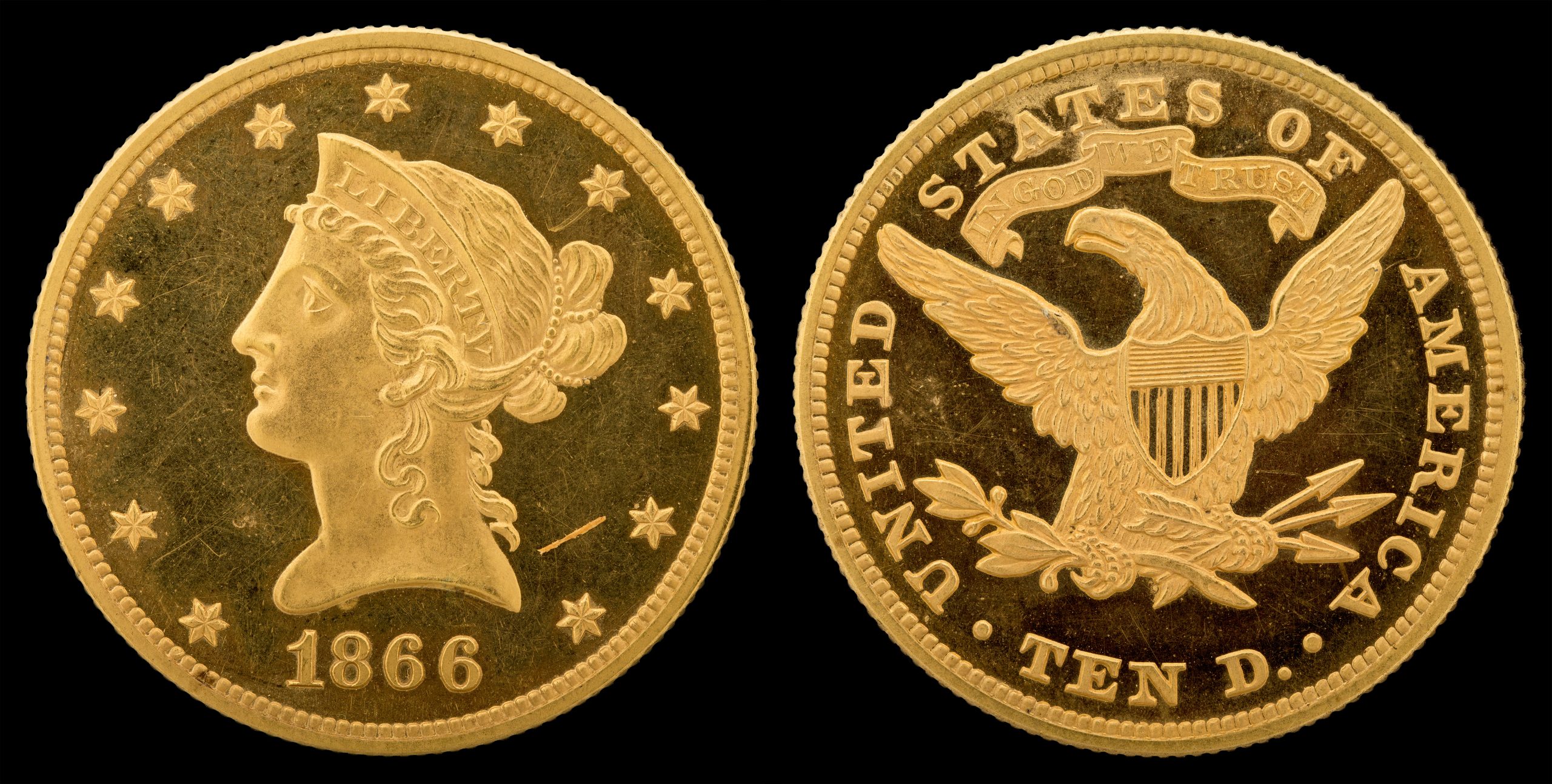
File:NNC-US-1866-G$10-Liberty Head (new style & motto).jpg – (Behold the refined Liberty Head with Motto, a symbol of post-war resilience in this public domain depiction. Source: Wikimedia Commons)
Artistic Revolution: The Indian Head Eagle (1907-1933)
In 1907, President Theodore Roosevelt, a coin enthusiast, enlisted sculptor Augustus Saint-Gaudens to revamp US currency for classical beauty. The result? The Indian Head Eagle—Liberty in a Native American headdress (inspired by a Greek Nike figure) on the obverse, and a standing eagle on the reverse. Initially without “IN GOD WE TRUST” (Roosevelt deemed it irreverent), Congress mandated its addition in 1908.
Saint-Gaudens, battling cancer, completed the design with Roosevelt’s encouragement via letters—a poignant collaboration. The 1907 high-relief prototypes, with Roman numerals, are masterpieces; one sold for millions. But the era ended dramatically in 1933 when FDR’s Executive Order 6102 banned gold hoarding, melting most Eagles. Survivors like the 1933 Indian Head became legends—a single example legally owned fetched $18.9 million in 2021!
Episodes abound: Roosevelt’s redesign sparked controversy, with critics calling the headdress “un-American,” yet it endures as art. For collectors searching “Saint-Gaudens Eagle value,” common dates in Mint State (MS) start at $1,500, but keys like 1911-D hit $50,000+. It’s a blend of beauty and rarity, perfect for “premium gold coin portfolios.”
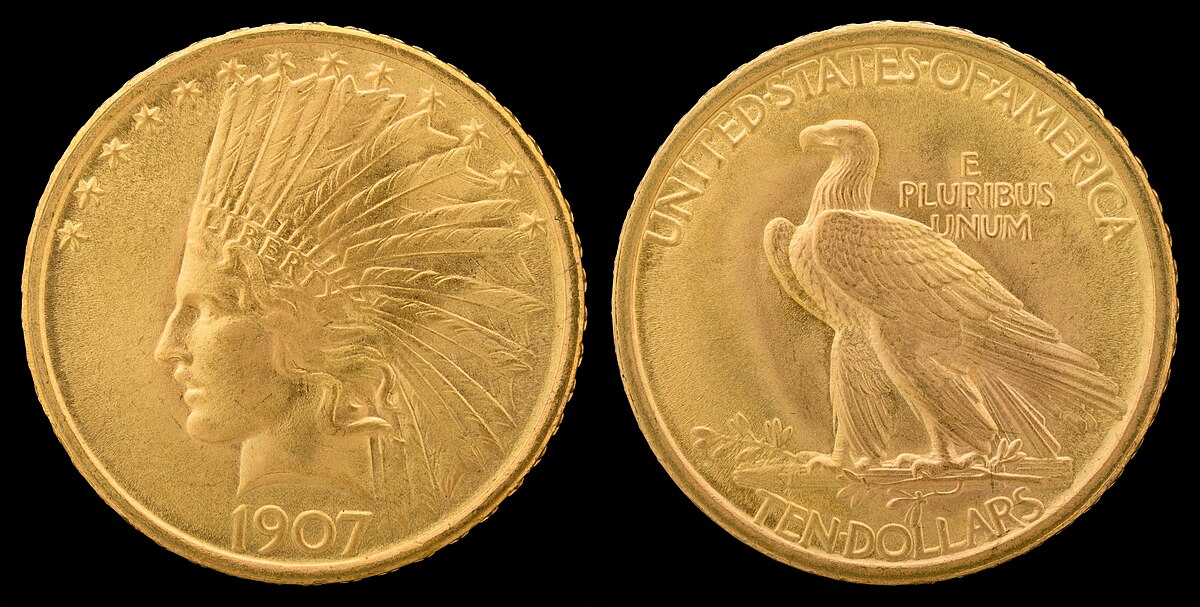
File:NNC-US-1907-G$10-Indian Head (no motto).jpg – Wikimedia Commons (This striking public domain image captures the bold Indian Head design, a Roosevelt-era innovation. Source: Wikimedia Commons)
Collecting and Investing: Why the $10 Eagle Captivates Today
For 40s and 50s readers exploring “US Eagle gold coin appraisal” or “rare coin market trends,” the Eagle offers dual appeal: historical depth and financial hedge. Gold’s intrinsic value (tied to spot prices around $2,500/oz in 2026) plus numismatic premiums make it smart. Tips: Seek PCGS or NGC grading for authenticity; focus on mintmarks for variety. Rarities like branch-mint issues (e.g., Carson City) add thrill.
A standout tale: The 1933 Eagles’ “forbidden fruit” status—most destroyed, a few smuggled— inspired heist-like stories, including FBI seizures. One coin, once owned by Egypt’s King Farouk, was legalized after decades of drama!
In essence, the $10 Eagle isn’t just metal—it’s America’s narrative in gold. Whether you’re a seasoned collector or curious investor, its stories and stability shine.