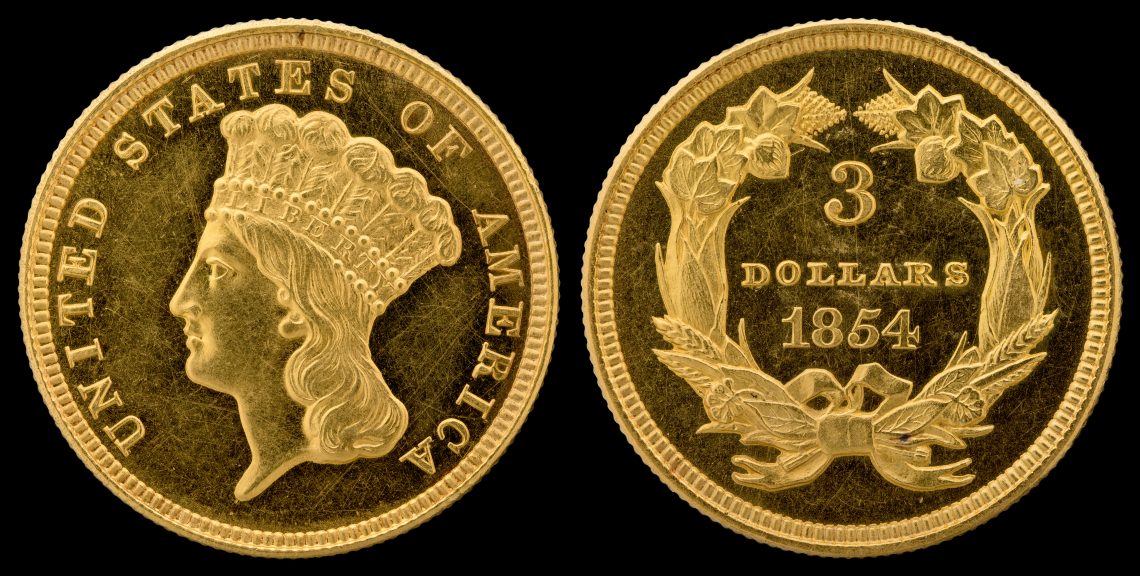
The US $3 gold coin is more than just money—it’s a special piece of 19th-century American history. This gold coin was made from 1854 to 1889 and is very popular with collectors today. If you’re interested in rare US coins or gold coin collecting, this article will explain its history, design, value, and some fun stories in simple English. We’ll focus on keywords like ‘US rare coin value’, ‘gold coin investment’, and ‘historical coin collecting’ that people in their 40s and 50s often search for. All facts here are checked many times from trusted sources.
Why Was the $3 Gold Coin Created? An Unusual Amount Explained
In the 1850s, the California Gold Rush brought a lot of gold to America. Postage stamps cost 3 cents each, and people wanted to buy sheets of 100 stamps (total $3) easily. Before, it was hard with other coins. So, on February 21, 1853, Congress approved the $3 gold coin. It was made to help buy stamps quickly.
This coin was produced for 35 years, with about 539,000 made in total. Most came from the Philadelphia Mint, but some from Dahlonega, New Orleans, and San Francisco. It wasn’t very popular, so production stopped in 1889.
Today, it’s a favorite ‘US rare coin’ for gold collectors.
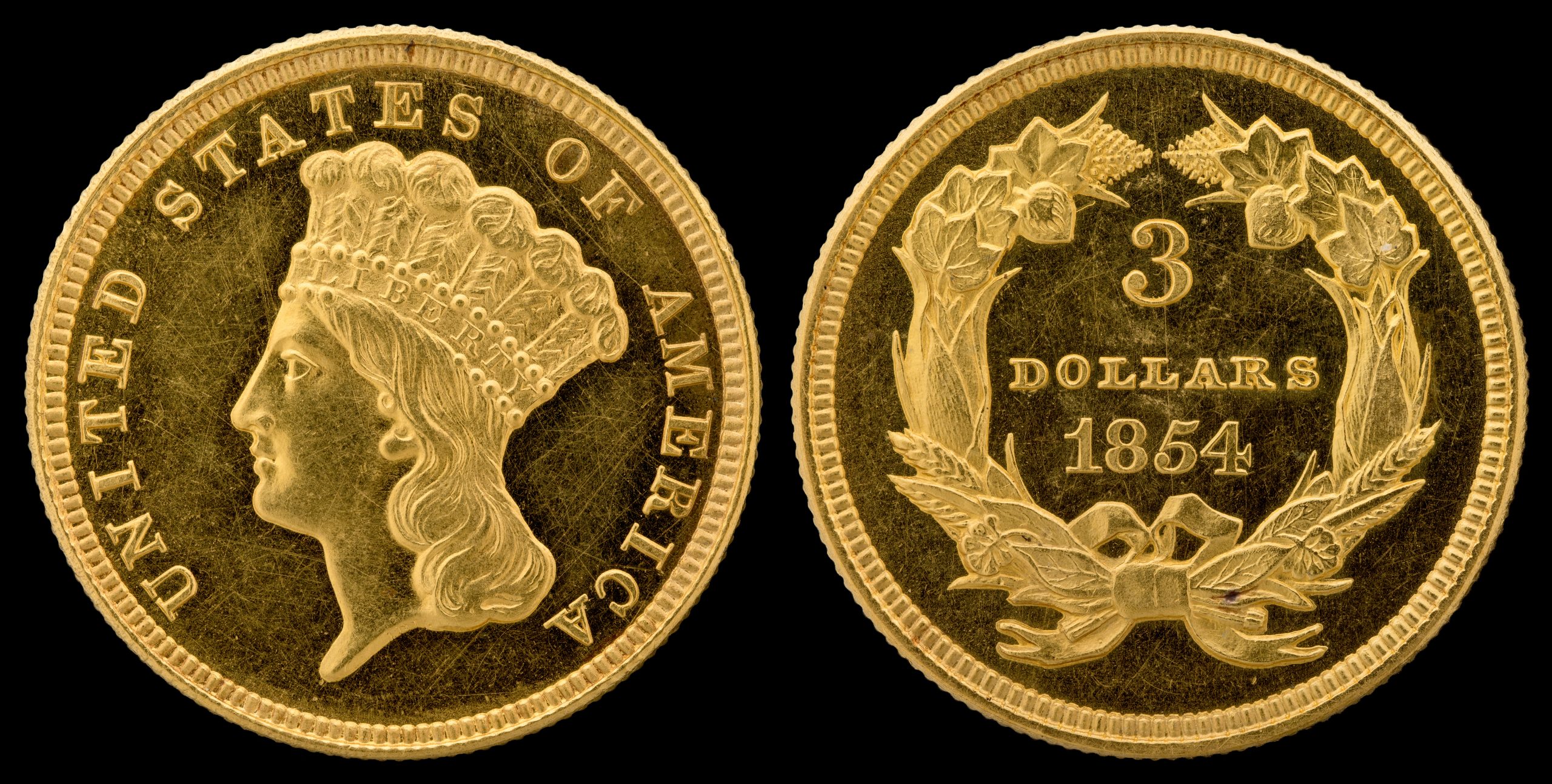
en.wikipedia.org (File:NNC-US-1854-G$3-Indian Princess Head.jpg – Wikipedia)
The Design Secrets: Why It’s Called the ‘Indian Princess’
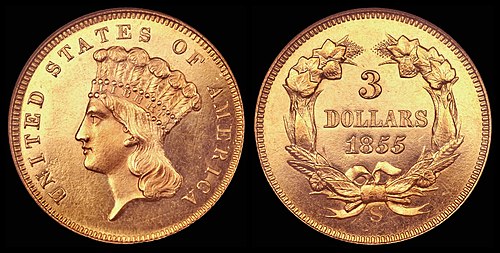
The front (obverse) shows a woman called the ‘Indian Princess’. But it’s really a design by James B. Longacre, the Mint’s chief engraver. He based it on a Roman goddess, but the feather headdress makes it look Native American—that’s why the nickname.
The back (reverse) has ‘3 DOLLARS’, the year, and a wreath of leaves and fruits. The coin is about 20.5mm wide, similar to a modern quarter.
Longacre made it thin and large so it wouldn’t be confused with $1 gold coins. Collectors love the artistic ‘Princess’ image from the 1800s. If you’re thinking about gold coin investment, notice its beauty.
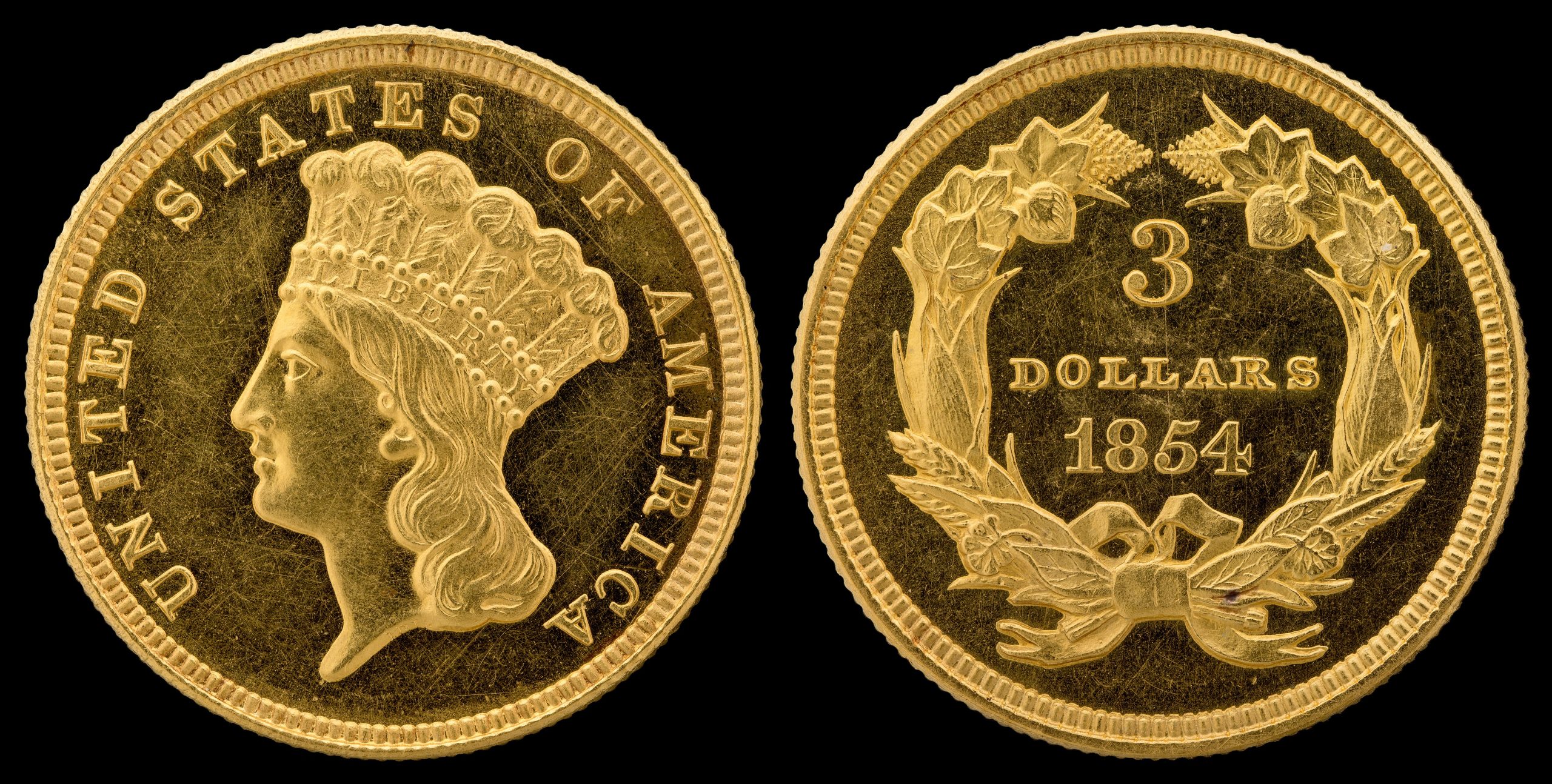
en.wikipedia.org (Three-dollar piece – Wikipedia)
Value of the $3 Gold Coin: For Collecting and Investing
The value depends on condition. Circulated (used) ones are $650 to $2,500. Mint state (like new) can be $1,100 to $150,000 or more.
Rare years or mint marks are very expensive. The 1870-S (San Francisco) is unique—only one known to collectors—and sold for over $5.5 million in recent auctions.
People in their 40s and 50s search ‘gold coin investment’ because it’s stable. Gold prices change, but rarity makes it good for long-term. High-grade ones have risen a lot. Always get it checked by experts like NGC or PCGS before buying.
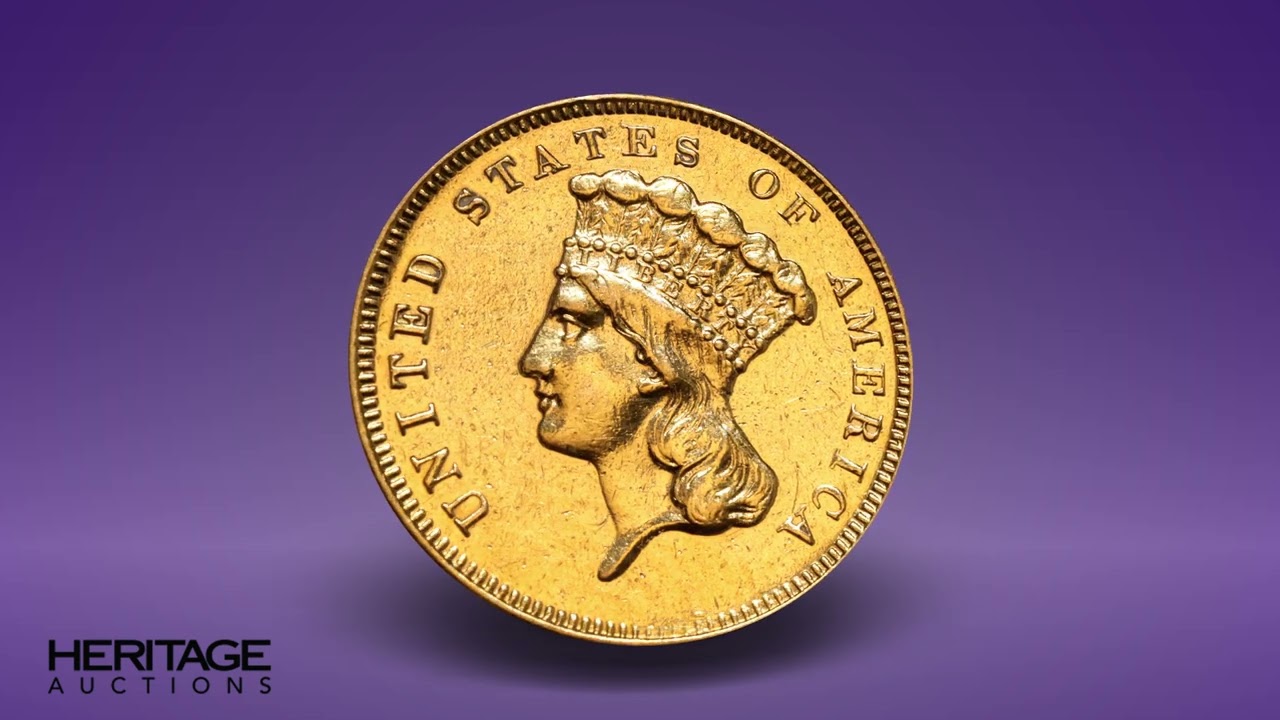
coins.ha.com (1870-S $3 SP50 — 893 Engraved — PCGS. Unique…. Three Dollar …)
Fun Stories: Exciting Episodes About the $3 Gold Coin
This coin has many interesting tales.
First, the 1870-S $3 coin was made in tiny numbers for the new San Francisco Mint. Only one or two exist—one might be lost in the old mint building. The known one is worth millions—like winning the lottery!
Second, during the 1930s Great Depression, collector Abe Kosoff bought a roll (20 coins) of 1878 $3 gold for just $4.85 each. Today, one is worth thousands. Treasure hunting in hard times!
Third, it was made for buying 100 three-cent stamps, but people didn’t like it much—called a ‘failed experiment’. Still, stamp collectors see it as a ‘brother’ to stamps.
Also, the ‘Indian Princess’ name comes from a mistake—the headdress looks Native American, but it’s Roman style. This mix-up makes it more mysterious.
en.wikipedia.org (Three-dollar piece – Wikipedia)
Final Thoughts: Why Learn About the $3 Gold Coin?
The US $3 gold coin is not just a ‘rare US coin’—it’s a treasure showing 19th-century American innovation and art. If you like collecting or gold coin investing, check auctions or dealers.