In the history of U.S. currency, the three-cent coin holds a unique place. This small coin reflects the economic and daily life changes in mid-19th-century America, and it remains a popular item among collectors today. In this article, we’ll explore the accurate historical facts of the U.S. three-cent coin in detail. If you’re interested in U.S. coin history or rare coins, this guide will be helpful.
The Birth of the Three-Cent Coin: Postage Rates and Economic Changes
The U.S. three-cent coin was first minted in 1851. Its creation was closely tied to changes in postal rates at the time. In 1851, U.S. postage rates dropped from 5 cents to 3 cents, creating a need for a convenient small-denomination coin to buy stamps. Previously, 1-cent and 5-cent coins dominated, but a new 3-cent value was required.
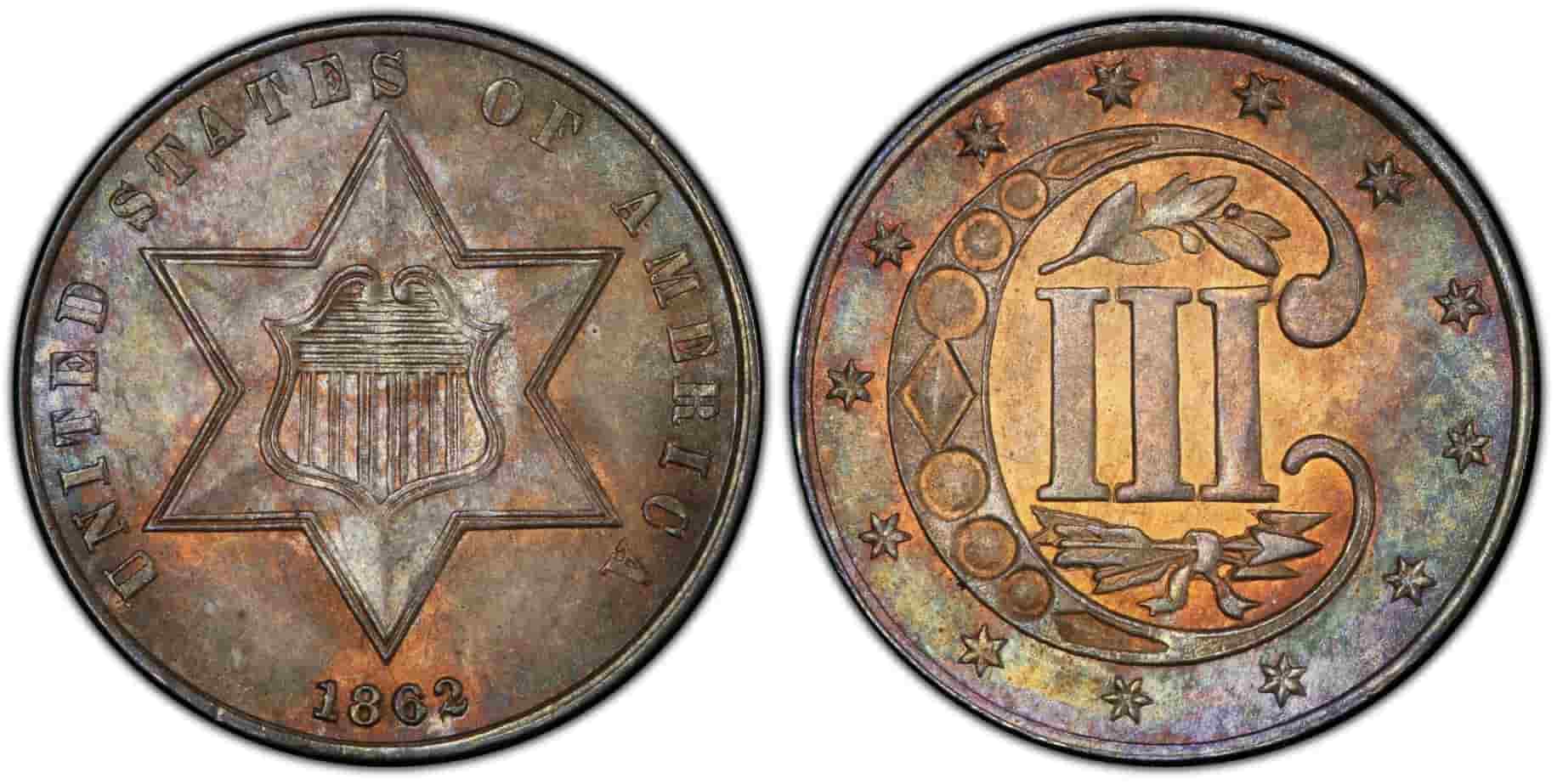
The early three-cent coins were made of silver and produced from 1851 to 1873. With a diameter of just about 14mm, this coin is recorded as the smallest in U.S. history. Its thin and small size earned it the fun nickname “fish scales.” This name came from its thin, shiny appearance.
Design and Evolution: From Silver to Nickel
The three-cent coin comes in two main types: silver and nickel versions.
- Silver Three-Cent Coin (1851-1873): The obverse features a shield inside a six-pointed star, and the reverse has the Roman numeral ‘III’ surrounded by a Roman-style wreath. The design evolved into three types; early versions (1851-1853) had no lines in the star, while later ones (1859-1873) added lines around the star for a more refined look. It weighed about 0.8g and was composed of 75% silver and 25% copper.
- Nickel Three-Cent Coin (1865-1889): During the American Civil War (1861-1865), silver shortages and hoarding led to the introduction of the nickel version in 1865. Made of 75% copper and 25% nickel, the obverse shows the head of Lady Liberty, and the reverse features the Roman numeral ‘III.’ With a diameter of 17.9mm, it was slightly larger than the silver version. About 31 million were minted over its production period, but minting stopped in 1889.
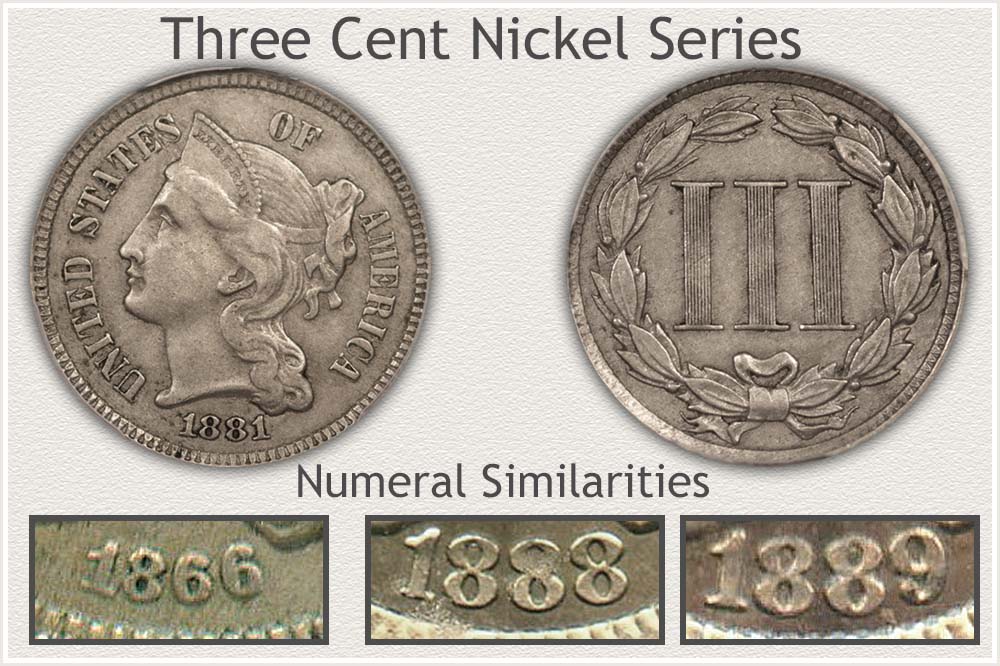
These design changes reflect the economic and political conditions of the era. For example, the silver version was prone to getting dirty and damaged during the war, contributing to the popularity of the nickel version.
Interesting and Fun Episodes: Hidden Stories of the Three-Cent Coin
The three-cent coin is more than just currency—it carries fun episodes from U.S. history. Here are some intriguing facts:
- The ‘Hero’ of Stamp Purchases: After the 1851 postage rate reduction, three-cent coins were mass-produced not only for stamps but also to facilitate small transactions. People called it the “postage coin,” and it was the most popular item at post offices. One episode notes that in the 1850s, some merchants profited greatly by using these coins to sell low-priced goods.
- The ‘Silver Shortage Crisis’ During the War: With silver coins hoarded and disappearing during the Civil War, the government rushed to introduce the nickel version. Interestingly, when the nickel coins first appeared, people mistook them for counterfeit money. In some areas, folks even bit the coins to check their authenticity!
- A ‘Treasure’ for Collectors: Today, three-cent coins are popular among collectors. For instance, rare versions of the 1873 silver three-cent coin have sold for tens of thousands of dollars at auctions. A famous episode is from a 2019 auction where an 1861 silver three-cent coin exceeded expected prices, proving its historical value despite its small size. Coin enthusiasts on communities like Reddit often share stories of completing sets, describing it as “a small piece of American history.”
- The ‘Filthy’ Nickname: The silver three-cent coin was so thin that it got dirty easily. Records from the 1860s show people calling it “filthy” and avoiding it. This ironically led to the nickel version’s success, but that “dirtiness” adds to the coin’s unique charm today.
These episodes show that the three-cent coin was a product of its time.
Conclusion: Modern Value and Legacy
The U.S. three-cent coin ceased production in 1889, but its legacy endures. Today, these coins trade in the collector’s market, valued from tens to thousands of dollars depending on condition.