The recent CBS News report on internal government documents has sparked widespread discussion in immigration circles. According to the exclusive obtained by CBS, the Trump administration is mandating enhanced security checks for broad categories of immigration applicants. U.S. Citizenship and Immigration Services (USCIS) has issued guidance directing officers to resubmit pending cases for expanded FBI background screenings and to pause approvals until the new enhanced vetting is complete.
This development centers on enhanced security checks (also referred to as enhanced background checks or enhanced vetting), a key policy shift aimed at strengthening national security in the U.S. immigration system.
What Exactly Did the Internal Documents Reveal?
Last week, USCIS distributed internal guidance instructing officers to take action on pending applications for various immigration benefits. These include asylum, green cards (adjustment of status), U.S. citizenship (naturalization), and family-based sponsorship petitions for relatives or fiancées of U.S. citizens or lawful permanent residents.
Officers must:
- Resubmit fingerprint-based screenings to the FBI if the original FBI information was received before April 27, 2026.
- Refrain from approving any pending cases that have not undergone the enhanced security checks.
- Skip resubmission only if they already plan to deny the application.
The change stems from the FBI granting USCIS greater access to its criminal history databases, following a February executive order from President Trump. This order directed the Department of Justice to maximize USCIS access to federal criminal records “to the maximum extent permitted by law.” USCIS spokesperson Zach Kahler confirmed the agency implemented “new security checks to strengthen the vetting and screening of applicants through expanded access to federal criminal databases.” Processing delays are expected to be “brief,” according to the agency, though real-world impacts often vary.
In simple terms, what was once considered sufficient background checks is now being upgraded to enhanced security checks across the board for fingerprint-required cases. This is not a blanket denial of applications but a systematic re-vetting using richer data from FBI systems like the Next Generation Identification (NGI) database.

Impact on Immigration Applicants: Delays, Uncertainty, and Heightened Scrutiny
For immigration applicants, the rollout of enhanced security checks brings immediate practical consequences. Pending cases for green cards, naturalization, asylum adjustments, and family petitions are now subject to re-submission of fingerprints for deeper criminal history review. This means:
- Processing delays: Even applicants who submitted months ago may see their cases paused while USCIS re-runs checks. Backlogs, already a chronic issue in the U.S. immigration system, could temporarily lengthen for affected categories.
- No applicant action required: USCIS is re-using existing fingerprints on file, so most individuals do not need to submit new biometrics unless specifically requested.
- Broader vetting scope: The enhanced background checks pull more comprehensive criminal history information, potentially flagging issues that standard screenings might have missed—ranging from minor offenses to serious disqualifying records.
Imagine waiting years for your green card interview, only to learn your file is now in limbo for enhanced vetting. One anecdotal parallel from past policy shifts involves a family-based applicant who had all paperwork perfect but faced unexpected delays due to a distant relative’s unrelated record surfacing in deeper database cross-checks. Such stories highlight how enhanced security checks can feel like moving the goalposts mid-game, even for those with clean records.
Another interesting episode: During earlier Trump-era enhanced vetting for refugees, some applicants from high-risk regions underwent additional layers of biographical questioning and inter-agency data sharing. Officers trained to detect deception reported catching inconsistencies that standard processes overlooked—leading to both legitimate approvals and necessary denials. These real-world tests underscored the trade-off between security and speed in immigration processing.
Applicants from countries previously flagged under high-risk policies may feel the effects more acutely, though the current guidance applies broadly to fingerprint-based cases rather than targeting specific nationalities exclusively.
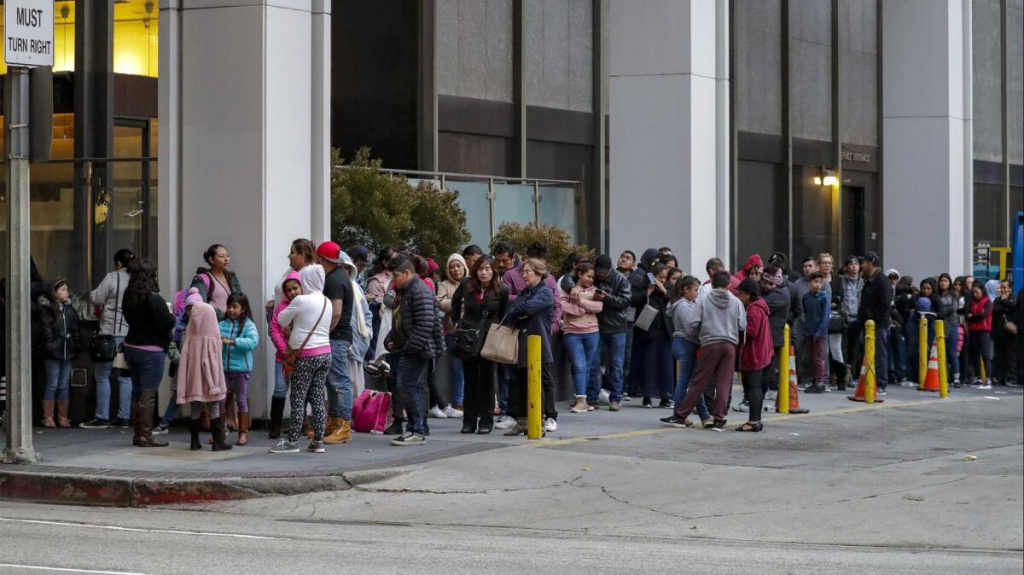
Image: Diverse group of immigrants waiting in a USCIS office hallway, some checking phones anxiously, representing the human side of enhanced security checks delays. (Source: LA Times)
How This Fits into Broader Changes in U.S. Immigration Policy
This move reflects a deliberate pivot toward prioritizing national security and public safety in the U.S. immigration system. The Trump administration has emphasized that prior vetting measures were “wholly inadequate” in some reviews, prompting comprehensive overhauls via executive actions.
Enhanced security checks align with earlier initiatives, including holds on certain asylum and diversity visa cases, and stricter screening for student visas or refugees. By expanding FBI data access, the policy seeks to identify “criminal actors” more effectively before granting benefits like permanent residency or citizenship.
Critics argue it adds bureaucracy and slows legal immigration, potentially discouraging qualified applicants. Supporters view it as essential risk management in an era of global mobility and varied threat landscapes. Either way, it signals that enhanced vetting is becoming the new baseline for legal immigration pathways.
Historically, U.S. immigration policy has oscillated between openness and restriction. Think of the 1920s quota systems or post-9/11 security enhancements—enhanced security checks fit into this long pattern of layering more safeguards as technology and data access improve. A lighter moment from immigration lore: In the early days of computerized checks, one officer reportedly joked that the system finally caught a applicant who listed “none” for criminal history… while having an outstanding warrant under a slightly different spelling. Modern enhanced background checks aim to minimize such gaps systematically.
For those navigating the system, this underscores the importance of maintaining complete, accurate records and preparing for potential additional scrutiny.
Practical Takeaways and What Comes Next
While USCIS claims delays will be short, immigration attorneys recommend monitoring case status closely via the USCIS online portal and consulting professionals for complex situations. New applicants should expect the enhanced security checks process from the outset.
This policy is still unfolding, with potential for further guidance or adjustments as implementation progresses. It forms part of a larger effort to reform legal immigration by tightening vetting without halting the system entirely.
The story, broken by CBS News through exclusive access to internal documents, provides a clear window into how administrative priorities translate into on-the-ground procedures for immigration applicants.
Main sources for verification:
- CBS News original report: https://www.cbsnews.com/news/trump-administration-mandates-enhanced-security-checks-immigration-applicants-uscis/
- Reuters coverage confirming details: https://www.reuters.com/legal/government/us-mandates-what-it-calls-enhanced-security-checks-immigration-applicants-2026-04-29/
- USCIS public statements as quoted in multiple outlets.
For the most current updates, check official USCIS alerts or consult a qualified immigration attorney, as policies can evolve quickly.