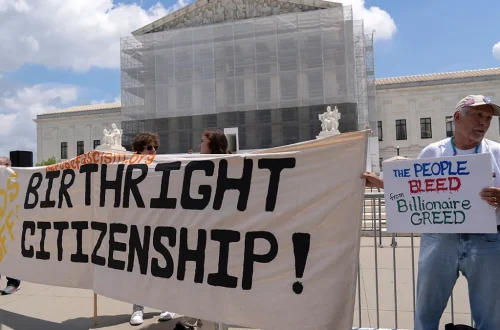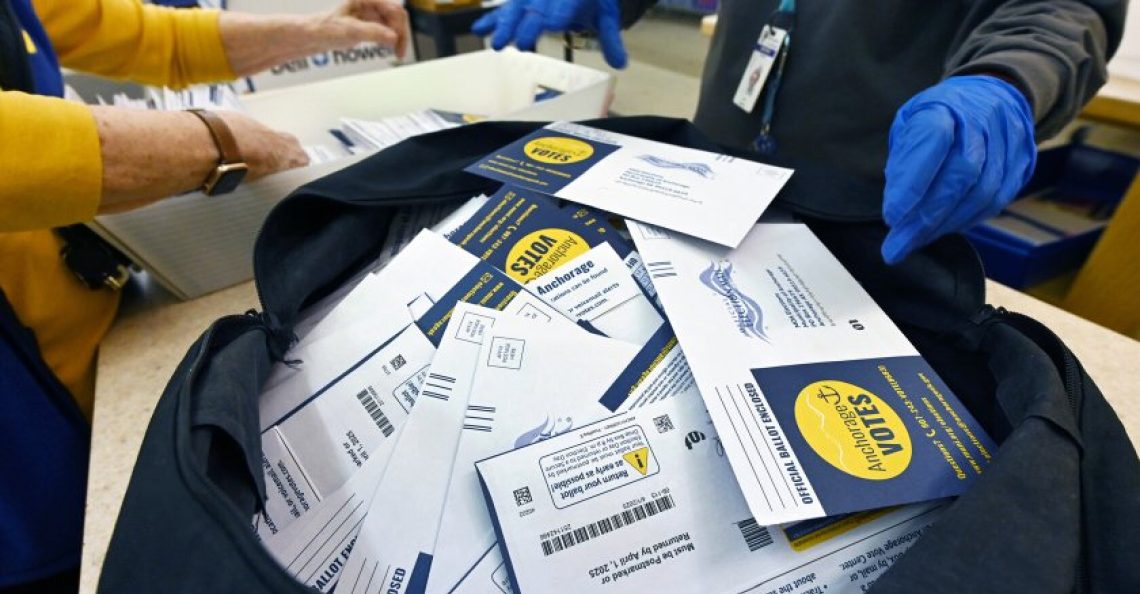
If you’ve been following U.S. election news this summer, you’ve probably seen the phrase “mail-in voting order” pop up again and again — in headlines, in cable news chyrons, and in furious dissents from Supreme Court justices. On August 24, 2026, the Supreme Court handed the Trump administration a preliminary win that lets it move forward with a controversial mail-in voting order restricting how mail ballots are collected, verified, and delivered ahead of the November 2026 midterms. But as of this week, the story is far from over — a federal judge has already thrown a new wrench into the works.
This post breaks down exactly what the mail-in voting order does, how the legal fight has unfolded step by step, and what it could realistically mean for your ballot this November — all verified against primary sources, court filings, and reporting from SCOTUSblog, Votebeat, NBC News, and ABC News.
What Is the Mail-In Voting Order, Exactly?
The order at the center of this fight is Executive Order 14399, titled “Ensuring Citizenship Verification and Integrity in Federal Elections.” President Trump signed it on March 31, 2026, in the middle of a bitter Senate debate over the SAVE America Act, a Republican-backed bill that would require proof of citizenship to register to vote and photo ID at the polls.
The mail-in voting order rests on three main pillars:
- A federal citizenship list. The Department of Homeland Security must compile a list of adult U.S. citizens in every state and share it with state governments at least 60 days before a federal election.
- A prosecution directive. The U.S. Attorney General is instructed to “prioritize” investigating and prosecuting state and local officials who send federal ballots to people the administration considers ineligible.
- A Postal Service gatekeeping rule. States must submit lists of every voter to whom they intend to send a mail or absentee ballot. The U.S. Postal Service then cross-checks those names against its own “enrolled voter” list — and, under the original plan, ballots for anyone missing from the list simply wouldn’t move through the mail.
That third piece — USPS acting as a kind of eligibility checkpoint for the mail — is what has drawn the sharpest legal and political fire, since mail-ballot rules have traditionally been set by the states, not the federal government.
How the Legal Battle Unfolded
Understanding the mail-in voting order means following a fairly dramatic back-and-forth between the White House, federal courts, and the Supreme Court:
- March 31, 2026 — Trump signs the executive order.
- Spring/Summer 2026 — A coalition of 23 states plus Washington, D.C., led by California, sues in federal court in Massachusetts, arguing the order violates the Constitution’s Elections Clause, which gives states — not the president — authority over the “Times, Places, and Manner” of federal elections.
- June 2026 — U.S. District Judge Indira Talwani blocks the challenged provisions from taking effect before November 3, 2026, in the plaintiff states.
- Summer 2026 — The 1st U.S. Circuit Court of Appeals declines to pause Talwani’s order.
- July 27, 2026 — The Trump administration, joined by a group of 12 Republican-led states led by Alabama, asks the Supreme Court to intervene.
- August 24, 2026 — In a 6–3, unsigned (“per curiam”) opinion split along ideological lines, the Supreme Court lifts Talwani’s injunction, ruling that the states’ lawsuit was filed too early — before the government had even issued a “final rule” — so there was no concrete injury yet to sue over.
- August 27, 2026 — Just days later, Talwani issues a new temporary restraining order, this time blocking specific pieces of the finalized USPS rule (like envelope-design mandates and a portal for uploading voter data) for 14 days.
- September 3–4, 2026 — The administration goes back to the Supreme Court asking it to freeze even that narrower restraining order, warning that North Carolina and Alabama were about to start mailing ballots (as early as September 4) and that “once those ballot envelopes enter the mailstream, there is no retrieving them.”
- September 5, 2026 (Friday night) — Talwani converts her temporary order into a full preliminary injunction, again pausing the envelope and portal-registration requirements, writing that implementing the rule “less than seventy days before the November 2026 election threatens disenfranchisement of millions of United States citizens.” She also noted the record contained “no evidence relating to fraudulent mail voting” to justify the rushed rollout.
In other words: the Supreme Court’s August ruling was a real, meaningful win for the administration — but a narrow, procedural one. It didn’t say the mail-in voting order is constitutional. It said the lawsuit came too soon. Justice Sonia Sotomayor spelled this out plainly in her opinion, writing that the decision “does not address whether the President’s attempts to interfere with states’ administration of the November 2026 elections are lawful.”
The Courtroom Drama: Dissents, Zingers, and a Race Against the Calendar
Supreme Court opinions aren’t usually where you find memorable one-liners, but this case delivered a few.
Justice Ketanji Brown Jackson’s dissent accused the majority of “taking its eye off the ball” by getting lost in a technical procedural question instead of grappling with what she called the administration’s real goal: to “foment chaos ahead of the November elections.” That’s about as sharp as Supreme Court language gets.
There’s also an oddly funny footnote buried in the government’s own legal filings. Defending the Postal Service’s authority to set rules for election mail, Solicitor General John Sauer pointed to precedent showing USPS has regulated all sorts of unusual mail categories before — including, in his own words, “processing requirements on the mailing of cremated remains and replica explosives.” It’s a strange but true detail: the same agency that decides how to ship fake bombs and human ashes is now at the center of a fight over how America votes.
Meanwhile, the practical stakes turned into a literal countdown. North Carolina and Alabama were set to start mailing ballots to voters as early as September 4 — meaning the window for courts to act before ballots physically entered the mail system was measured in hours, not months. That urgency is exactly why the administration kept racing back to the Supreme Court on emergency, “shadow docket” filings rather than waiting for a normal appeal.
What This Means for the November 2026 Midterms
So does the mail-in voting order actually change how you vote this November? As of this writing, the honest answer is: parts of it might, most of it probably won’t in time — and it’s a genuinely moving target.
Here’s the practical breakdown:
- The citizenship-list provision and the prosecution directive are now legally allowed to move forward, since the Supreme Court lifted the injunction blocking them.
- The USPS “gatekeeping” rule that could withhold ballots — the single most disruptive piece — is currently on hold again, thanks to Judge Talwani’s September 5 preliminary injunction, which specifically pauses the envelope-design and voter-data-portal requirements.
- The administration insists the rule is modest. In its filings, the government has actually walked back the scarier version of the plan, telling the Supreme Court that “USPS will not perform any verification of voter eligibility” and will “not refuse to transmit ballots” from voters missing from a list — describing the rule instead as “modest envelope design requirements.”
- Timing is the biggest obstacle of all. With the midterms roughly two months away when the September fight broke out, courts across the political spectrum have repeatedly flagged that implementing sweeping new mail-voting rules this close to Election Day risks confusing voters and disenfranchising people who have voted by mail for years without issue.
For everyday voters, the most likely near-term effect is confusion and state-by-state variation rather than a uniform national change — some states (especially ones that joined the pro-administration coalition, like Alabama) may move faster to comply, while others (like California, part of the original 23-state lawsuit) are actively resisting in court. Election officials in both groups have said the compressed timeline makes clean implementation difficult regardless of which side eventually wins the underlying constitutional fight — a fight the Supreme Court explicitly said it has not yet resolved.
The Bigger Picture
It’s worth stepping back from the legal weeds for a second. This case sits at the intersection of two long-running American debates: how much power the federal government should have over elections that the Constitution assigns to the states, and how to balance concerns about voter fraud against the risk of disenfranchising eligible voters. Reasonable people disagree sharply on both questions, and this litigation will keep generating headlines well past November, regardless of who “wins” in the short term.
What’s genuinely unusual here is the pace: two separate emergency trips to the Supreme Court in under six weeks, a temporary restraining order that flipped into a preliminary injunction within days, and ballots that were physically about to go in the mail while judges were still writing opinions. Few election-law disputes in recent memory have moved this fast, this close to a live election.
Sources
- Votebeat — Supreme Court lifts injunction on Trump’s mail-voting order
- NBC News — Supreme Court hands preliminary win to Trump on mail-in ballots order
- ABC News — Supreme Court allows Trump to implement parts of mail-in voting order
- SCOTUSblog — Supreme Court allows Trump administration to move forward with mail-voting restrictions
- SCOTUSblog — Trump administration asks Supreme Court to clear the way for new mail-in voting rule
- Wikipedia — Executive Order 14399
- Full Supreme Court opinion, Trump v. California (26A124)
This article is for informational purposes only and does not constitute legal advice. The underlying litigation is ongoing and details may change; readers are encouraged to consult the primary sources linked above for the latest updates.