In the age of always-connected smartphones, the phone listening phenomenon has become one of the most persistent digital mysteries. You casually mention a product in conversation—maybe a new carrot peeler with your spouse or a dream trip to New York—and within minutes or hours, hyper-specific ads flood your TikTok, Instagram, or Facebook feed. It feels like phone listening is happening in real time, with targeted advertising algorithms predicting your desires before you even search. But is it true? A recent CBS News investigation titled “Is your phone listening to you?” (April 12, 2026) dives deep into this exact question, and the evidence-based answer is both reassuring and unsettling.
Image: Vibrant illustration of a smartphone with a microphone icon emitting sound waves, surrounded by popping targeted ads on a colorful gradient background, perfectly capturing the phone listening paranoia many feel daily (Grapeseed Media).

Image: Artistic depiction of a person staring at their phone while shadowy eyes represent invisible data tracking surveillance, highlighting the creepy feeling behind targeted advertising (MOST 2414).
The Phone Listening Illusion: What CBS News Revealed
CBS News correspondent David Pogue explored this phone listening puzzle with ad industry veteran Ari Paparo and Northeastern University professor David Choffnes. User after user shared identical stories: one woman talked about a specific food with friends, only to see it advertised instantly on TikTok. A New York visitor mentioned their upcoming trip and was bombarded with city-themed Instagram Reels for weeks. Another described discussing a better carrot peeler at home—then seeing peeler ads everywhere. “It’s a bit strange!” one participant exclaimed.

Image: Eye-catching graphic of a bearded man pointing at a giant smartphone screen with location pins and magnifying glass, symbolizing how targeted advertising uncovers hidden patterns without phone listening (Grapeseed Media).
Paparo, who has fielded this question “a million times,” delivers a clear verdict: “Your phone is not passively listening to you for advertising purposes.” Processing audio from billions of devices worldwide to scan for keywords and match them to ads is technically impossible at scale. Choffnes backed this up with hard data from a rigorous 2018 study (updated in ongoing research) analyzing thousands of Android apps: “We didn’t see any surreptitious recording of information.” No hidden mic activations. No secret audio uploads for ad targeting.
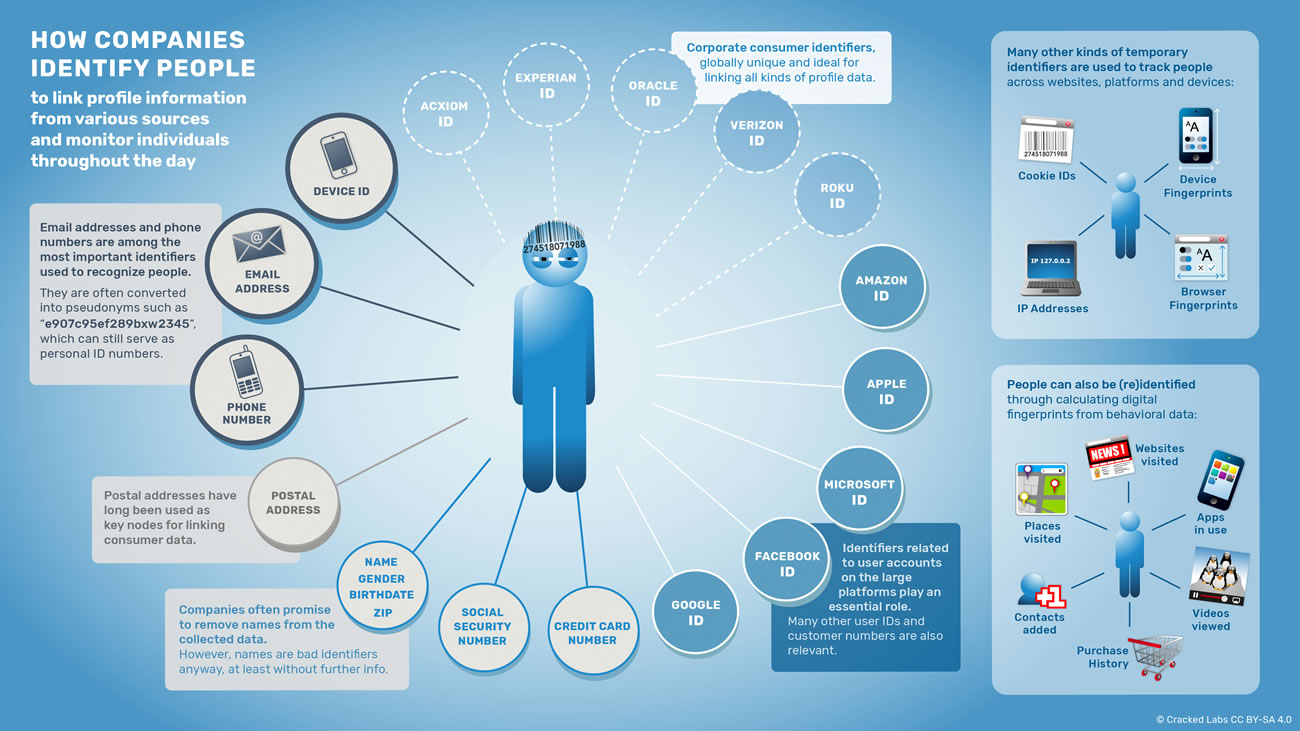
Image: Comprehensive infographic mapping how companies identify people through device IDs, email, phone numbers, and behavioral data— the true engine of targeted advertising and data tracking (Cracked Labs).
How Targeted Advertising Algorithms Actually Work (No Mic Required)
So if phone listening isn’t the culprit, what powers this prescient targeted advertising? The answer lies in sophisticated machine learning (ML) and AI algorithms that build detailed user profiles from your digital footprint alone. Here’s the step-by-step reality, verified through industry analyses and academic sources:
- Behavioral Data Collection: Every website visit, app interaction, search query, and location ping feeds massive datasets. Platforms like Google and Meta track cross-device activity via cookies (where allowed), device fingerprints, and IP addresses.
- Inference Engines: ML models don’t need your voice—they infer interests from patterns. Visited a cooking site? Searched for travel? Your spouse’s peeler query on the same household Wi-Fi gets attributed to you. Predictive analytics forecast needs with eerie accuracy.
- Real-Time Bidding and Lookalike Audiences: In programmatic advertising, AI adjusts bids in milliseconds. Algorithms create “lookalike” groups based on similar users, amplifying relevance without ever hearing a word.
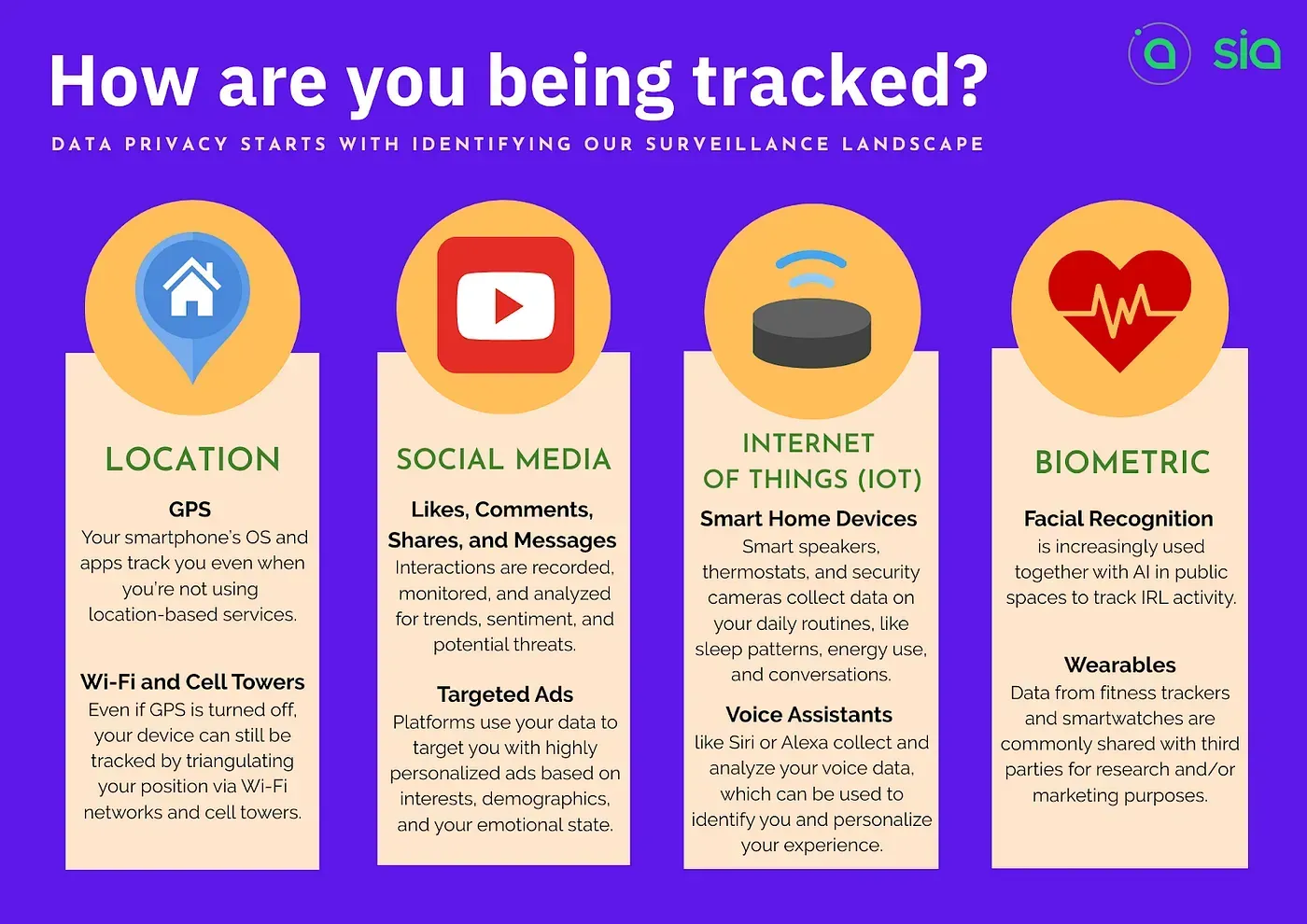
Image: Colorful tracking breakdown showing location, social media, IoT devices, and biometrics feeding into data tracking systems that fuel targeted advertising (SIA).
- Data Broker Amplification: Companies buy and sell anonymized (but often re-identifiable) profiles—sometimes 300+ pages long, as Choffnes received. These contain guesses like “likely cruise enthusiast” or “Xbox owner” (both wrong in his case), yet still drive precise targeted advertising.
Studies confirm this: Northeastern’s Panoptispy project and similar 2025 research found zero evidence of mic misuse for ads, only extensive online surveillance. Apple and Google have restricted tracking further, with Safari blocking much of it outright—explaining why advertisers “are not big fans of Apple.”
Fun (and Slightly Unnerving) Real-Life Episodes of the Phone Listening Myth
The phone listening myth thrives on relatable stories that feel too coincidental to ignore. One viral anecdote: a couple debates getting a dog over dinner; the next day, both see puppy food ads despite no prior searches. Coincidence? Or household data tracking linking their devices? Another classic: friends chat about a quirky vacation idea, and boom—destination reels dominate feeds. CBS captured these perfectly, but similar tales date back years. In 2018, users swore Facebook eavesdropped on pregnancy talks for baby ads—yet Meta’s Zuckerberg testified under oath it wasn’t true, and independent tests agreed.
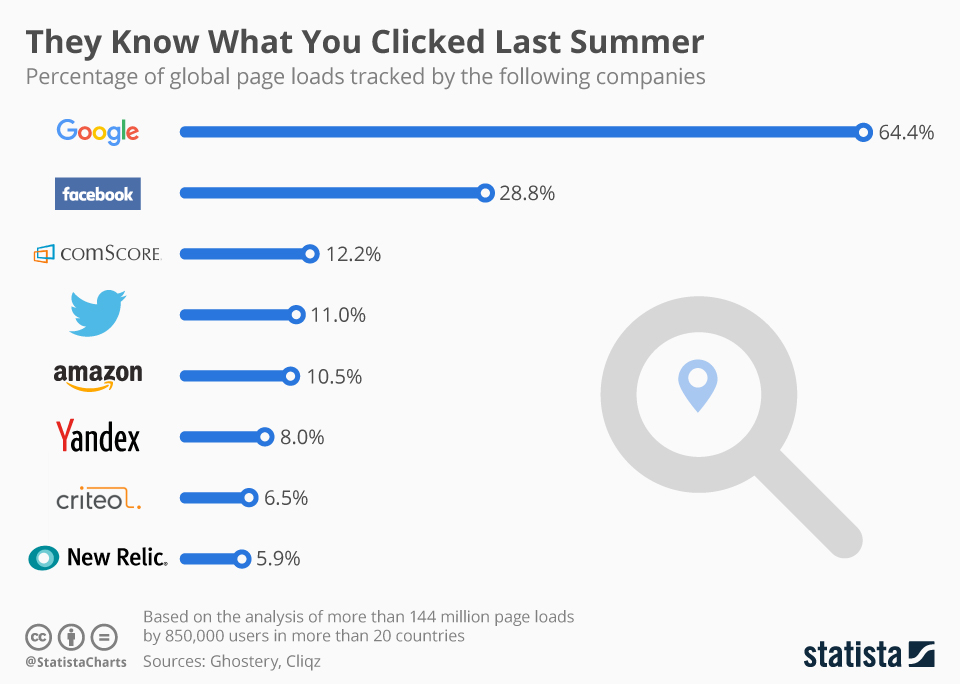
Image: Statista chart revealing Google tracks 64.4% of global page loads, dwarfing others—visual proof of the scale behind targeted advertising without needing phone listening (Statista).
A humorous 2024 Reddit thread recounted someone mentioning “divorce lawyer” in passing (not even seriously), only for ads to appear—turns out a family member’s browser history was the real culprit. These episodes entertain because they expose how interconnected our data tracking really is, turning everyday life into personalized ad fodder.
The Dark Side: Privacy Problems with Data Tracking
While phone listening for ads is a myth, the reality of targeted advertising and data tracking raises serious issues. Inferences can be wildly inaccurate yet invasive—Choffnes’ report wrongly pegged him as an Xbox gamer and cruise lover. Data brokers sell this to thousands of firms, enabling manipulation (think election micro-targeting) or discrimination (higher prices based on inferred income). Smart home devices add layers: Choffnes’ fake apartment lab revealed constant data pings from appliances, even when idle.
Laws like California’s CCPA and state privacy trackers help—users can request or delete data—but enforcement lags. The FTC has called out “vast surveillance” by social platforms. Without reform, targeted advertising risks eroding trust and autonomy.
Will the Phone Listening Phenomenon Continue?
Absolutely—though not via actual phone listening. As AI advances and IoT expands (smart speakers, wearables), data tracking will grow more predictive. Voice assistants already listen when triggered (Siri recordings led to a 2024 Apple settlement, though denied for ads), and future models may blur lines further. But counter-trends exist: privacy-focused browsers, app permission revocations, and legislation will push back. Paparo jokes no one will believe the truth, yet facts remain: targeted advertising thrives on visible data, not secret mics.
Practical Tips to Reclaim Control
- Revoke mic/camera access for non-essential apps.
- Use Safari or privacy browsers.
- Request your data reports from platforms.
- Support consumer privacy laws.
- Limit location/history sharing.
The phone listening myth persists because targeted advertising is that good at reading your digital life. It’s not eavesdropping—it’s engineering. Armed with facts from the CBS News piece and verified studies, you can navigate this landscape smarter.
Sources:
- CBS News full article: Is your phone listening to you? (April 12, 2026)
- Northeastern University study: Panoptispy PDF
- State privacy legislation tracker: Bloomberg Law
- Additional expert context: Ari Paparo’s site and David Choffnes’ profile at Northeastern.