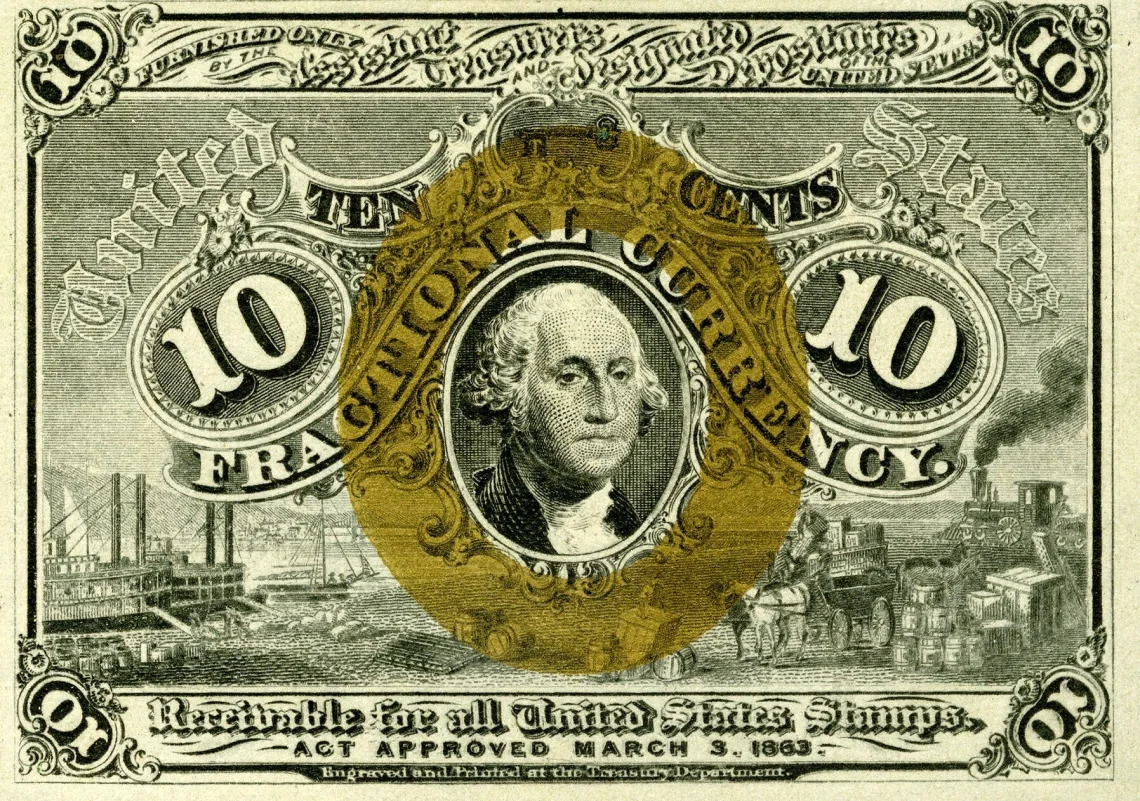
Have you ever wondered what happens when a nation runs out of small change during a massive crisis? Enter the US 10-cent fractional currency – a quirky, pint-sized paper note that stepped in to save the day during the American Civil War. Far from the flashy $100 bills or even the humble dime coin we know today, this little bill (worth just a tenth of a dollar) tells a tale of innovation, desperation, and even a dash of scandal. In this deep dive, we’ll explore its history, designs, and some wild stories that make it more than just old money – it’s a snapshot of America’s resilient spirit. Buckle up for a ride through time that’s packed with facts, fun anecdotes, and visuals to bring it all to life.
Why Did America Need a 10-Cent Paper Note? The Civil War Coin Crisis
Picture this: It’s 1861, and the Civil War has just erupted. As battles rage, people start hoarding gold and silver coins like squirrels stashing nuts for winter. Why? Uncertainty about the war’s outcome made folks distrust paper money, so they clung to “hard” currency. By late 1861, banks in major cities like New York suspended payments in specie (gold and silver), causing the value of paper dollars to plummet – one paper dollar was soon worth only about 91 cents in gold.
This created chaos for everyday transactions. Need to buy a loaf of bread or pay for a streetcar ride? Good luck without small change. Businesses resorted to wild fixes: cutting dollar bills into quarters, charging premiums for silver coins, or issuing their own “shinplasters” – flimsy private notes that were basically IOUs. Some places even brought back old Spanish quarter dollars! But many states banned these private shinplasters, leaving a void.
Enter Treasurer Francis E. Spinner, a clever problem-solver who gets credit for the breakthrough. He suggested using postage stamps glued to treasury paper as makeshift money, complete with his signature for authenticity. This “postage currency” idea caught on, and on July 17, 1862, President Lincoln signed the Postage Currency Bill into law. It wasn’t meant for stamps to circulate like cash, but desperate times called for desperate measures. This evolved into full-fledged fractional currency, issued in denominations like 3, 5, 10, 15, 25, and 50 cents from 1862 to 1876.
The 10-cent note was a star player, helping folks handle small purchases without breaking a sweat. Adjusted for inflation, that 10 cents from the 1870s is worth about $2 today – not pocket change by modern standards!
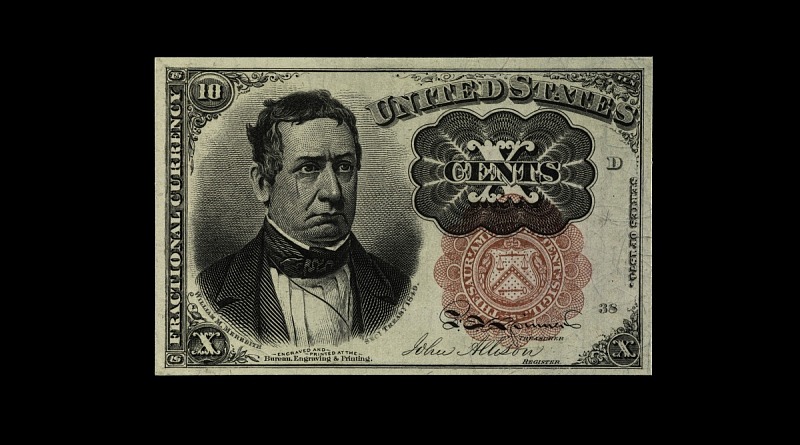
americanhistory.si.edu (Above: A well-preserved 10-cent fractional note from the 1874-1876 fifth issue, showcasing the intricate designs that made counterfeiting tough.)
Designs and Issuing Periods: From Stamps to Sophisticated Prints
Fractional currency came in five issues, each with evolving designs to combat counterfeiting – a big problem back then. The 10-cent notes were printed by the Bureau of Engraving and Printing (BEP), often in the Treasury building’s attic!
- First Issue (1862-1863): These were basically postage stamps on paper. The 10-cent version featured Thomas Jefferson’s portrait from the stamp, redeemable for actual stamps at post offices. They were perforated or straight-edged, with varieties like monograms for security.
- Second Issue (1863-1867): Improved with a bronze oval frame around George Washington’s bust. Printed on better paper to last longer in pockets.
- Third Issue (1864-1869): Washington stayed on the front, but the back got fancier. This series is infamous for a related scandal – not on the 10-cent, but on the 5-cent note, where Spencer Clark (BEP’s first chief) put his own face on it, sparking outrage in Congress. They quickly banned living people from appearing on US currency!
- Fourth Issue (1869-1875): Post-war recovery vibes. Featured Liberty’s portrait or other allegorical figures, with anti-counterfeit features like watermarks and colored fibers.
- Fifth Issue (1874-1876): The finale! Only 10, 25, and 50 cents here. The 10-cent showed William M. Meredith, former Treasury Secretary, or Columbia (personifying America). These were the most secure yet, with tiny red and blue fibers in the paper – a precursor to modern security threads.
All notes were tiny – about 3×2 inches – earning the “shinplaster” nickname from their resemblance to cheap bandages used by soldiers.
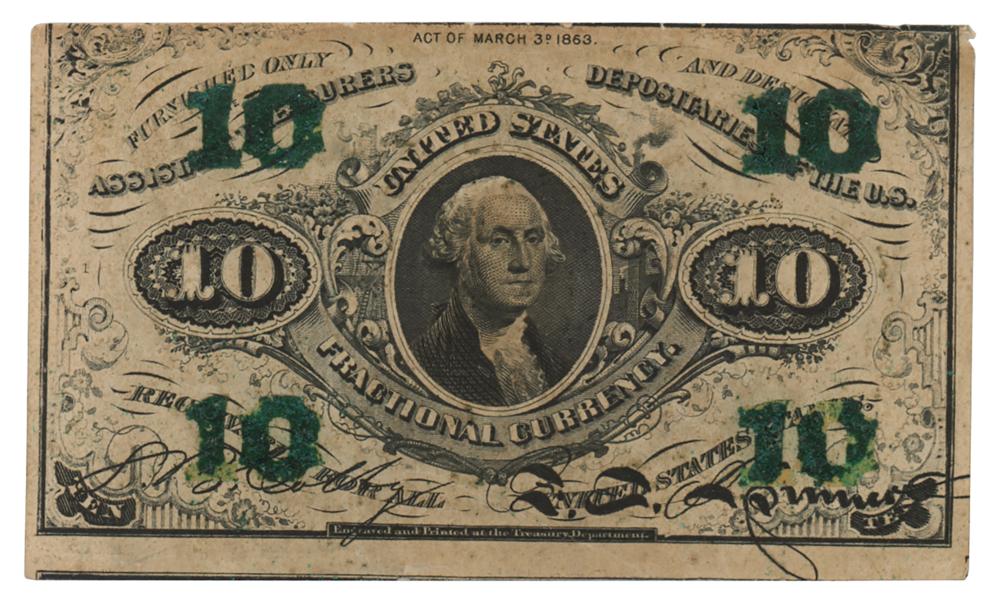
rrauction.com (Above: An 1863 third-issue 10-cent note with Washington’s portrait – a classic example of early fractional design.)
Fun Anecdotes and Surprising Twists: The Human Side of Small Change
Fractional currency wasn’t just paper; it sparked some wild stories that humanize history.
- The Trent Affair Trigger: In 1861, a diplomatic spat with Britain (the Trent Affair) nearly sparked another war, accelerating the coin shortage. Banks halted gold payouts, and the public panicked – leading directly to Spinner’s stamp idea. Imagine international drama causing your local store to run out of pennies!
- Private Money Mayhem: Before federal fractions, merchants minted their own tokens or used encased stamps (stamps in metal cases to prevent wear). One anecdote: A Philadelphia shopkeeper revived ancient Spanish coins, turning history into hasty cash.
- The Clark Scandal Ripple: Though on the 5-cent, Spencer Clark’s self-portrait fiasco led to the law still in effect today – no living folks on money. It caused such a stir that Congress acted fast, forever changing US currency rules.
- Everyday Heroes: These notes helped rebuild the economy post-war. One fun fact: They were receivable at post offices for stamps, blending mail and money in a quirky way. Collectors today chase rare varieties, like perforated edges or errors, which can fetch thousands at auctions.
And here’s a modern echo: The “salami slicing” fraud in movies like Office Space draws from real bank scams, but fractional currency itself was born from honest necessity – no Hollywood heists here!
Legacy and Collectibility: Why It Still Matters Today
By 1876, with coins back in circulation, fractional currency was phased out. But its impact lingers – it paved the way for modern paper money security features. Today, these notes are collector’s items, with uncirculated examples selling for $50 to $500 or more, depending on condition and rarity.
If you’re intrigued, check out museums like the Smithsonian’s National Museum of American History, where originals are on display. They remind us how crises spark creativity, turning a simple 10-cent note into a symbol of American ingenuity.
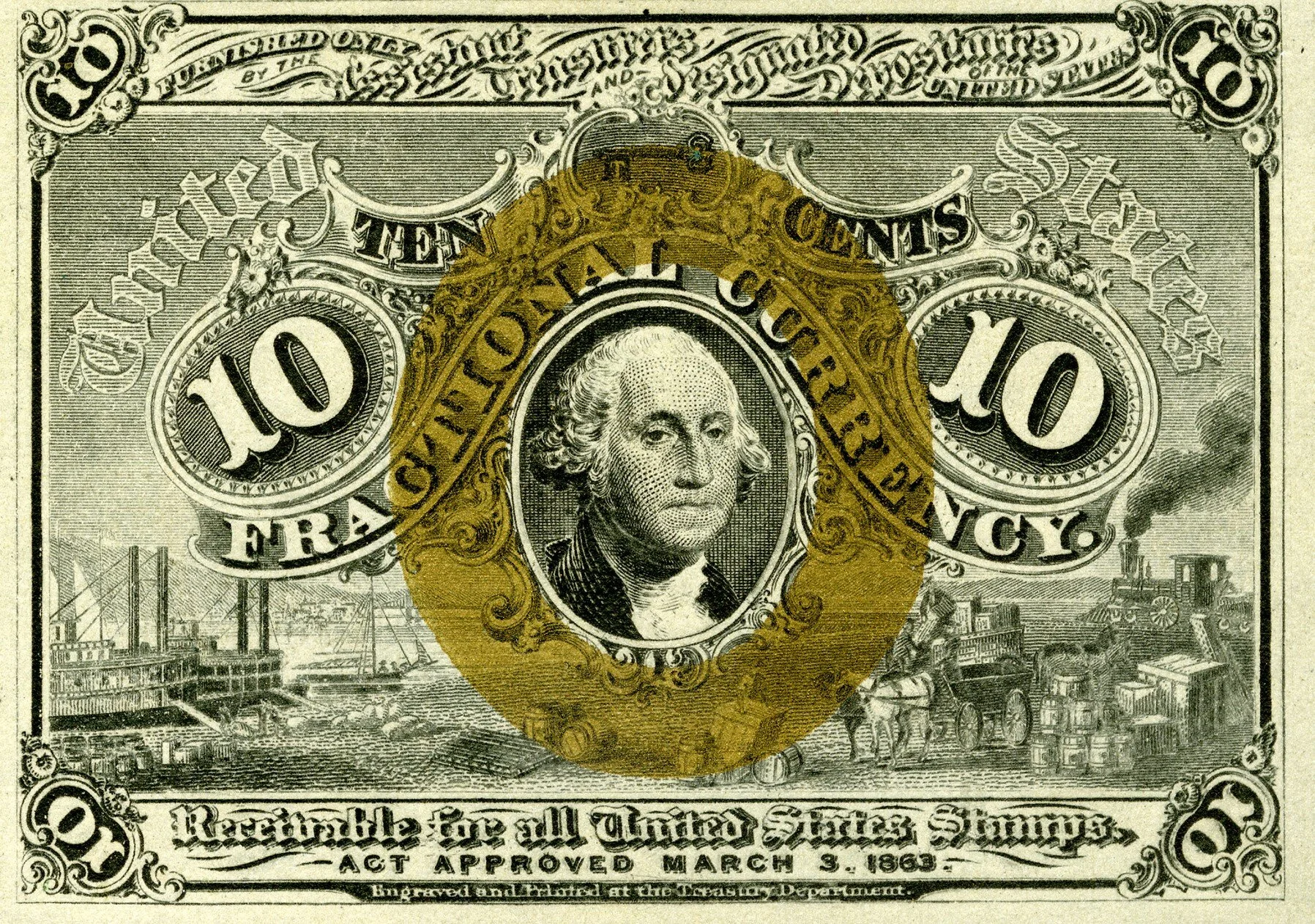
franklinnoll.com (Above: A detailed view of an 1863 second-issue 10-cent note, highlighting the bronze oval and Washington’s enduring presence.)