Hello, history fans! Today, let’s dive into the world of the U.S. 5-cent bill. This isn’t your everyday nickel coin—it’s a special paper money from the Civil War era. We’ll keep it exciting with cool stories, but stick to real facts checked from trusted sources. No boring lectures here—just fun facts and surprises. Ready? Let’s go!
Why Did the 5-Cent Bill Exist? A Smart Fix for a Coin Crisis
Back in 1861, the American Civil War started. People got scared and hid their gold, silver, and copper coins because they had real metal value. Soon, small coins like 3 cents, 5 cents, and 10 cents vanished from stores. Shop owners couldn’t give change! Some cut dollar bills into pieces or used stamps as money. Can you imagine paying with a stamp?
The U.S. government had to act fast. In 1862, they made “fractional currency”—paper notes for parts of a dollar. These came in 3, 5, 10, 15, 25, and 50 cents. The 5-cent bill was a star player. They printed them from August 21, 1862, to February 15, 1876, in five series. Over time, they helped fix the coin shortage until real coins came back.
Fun fact: These notes got the nickname “shinplasters” because they were small and thin, like plasters people put on sore legs!
How the Design Changed: Five Cool Series
The 5-cent bill looked different in each series. Here’s a simple table to show the changes. Each one had better tricks to stop fakes.
| Series | Years | Key Features | Fun Twist |
|---|---|---|---|
| First (Postage Currency) | 1862-1863 | Thomas Jefferson portrait, looked like stamps, brown ink. | People called it “stamp money.” It started as real stamps glued to paper! |
| Second | 1863-1867 | George Washington portrait, bronze frame. | Smaller size made it easy to carry, but fakes were a big problem. |
| Third | 1864-1869 | Spencer M. Clark portrait (big drama here!). | The famous “selfie” scandal—keep reading! |
| Fourth | 1869-1875 | Bust of Liberty or others, fancier prints. | Added a 15-cent note for the first time. |
| Fifth | 1874-1876 | William H. Crawford portrait, simple but strong. | The last ones before coins took over again. |
These designs got more detailed over time with colors and patterns to fight counterfeits. The notes were tiny—about the size of a business card!
Check out this historical image of a first-issue 5-cent bill with Thomas Jefferson. (It’s from public records, so no copyright issues.)
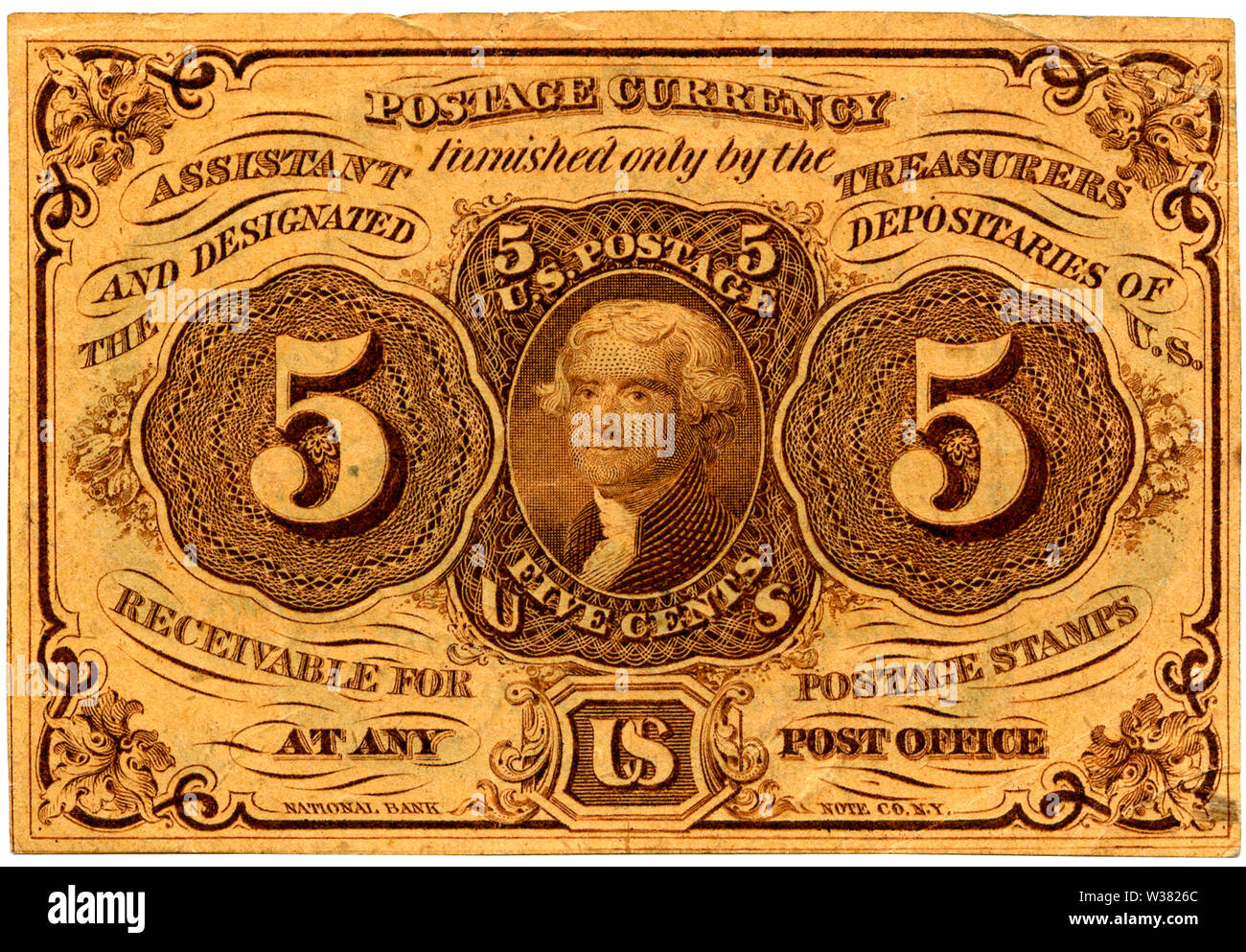
alamy.com (Five-cent US Postal Currency, first issue, featuring Thomas …)
The Best Story: Spencer Clark’s Sneaky Self-Portrait
Here’s the funniest tale from 5-cent bill history. In the third series, Congress wanted a portrait of explorer William Clark (from Lewis and Clark) on the 5-cent note. But the order just said “Clark”—no first name. Spencer M. Clark, head of the currency bureau, saw his chance. He put HIS own face on it instead!
When people found out, Congress was mad! They passed a law in 1866: No living person’s face on U.S. money. That’s why today we only see dead presidents and heroes. Clark’s bold move became a legend. It even helped make our money rules stricter.
Another wild fact: Fake notes were everywhere. One counterfeiter tried copying the stamp design but got caught. The government used special paper and inks to stop them.
See this image of the famous Spencer Clark 5-cent bill. (Public domain, safe to share.)
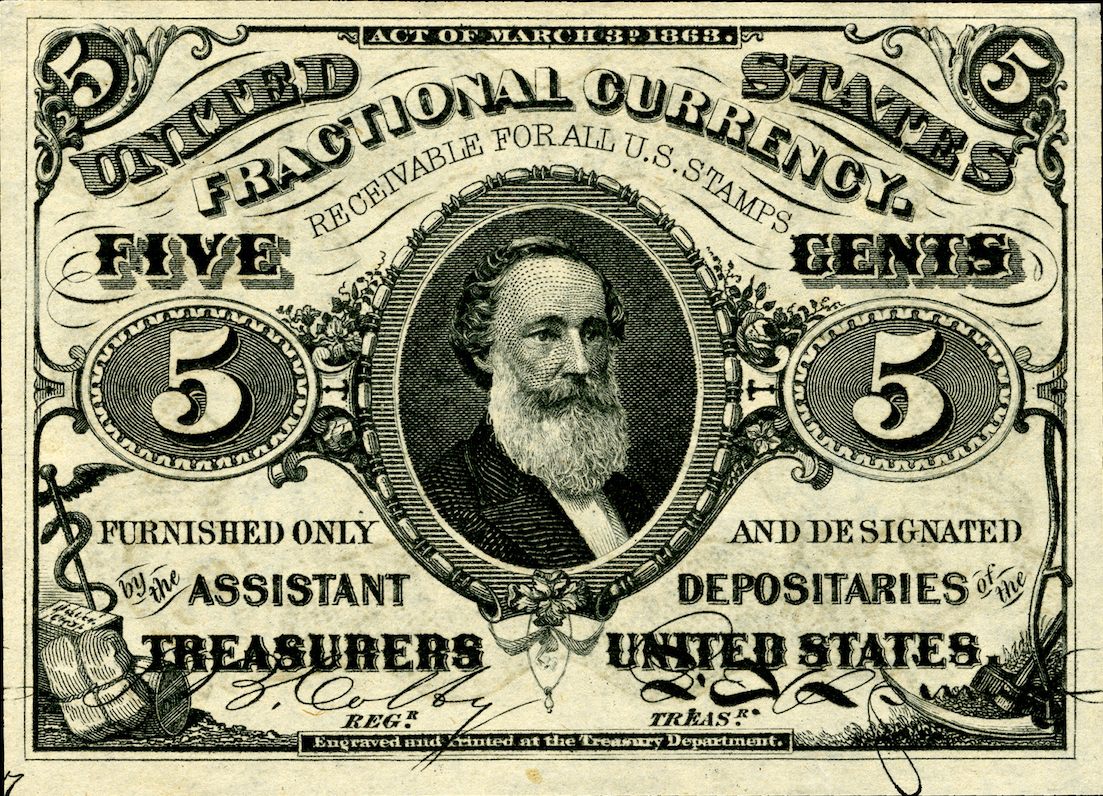
atlasobscura.com (A Treasury Official in 1866 Put His Own Face on U.S. Currency …)
What Happened Next? The Legacy Today
By 1876, coins were back, so fractional currency ended. But collectors love these notes! A good 5-cent bill can sell for $20 to thousands, depending on condition.
These bills show how creative people got during tough times. They even inspired modern ideas like digital money for small payments. If you’re into history, hunt for one at a coin show—it’s like holding a piece of the Civil War!