The US 10-cent coin, usually called a dime, has a long history of more than 200 years. It started with a law in 1792 and continues to today with special designs. This coin shows changes in America’s money, art, and important events.
This simple guide looks at the main parts of the dime’s story. We use only checked facts from trusted places like the US Mint. We also add fun stories to make it interesting. It’s more than just a coin!
If you collect coins, love history, or are just curious about US money, learning about the dime is a great way to see America’s past. Let’s look at the timeline, designs, and cool stories. (Keywords: US dime history, 10-cent coin designs, Roosevelt dime facts)
The Start of the Dime: The 1792 Law and Early Silver Coins
The dime was approved by the Coinage Act of 1792. It was first written as “disme.” The first dimes for everyday use were made in 1796. Before that, there were test coins in 1792 (mostly copper, not for spending).
Early dimes were made of 89.24% silver and 10.76% copper. They weighed about 2.7 grams and were 18.8 mm wide.
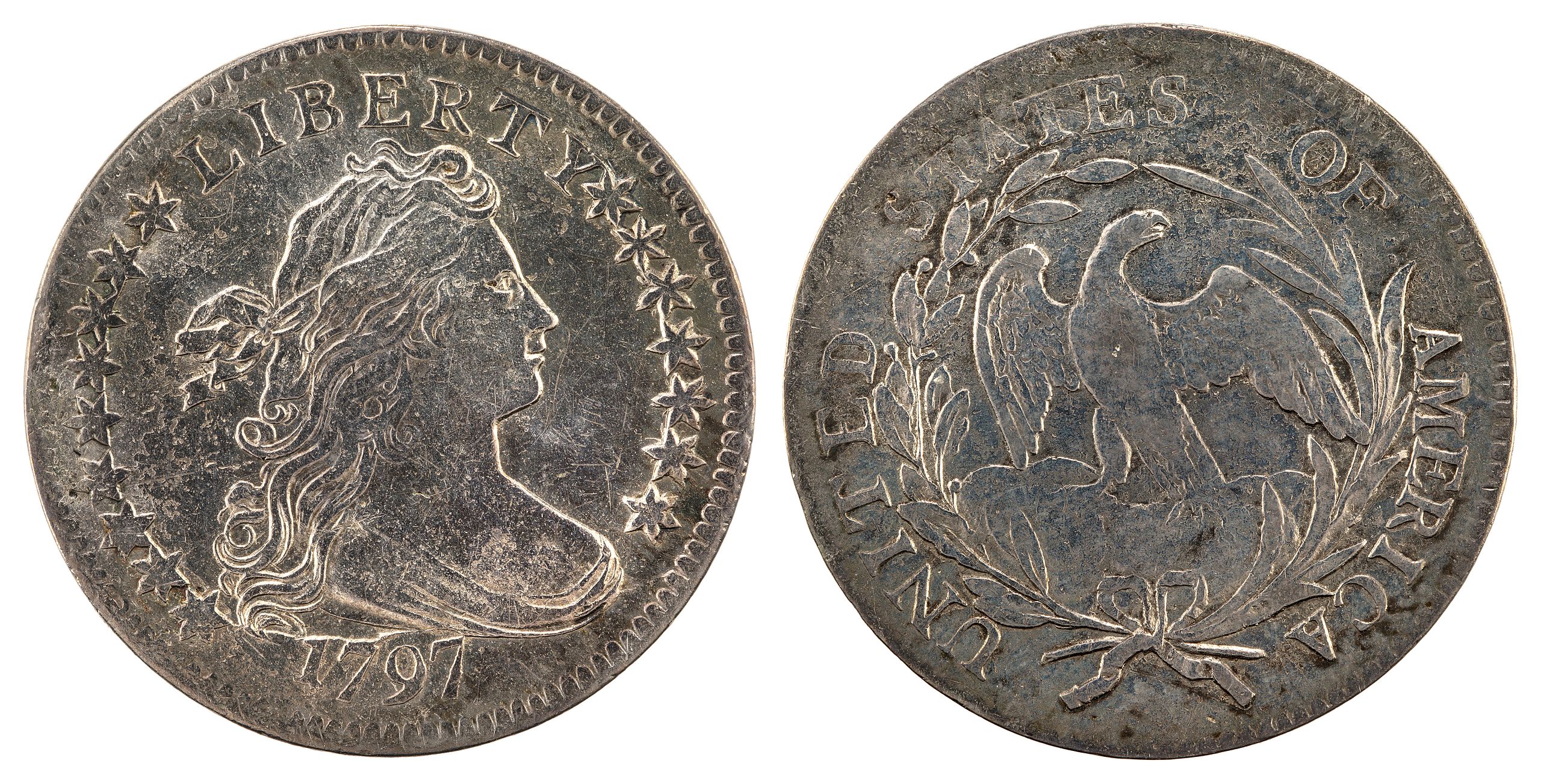
File:NNC-US-1797-10C-Draped Bust (small eagle).jpg – Wikimedia Commons
From 1796 to 1807, the Draped Bust design showed Lady Liberty on the front (based on a real person, Ann Willing Bingham). The back had a small eagle (1796–1797) or a heraldic eagle (1798–1807). At first, there was no value written on it. The number of stars changed (15 in 1796, sometimes 16 or 13 in 1797).
Fun Story: The 1792 test “disme” coins were one of the first tries at decimal money in the US. They were influenced by Robert Morris and Thomas Jefferson. This shows how the US took ideas from the French Revolution for its ten-based money system.
Image: Example of a Draped Bust dime, showing its old beginnings (public domain source).
Capped Bust Dime (1809–1837): First Time Showing the Value
John Reich designed the Capped Bust dime, which started in 1809. The front showed Lady Liberty wearing a cap. The back had an eagle holding arrows and an olive branch. For the first time, it said “10C” to show the value.
There were big size versions (until 1828) and smaller ones (1828–1837). The smaller ones had a reduced size and changes to the edge.
The metal mix stayed the same, but how many were made changed with the economy.
Interesting Fact: This design stood for early American ideas of freedom. The cap on Liberty reminded people of the Roman Republic. Collectors like the different numbers of stars.
*Image: Capped Bust dime, a symbol of early US designs (public domain).

1828 10C Small Date (Regular Strike) Capped Bust Dime – PCGS CoinFacts
Seated Liberty Dime (1837–1891): Changes and Weight Adjustments
Christian Gobrecht’s Seated Liberty dime began in 1837. The front showed a seated Lady Liberty. The back changed to a wreath in 1837.
There were different versions: no stars/drapery (1837–1838), arrows (1853 and 1873–1874 to show weight changes), and updated words in 1860 (“UNITED STATES OF AMERICA”). The metal became 90% silver and 10% copper.
Rare ones include the 1873 and 1874 Carson City dimes (with or without arrows).
Fun Episode: The arrows added in 1853 showed a weight reduction because of the California Gold Rush, which made silver more expensive. This is an example of how big economic changes affected coins.
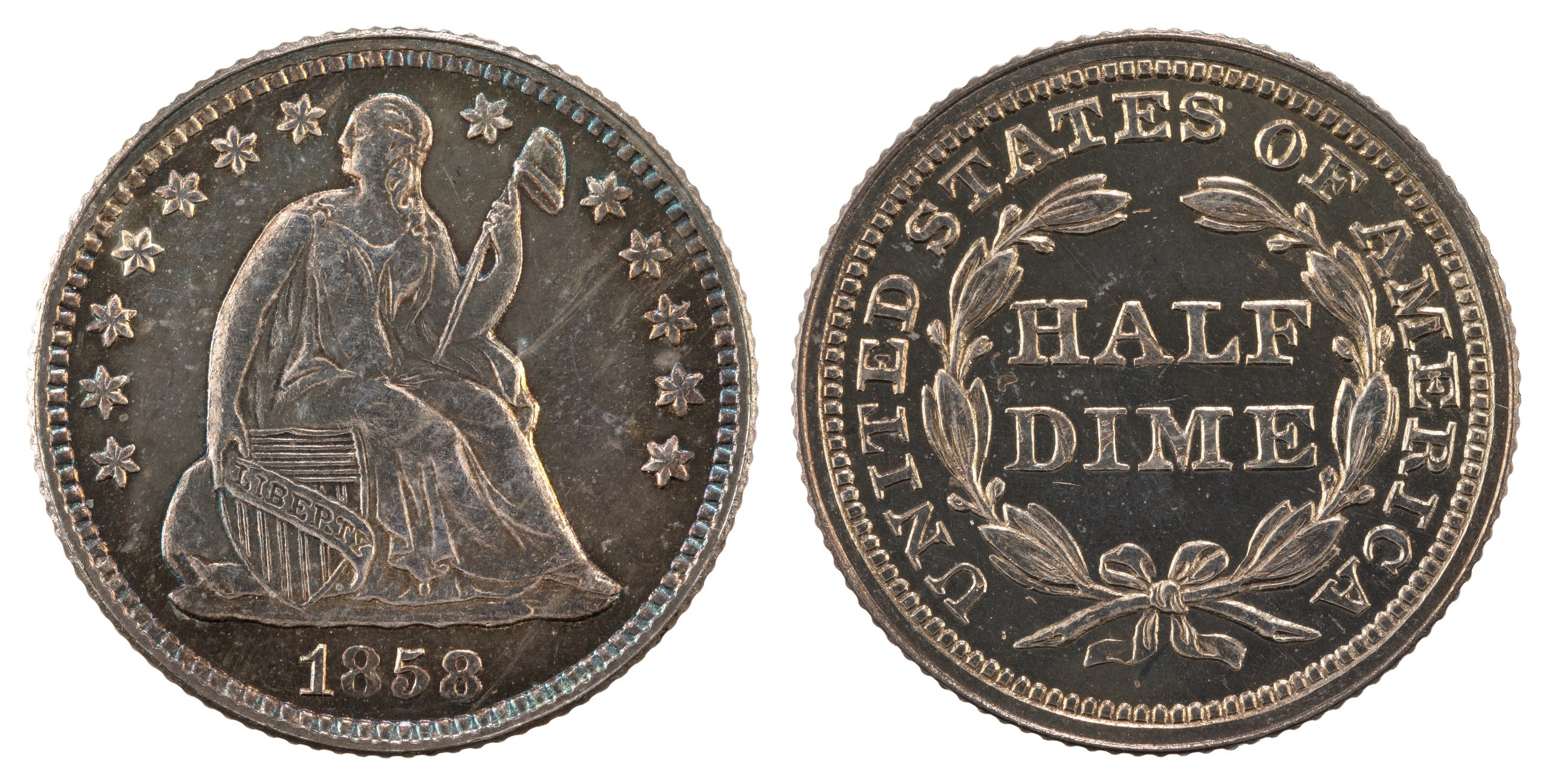
File:NNC-US-1858-5C-Seated Liberty (stars).jpg – Wikimedia Commons
Image: Seated Liberty dime, a symbol of 19th-century America (public domain).
Barber Dime (1892–1916): A Matching Design
Charles E. Barber’s Barber dime started in 1892. The front had Lady Liberty, and the back said “ONE DIME” in a wreath. It looked similar to the quarter and half dollar.
The metal stayed 90% silver.
Notable Story: The 1894-S Barber dime had only 24 made. It is one of the rarest US coins (only 9 known today). Legend says it was made as gifts for the daughter of a Mint worker. It’s a big legend in coin collecting.
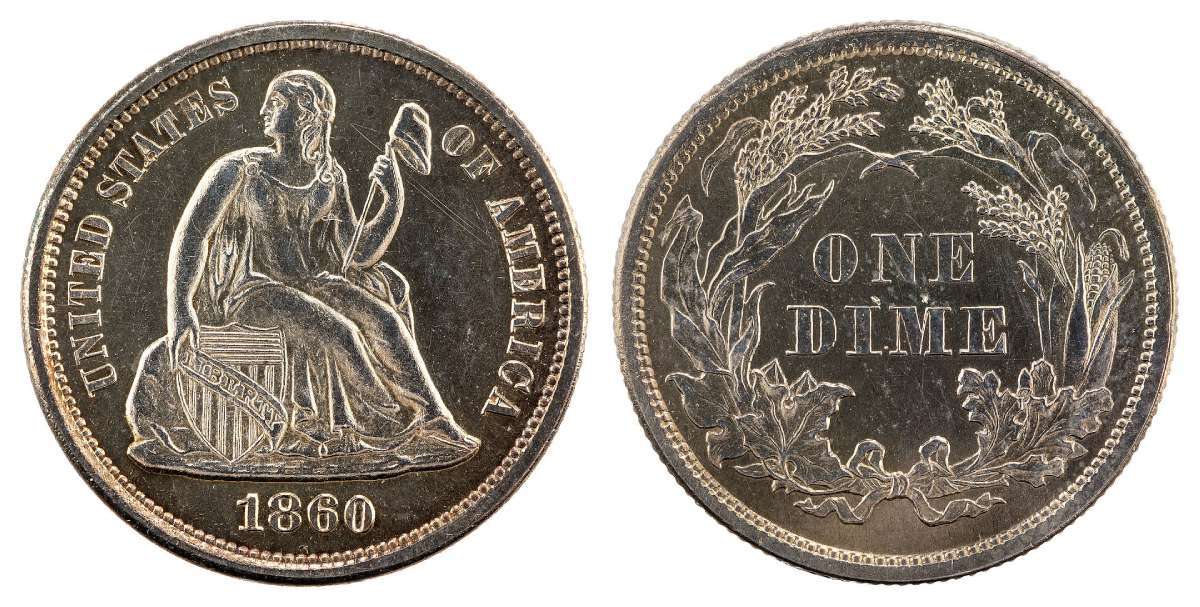
Rare Dimes By Year: 1796 To Present (Rare U.S. Dime Values) | U.S. …
Image: Barber dime, late 19th-century design (public domain).
Mercury Dime (1916–1945): Beautiful Winged Liberty
Adolph A. Weinman’s Mercury dime (actually called Winged Liberty Head) started in 1916. The front showed Lady Liberty with wings on her cap (symbolizing freedom of thought). The back had a fasces (bundle of rods with an axe) and olive branch (peace and military readiness).
It looks like the Roman god Mercury, so people call it that by mistake. Many say it’s the most beautiful US coin.
Fun Anecdote: The design came during World War I. It showed America’s hope for peace and being ready for war. But the “Mercury” name came from people thinking the figure was a male god.

Mercury Dimes: The Classic Winged Liberty Silver Coin Series
Image: Mercury dime, a beautiful 20th-century design (royalty-free).
Roosevelt Dime (1946–Present): Modern Memorial and Changes
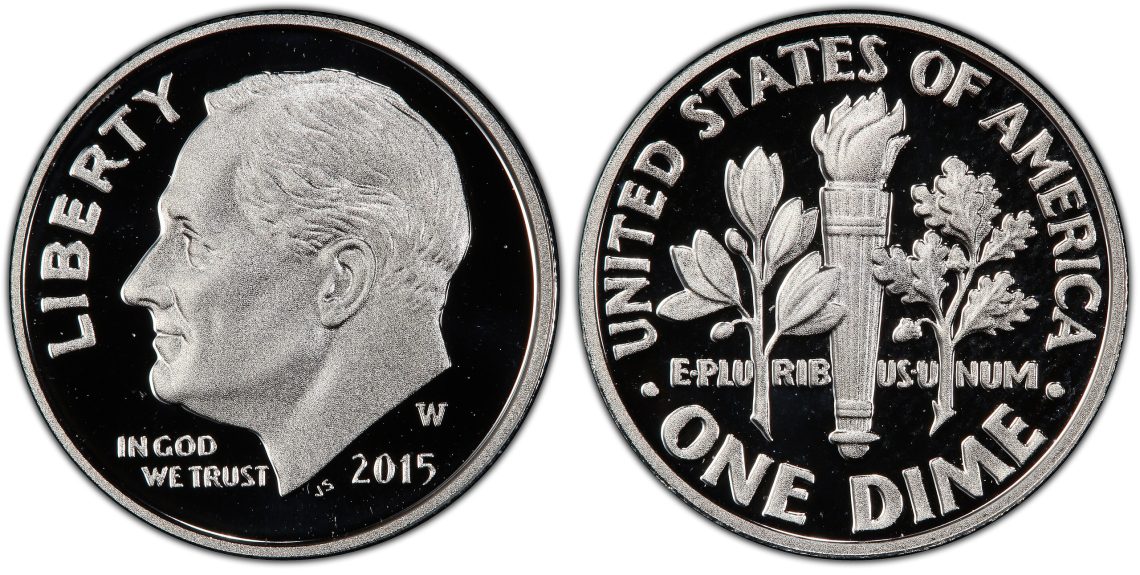
John R. Sinnock’s Roosevelt dime was released on January 30, 1946 (Roosevelt’s birthday). The front has President Franklin D. Roosevelt’s profile. The back has a torch (liberty), olive branch (peace), and oak branch (strength).
It honors Roosevelt because he supported the March of Dimes campaign to fight polio (he got polio at age 39).
In 1965, silver was removed. It became copper-nickel clad (outer layer 75% copper 25% nickel, core pure copper; overall 91.67% copper, 8.33% nickel). For the US 250th anniversary in 2026, there will be a temporary “Emerging Liberty” design (Capped Liberty and eagle, with 1776–2026). Roosevelt returns in 2027.
Interesting Episode: At first, the designer’s initials “JS” were mistaken for Joseph Stalin, causing rumors during the Cold War. There were also claims it copied a relief by Selma Burke, but that was denied.
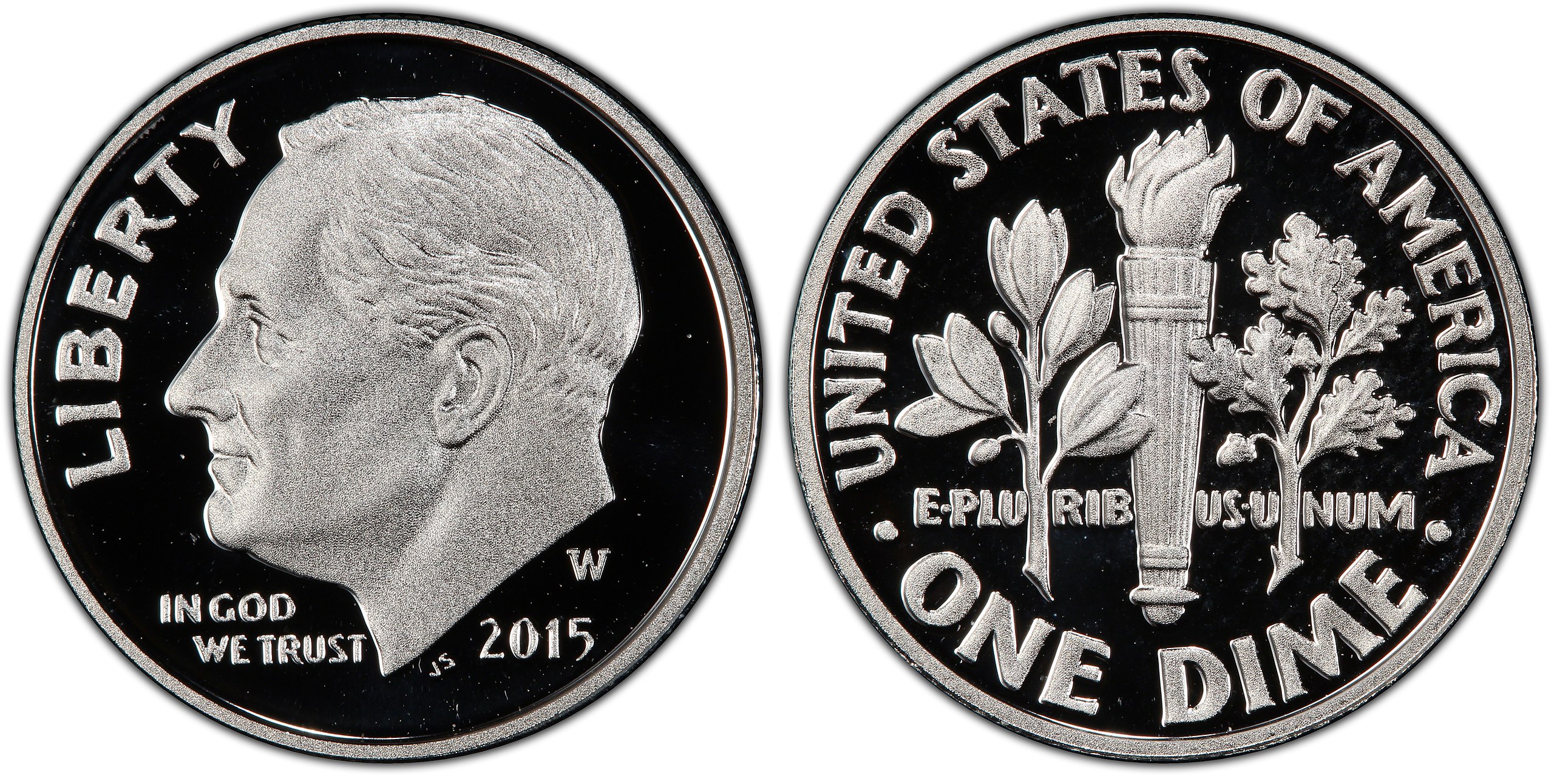
File:2015-W proof Roosevelt dime.jpg – Wikimedia Commons
Image: Roosevelt dime, a main part of modern US money (royalty-free).
Key Facts and Design Timeline
| Time Period | Design | Metal Mix | Main Changes |
|---|---|---|---|
| 1796–1807 | Draped Bust | 89.24% silver, 10.76% copper | Back eagle changes |
| 1809–1837 | Capped Bust | 89.24% silver, 10.76% copper | Added “10C”, size reduced |
| 1837–1891 | Seated Liberty | 90% silver, 10% copper | Arrows, updated words |
| 1892–1916 | Barber | 90% silver, 10% copper | Matching Liberty image |
| 1916–1945 | Mercury (Winged Liberty) | 90% silver, 10% copper | Winged cap, fasces |
| 1946–Present | Roosevelt | 90% silver (until 1964); copper-nickel clad after | 2026 special 250th anniversary design |
The dime’s steady weight (2.268 grams) and size (17.91 mm) show the stability of US coins.
Why the Dime Lasts: Cultural and Economic Impact
More than just money, the dime reflects US history—from the early republic to fighting polio. Collectors hunt rare ones like the 1894-S, and everyday people connect it to the March of Dimes charity. Even though it costs more to make now, the dime remains part of America’s heritage.