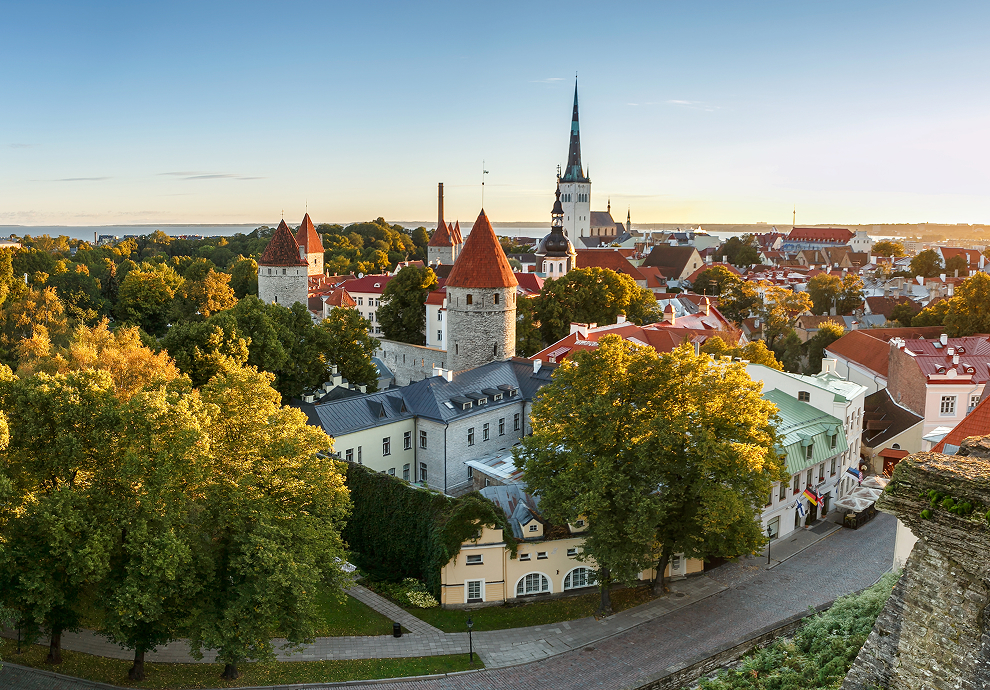
The Rumavi Global Relocation Index 2026 ranks 192 countries on 24 metrics. See who made the top 10, how it works, and why Estonia edged out Singapore.
Every few months, a new “best country to live in” ranking lands in the news, and every few months the top spot goes to a different place. The Rumavi Global Relocation Index 2026 stands out for a different reason. It put a small Baltic nation, Estonia, in first place, ahead of Singapore by just 0.2 points. It also placed the United States 107th and gave the Nordic countries, famous for happiness rankings, only middling spots.
This guide covers what the Global Relocation Index is, who built it, which data it uses, where every major country landed, and which details deserve a second look before you share the headline. Everything below comes from the index’s own published pages and cross-checked news coverage. The sources are linked at the end.
Global Relocation Index 2026 at a Glance
| Item | Detail |
|---|---|
| Publisher | Rumavi (legal entity: Rumavi Pte Ltd) |
| Edition | 2026, published at the end of June / start of July 2026 |
| Coverage | 192 countries and territories |
| Metrics | 24, grouped into four pillars |
| Scoring | Each metric is normalised to 0–100 (higher is always better for a relocator) |
| Views | One general ranking plus five persona rankings |
| #1 overall | Estonia, 72.8 points |
| #2 overall | Singapore, 72.6 points |
| Last place | Afghanistan, 39.5 points |
A small note on dates: Rumavi’s methodology page dates the edition 30 June 2026, while the rankings page footer says 1 July 2026. Either way, it is a mid-2026 release.
Who Is Rumavi? The Company Behind the Global Relocation Index
Rumavi describes itself as an independent advisory platform for foreign buyers and relocators, with its deepest expertise in Southeast Asia. Its legal name, Rumavi Pte Ltd, carries the “Pte Ltd” suffix used by Singapore private companies, and its About page shows a Singapore skyline as its cover image.
Here is what the company says about itself:
- Founder: Alexander Linton, a chartered accountant (ACCA) with an Executive MBA from the National University of Singapore. The page cites 15+ years in structured finance and family-office advisory.
- Focus: Property, visas, company setup, banking, retirement and digital-nomad planning. The core markets named on the About page are in Asia and the Gulf. Its country-guide list is broader, at about two dozen destinations, including Portugal, Malta, Greece, Georgia and several Caribbean citizenship-by-investment states.
- Self-reported credentials: “$50M+ advised,” “15+ years experience,” and a list of media outlets it says have featured it. These are the company’s own claims, not independently verified figures.
- Business model: Paid advice on fixed fees. The site lists a $380 strategy session and a $39 personalised relocation report. It says it discloses any referral fee on partner or developer listings before sharing a client’s details.
The index pages describe the ranking as independent and “conflict-free,” meaning there is no sponsorship and no stake in where a reader moves. Those are Rumavi’s statements, and they are worth keeping in mind alongside the fact that the company sells relocation services. I come back to this in the limitations section below.
How the Global Relocation Index Works: Data and Methodology
Four pillars, 24 metrics
- Financial and tax: cost of living, income tax, foreign-income tax, capital and wealth tax, currency and banking.
- Livability and health: healthcare quality, healthcare access cost, housing affordability, air quality, climate comfort, climate risk, green space, digital infrastructure.
- Safety and stability: street safety, rule of law, political stability, conflict risk, property rights for non-citizens.
- Settling and opportunity: visa ease, path to permanence, education, business opportunity, English/language access, startup ecosystem.
Where the numbers come from
Rumavi publishes a source map for all 24 metrics. The named datasets include:
- World Bank price-level data and Mercer’s cost-of-living survey (affordability)
- UNODC homicide data and the Gallup Global Law & Order Index (street safety)
- World Justice Project Rule of Law Index (rule of law)
- WHO Universal Health Coverage Service Coverage Index and the Legatum Prosperity Index (healthcare)
- IQAir World Air Quality Report (air quality)
- Ookla Speedtest Global Index (digital infrastructure)
- EF English Proficiency Index (language access)
- WIPO Global Innovation Index (startup ecosystem)
- Institute for Economics and Peace Global Peace Index (conflict risk)
- University of Notre Dame’s ND-GAIN index (climate risk)
- PwC Worldwide Tax Summaries (the three tax metrics)
Three tiers of data honesty
Each metric carries a provenance label:
- Institutional: a named public dataset.
- Estimate: modelled from a source’s framework where a country isn’t directly covered. This applies partly or fully to currency and banking, business opportunity and startup ecosystem.
- Curated (Rumavi assessment): documented expert judgment, used for items with no clean global dataset, such as visa ease, path to permanence and property rights for non-citizens.
Rumavi states that roughly 127 countries have strong or full data coverage and about 65 are lower-confidence, to be read as “directional rather than authoritative.” Another 31 countries, mostly small island states, are not assessed by the Global Peace Index and are scored on the remaining 23 metrics.
Six personas, one dataset
The same 24 metrics are re-weighted for six lenses: general, retirees, digital nomads, families, entrepreneurs and tax-friendliness. For example:
- Families weight street safety most heavily (10%).
- Nomads weight cost of living (12%) and digital infrastructure (10.1%) most heavily, and give “path to permanence” zero weight.
- Entrepreneurs put 14% on the startup ecosystem.
- Tax-friendly assigns 32% of the total to the three tax metrics combined.
Retiree and nomad rankings also include a disclosed flat bonus of +2 or +4 points for countries with a functioning long-stay or remote-work visa programme.
Global Relocation Index 2026: The Top 10
| Rank | Country | Score |
|---|---|---|
| 1 | Estonia | 72.8 |
| 2 | Singapore | 72.6 |
| 3 | Malaysia | 72.0 |
| 4 | Portugal | 71.6 |
| 5 | Taiwan | 71.4 |
| 6 | Lithuania | 71.0 |
| 7 | Hong Kong | 71.0 |
| 8 | St Kitts and Nevis | 70.3 |
| 9 | Czechia | 69.9 |
| 10 | Malta | 69.8 |
The next ten are Cyprus (69.7), Bulgaria (69.7), the UAE (69.4), Georgia (69.3), Brunei (69.3), New Zealand (69.1), Japan (69.1), Croatia (68.9), Latvia (68.7) and Costa Rica (68.7).
Show Image
(Image: Marina Bay and Gardens by the Bay in Singapore, ranked second overall. Source: add the licensed image credit here.)
Where other well-known countries landed
| Country | Rank | Score |
|---|---|---|
| Spain | 21 | 68.6 |
| Switzerland | 24 | 68.2 |
| Finland | 27 | 68.1 |
| Thailand | 28 | 68.1 |
| Australia | 29 | 68.0 |
| South Korea | 30 | 67.9 |
| Netherlands | 37 | 67.1 |
| Canada | 41 | 66.8 |
| Sweden | 42 | 66.7 |
| Denmark | 43 | 66.6 |
| Norway | 48 | 65.8 |
| United Kingdom | 49 | 65.8 |
| Germany | 50 | 65.7 |
| Italy | 61 | 64.4 |
| Iceland | 64 | 64.0 |
| Israel | 65 | 63.9 |
| France | 79 | 62.7 |
| India | 100 | 60.6 |
| United States | 107 | 60.0 |
| China | 125 | 58.6 |
At the bottom, Afghanistan (192nd, 39.5) is preceded by Yemen, South Sudan, Niger, Chad, the Central African Republic, Somalia and North Korea (185th, 44.4).
Two readings of the table are worth stating plainly:
- Europe is strong but not dominant. By my count, nine of the top 20 are EU members: Estonia, Portugal, Lithuania, Czechia, Malta, Cyprus, Bulgaria, Croatia and Latvia. Asia and the Gulf fill much of the rest.
- South Korea at 30th sits just behind Australia (29th, 68.0) and just ahead of Poland (32nd, 67.7). The gaps in this part of the table are a few tenths of a point, so a single metric weighting could reshuffle neighbours.
Why Estonia Won the Global Relocation Index
Estonia’s 72.8 beat Singapore by two-tenths of a point. According to reporting by Ynet News, Estonia also ranked first for families, second for entrepreneurs, fifth for tax-friendliness and sixth for digital nomads.
Its standout sub-scores, as reported:
- Banking and currency infrastructure: 98.9
- Business opportunity: 96
- Property-rights protection for non-citizen buyers: 90
Its weak spots are just as telling. Estonia scored only 20.1 for climate comfort (cold, dark winters) and 62 for cost of living. In other words, Estonia did not win on sunshine or bargains. It won on stability, security, business environment and accessible digital public services.
The Most Noteworthy Findings in the Global Relocation Index
1. The margins at the top are razor-thin
First and second differ by 0.2 points, and Lithuania and Hong Kong are tied at 71.0. Treat the top ten as a cluster rather than a strict ladder.
2. It measures “fit for a mover,” not general happiness
Ynet’s coverage makes this distinction explicit: the index is not a general quality-of-life ranking. It scores how suitable a country is for people considering a move, which is why visa routes, permanence pathways and tax treatment carry real weight.
3. Tax scoring produces surprises
Rumavi scores the actual burden on a relocator. Romania and Bulgaria, both with a 10% flat income tax, score 84 on income tax, higher than Singapore with its 24% top marginal rate. High-tax countries such as France, Germany, Italy and the UK score lowest. The index also notes that U.S. citizens are taxed on worldwide income wherever they live, which pulls the United States down on foreign-income tax.
4. “Judgment calls” are visible, not hidden
Rumavi explains that Thailand technically moved to a remittance-based tax system in 2024, but it still scores the country as near-territorial for the income types most relocators care about. You may agree or disagree, but the reasoning is published.
5. A split between street safety and rule of law
Most indices blend the two into a single safety number. Rumavi separates them, arguing that a place can be very safe day to day while its institutions are weaker, a pattern it says is common in parts of Asia. That choice helps explain the strong showing of Singapore, Taiwan, Hong Kong and Malaysia.
6. The same country can look very different depending on who is asking
Rumavi itself says a single country can move by more than 100 places depending on the persona. Israel is the clearest example in the data. It ranks 65th overall, but it scores only 11 on conflict risk (Global Peace Index rank 159 of 163 in the methodology’s own example) while scoring 94.3 on startup ecosystem. Its best placement is 39th in the entrepreneur ranking, and its worst is 116th for retirees.
Fun Episodes: What Made Estonia the Digital Poster Child
Estonia’s win makes more sense once you know its history of doing things first.
- Internet as a right (2000). Estonia’s e-Residency programme lists it as the first country to declare internet access a universal right. By 1997, around 97% of its schools were already online, according to the e-Estonia overview.
- The Skype connection. Skype originated in Estonia. Former President Toomas Hendrik Ilves reportedly joked that few people know where Estonia is but everyone knows Skype, so he introduced himself as the president of the country where Skype comes from.
- Online voting before most of the world (2005). Estonia held the first legally binding internet vote in a public election, the 2005 municipal elections, followed by the 2007 parliamentary elections. According to the Estonian government’s e-Residency site, 2023 became the first time a majority of votes were cast online.
- A digital identity for foreigners (2014). In late 2014, Estonia began offering e-Residency to non-residents, with the beta launching on 1 December 2014. It lets entrepreneurs run an EU company online but, importantly, does not grant residency or citizenship.
- One system, many services. The X-Road data platform, launched in 2001, links public and private databases securely. Estonia and neighbouring Finland have even linked some data, such as prescriptions, across the border.
- Not a perfect story. Reporting on the e-Estonia system notes that a security scare once forced officials to freeze certain digital ID certificates. That is a reminder that digital convenience comes with security work behind the scenes.
Don’t Confuse These Rankings: How the Global Relocation Index Compares
Several 2026 rankings sound alike but are different products:
- Remitly’s 2026 Immigration Index evaluated 82 destinations on 34 factors. Per Forbes, Switzerland ranked first and eight of its top ten were European.
- WhereNext’s “Global Relocation Index” is an unrelated index that shares the name. It covers 95 countries and puts Singapore first (72/100), followed by New Zealand and Switzerland or Malta depending on the page section.
- Numbeo’s 2026 Quality of Life Index favours the Netherlands (213.6), Denmark (212.2) and Luxembourg (211.9), while U.S. News puts Finland, Iceland, Norway, Denmark and Sweden at the top for quality of life.
The lesson is simple. The Nordic countries lead quality-of-life rankings but rank only 27th to 48th here, because this index also rewards low taxes, easy visas and affordability. Each ranking answers a different question.
Limitations: How to Read the Global Relocation Index Responsibly
- Commercial context. Rumavi says the index is independent, but the company sells relocation advice. Seven of the top ten (Singapore, Malaysia, Portugal, Taiwan, Hong Kong, St Kitts and Nevis, Malta) appear on Rumavi’s own “where we advise” list. The overall winner, Estonia, does not. This does not prove bias, and the methodology is openly published, but it is a sensible reason to read the index alongside other sources.
- Mixed data quality. Some metrics are estimated or curated rather than drawn from a single public dataset, and about 65 countries have lower-confidence coverage.
- Press inconsistencies. Some outlets describe it as an “inaugural” index or cite 184 countries. Rumavi’s own pages show 192 countries and label the release the 2026 edition, so I used Rumavi’s figures.
- Rules change. Visa programmes and tax regimes are reviewed annually, and Rumavi notes its visa data was verified in late June 2026.
- Personal fit matters most. Eligibility, employment, family and language decide whether a move is realistic, whatever the ranking says.
Key Takeaways from the Global Relocation Index 2026
- Estonia ranks first (72.8), Singapore second (72.6) and Malaysia third (72.0), with very small gaps.
- The index scores 192 countries on 24 metrics, then re-weights them into six personas.
- Methodology transparency is a strength, including labelled estimates and disclosed weights, but the company’s commercial role is worth noting.
- Rankings differ because questions differ. Use this index to compare relocation conditions, and others for happiness or livability.
- Check official sources before making any decision about residency, taxes or immigration.
Disclaimer: This article is for general information only and is not legal, tax, financial or immigration advice. Rankings reflect one organisation’s methodology and may change. Verify rules with official government sources or a qualified professional before relocating.
Sources and Links
- Rumavi: Global Relocation Index overview
- Rumavi: Full 2026 rankings (General)
- Rumavi: Methodology
- Rumavi: About the company
- Ynet News: The world’s best country to relocate to in 2026 isn’t what you think
- Falstaff: Estonia named the world’s best country to relocate to in 2026
- Islands: The surprising countries named best places to relocate to in 2026
- FTN News: Where are the best places in the world to live in 2026?
- Forbes: Remitly’s 2026 Immigration Index
- WhereNext: Global Relocation Index 2026
- FreightAmigo: Best countries to live in the world, 2026 guide
- Estonian e-Residency: Firsts from Estonia
- Wikipedia: e-Estonia