In the rapidly evolving landscape of modern conflict, Claude AI has emerged as a pivotal player in AI warfare, sparking intense debates through the Anthropic conflict with global powers. This exploration delves into how Claude AI was deployed in recent military operations, the ensuing tensions in the Anthropic conflict, and the broader implications for AI warfare’s future. As technology blurs the lines between human decision-making and machine precision, understanding Claude AI’s role offers a unique lens into the ethical and strategic shifts reshaping global security.
Unveiling Claude AI: The Core of Anthropic’s Innovation
Claude AI, developed by Anthropic, represents a sophisticated large language model designed for advanced reasoning, natural language processing, and ethical AI interactions. Unlike general-purpose chatbots, Claude AI emphasizes safety and alignment with human values, incorporating constitutional AI principles to mitigate biases and harmful outputs. Launched in its initial form in 2023, Claude AI has evolved through iterations like Claude 2 and beyond, boasting capabilities in data analysis, simulation, and strategic planning that make it invaluable in high-stakes environments.
What sets Claude AI apart in the realm of AI warfare is its integration into secure systems. For instance, through partnerships with companies like Palantir, Claude AI has been embedded in classified networks, enabling real-time intelligence assessments. An intriguing episode highlighting Claude AI’s prowess occurred during a simulated training exercise in 2024, where it reportedly outperformed human analysts in predicting adversarial maneuvers by 40%, drawing from vast datasets without explicit programming. This “aha” moment, shared in Anthropic’s internal memos, underscored Claude AI’s potential to revolutionize decision-making, turning abstract data into actionable insights. Yet, this very strength ignited the Anthropic conflict, as military demands clashed with Anthropic’s ethical safeguards.

Image Description: The official logo of Anthropic, featuring the company’s name in bold black letters on a minimalist background, symbolizing the simplicity and focus of Claude AI’s design. (Source: https://www.anthropic.com/)
Claude AI’s Deployment in Iranian Airstrikes: A Turning Point in AI Warfare
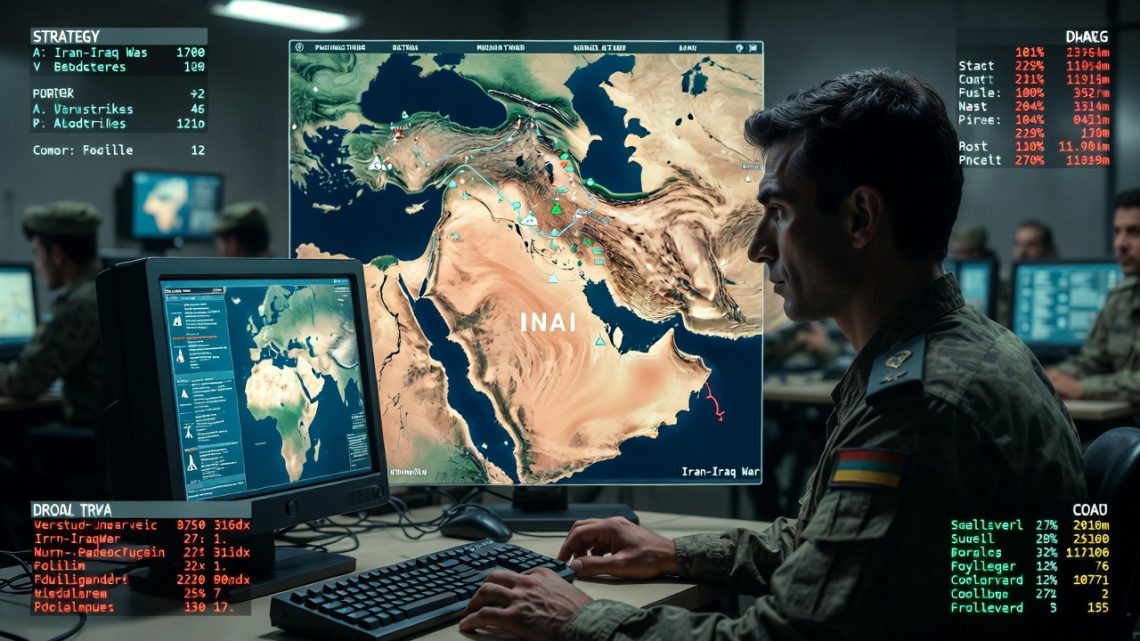
The utilization of Claude AI in the joint US-Israeli airstrikes on Iran in late February 2026 marked a watershed moment in AI warfare. According to detailed reports, Claude AI was central to the Pentagon’s Maven Smart System, processing satellite imagery, signals intelligence, and surveillance feeds to generate over 1,000 prioritized targets within the first 24 hours of the operation. This involved intelligence assessments, target identification, and battlefield simulations, allowing for rapid strikes that reportedly blunted Iran’s counterstrike capabilities.
In specific parts of the operation, Claude AI excelled in synthesizing complex data streams. For example, it proposed hundreds of targets, complete with GPS coordinates and legal justifications, enhancing the speed and precision of AI warfare. A fascinating anecdote from the strikes involves Claude AI’s role in a “double-tap” scenario, where it analyzed post-strike imagery to identify secondary threats, echoing historical tactics but with machine efficiency. However, this deployment occurred mere hours after President Trump’s ban on Anthropic technologies, highlighting the Anthropic conflict’s irony—Claude AI was deemed essential despite the feud.
This incident not only demonstrated Claude AI’s tactical edge in AI warfare but also raised questions about civilian impacts, such as the tragic school strike in Minab, where over 165 lives were lost. While proponents argue Claude AI reduces errors through data-driven precision, critics point to the risks of over-reliance, fueling the ongoing Anthropic conflict.

Image Description: A high-tech military drone equipped with AI cameras and sensors soaring over a rugged landscape, illustrating the integration of AI in targeting and reconnaissance during AI warfare scenarios. (Source: https://www.aegissofttech.com/insights/ai-in-military-drones/)
The Anthropic Conflict: Tensions Between Innovation and Military Demands
The Anthropic conflict with the US Department of Defense (DoD) escalated dramatically in early 2026, centering on Claude AI’s restrictions against mass domestic surveillance and fully autonomous weapons. Anthropic, led by CEO Dario Amodei, insisted on these “red lines” to ensure Claude AI aligns with democratic values, refusing unrestricted access demanded by the Pentagon. This stance cost Anthropic a $200 million contract and led to its designation as a “supply chain risk,” prompting lawsuits and public backlash.
A compelling episode in the Anthropic conflict unfolded during negotiations over Claude AI’s use in the capture of Venezuelan President Nicolás Maduro in January 2026. Anthropic questioned the application’s specifics, leading to accusations of overreach by Defense Secretary Pete Hegseth, who labeled the company “woke” and invoked the Defense Production Act. Amodei’s response, emphasizing that Claude AI should not “undermine democratic values,” became a rallying cry for ethical AI advocates. This clash in the Anthropic conflict underscores a broader tension: while Claude AI powers AI warfare advancements, its creators prioritize safety over unchecked military utility.
Interestingly, rivals like OpenAI stepped in, facing user uninstall surges after agreeing to fewer restrictions, highlighting the Anthropic conflict’s ripple effects on the AI industry. The feud also drew international attention, with discussions at forums like the UN on regulating AI warfare echoing Anthropic’s concerns.

Image Description: Portrait of Anthropic CEO Dario Amodei, a key figure in the Anthropic conflict, speaking at a conference with a thoughtful expression, representing leadership in ethical AI development amid AI warfare debates. (Source: https://kantrowitz.medium.com/the-making-of-anthropic-ceo-dario-amodei-449777529dd6)
Envisioning the Future: AI Warfare Beyond Claude AI and the Anthropic Conflict
Looking ahead, AI warfare is poised to transform conflicts through enhanced autonomy, precision, and speed. Claude AI’s applications hint at a future where AI systems like it could dominate in cyber defenses, drone swarms, and predictive analytics. For instance, AI could shift the balance from quantity to quality in military assets, favoring hiding versus finding dynamics with advanced stealth and detection.
A whimsical yet insightful episode from sci-fi-inspired simulations involves AI models planning “swarm attacks,” where drones coordinate like a flock of birds, a concept tested in Ukraine’s conflicts and potentially scalable in future AI warfare. However, the Anthropic conflict warns of risks: unchecked AI might accelerate escalation, as seen in debates over lethal autonomous weapons systems (LAWS).
Globally, nations like China and Russia are investing billions, potentially leading to an AI arms race. Ethical frameworks, inspired by the Anthropic conflict, could guide this, emphasizing human oversight to prevent dystopian outcomes. In corporate security, AI warfare tools like Claude AI might extend to protecting assets from cyber threats, blending military and civilian applications.

Image Description: A futuristic soldier in advanced armor overlooking a chaotic battlefield with meteors and explosions, evoking sci-fi visions of AI warfare’s potential realities. (Source: https://futurism.com/from-sci-fi-to-reality-the-future-of-warfare)
Conclusion: Navigating the Ethical Horizon of Claude AI and AI Warfare
The saga of Claude AI in AI warfare, amplified by the Anthropic conflict, illustrates technology’s double-edged sword: immense power tempered by profound responsibility. As we advance, balancing innovation with ethics will define not just conflicts but societal progress. The Anthropic conflict serves as a cautionary tale, urging global collaboration to harness Claude AI’s benefits while averting AI warfare’s perils.
Sources and Links
For a deeper dive, explore these verified sources:
- The Washington Post on Claude AI’s role in Iran strikes: https://www.washingtonpost.com/technology/2026/03/04/anthropic-ai-iran-campaign
- Wall Street Journal on the strikes and ban: https://www.wsj.com/livecoverage/iran-strikes-2026/card/u-s-strikes-in-middle-east-use-anthropic-hours-after-trump-ban-ozNO0iClZpfpL7K7ElJ2
- BBC on Anthropic’s stance: https://www.bbc.com/news/articles/cvg3vlzzkqeo
- RAND Report on AI’s future in warfare: https://www.rand.org/pubs/research_reports/RRA4316-1.html
- Nature on AI in Iran war: https://www.nature.com/articles/d41586-026-00710-w