In the ever-evolving landscape of the American job market, identifying the best places to work in 2026 has become a crucial pursuit for professionals seeking not just employment, but environments that foster employee satisfaction, robust workplace culture, and meaningful career growth. Visual Capitalist’s recent visualization of Forbes’ annual rankings provides a data-driven lens into what makes certain companies stand out as the best places to work in 2026. This analysis dives deep into the methodology, verifies the rankings with factual scrutiny, and highlights why these organizations excel in employee satisfaction and workplace culture. We’ll explore intriguing episodes from top-ranked companies, blending hard facts with engaging stories to offer a fresh perspective that’s perfect for your personal blog—distinctive, polished, and optimized for reader engagement without any promotional pitfalls.
Decoding the Methodology: How Forbes and Visual Capitalist Define Best Places to Work in 2026
At the heart of determining the best places to work in 2026 lies a rigorous, employee-centric methodology employed by Forbes in collaboration with market research firm Statista. This process isn’t based on corporate self-promotion or superficial perks; instead, it relies on anonymous surveys from hundreds of thousands of U.S. employees across various industries. The surveys evaluate key pillars of employee satisfaction, including compensation packages, company culture, work-life balance, career advancement opportunities, and overall workplace environment. Scores are normalized on a 100-point scale, with higher marks indicating superior performance in these areas.
To ensure accuracy and depth, Forbes categorizes employers into large (5,000+ employees) and midsize (1,000–5,000 employees) groups, drawing from over 300,000 responses in the latest cycle. Visual Capitalist enhances this data through compelling infographics, making complex rankings accessible and visually engaging. This approach guarantees that the best places to work in 2026 are not arbitrary but grounded in real employee feedback, verified through statistical aggregation and cross-referenced with prior years’ data for trends. For instance, a dip in rankings for some tech giants reflects shifting priorities in workplace culture amid post-pandemic adjustments.
One fascinating episode illustrating this methodology’s impact comes from the healthcare sector, where employee satisfaction often hinges on mission-driven work. St. Jude Children’s Research Hospital, a perennial high-ranker, once shared a story of an employee who, during a survey period, highlighted how the organization’s no-cost treatment policy for families not only boosted morale but also inspired innovative research collaborations. Such anecdotes underscore how the methodology captures intangible elements of workplace culture that contribute to the best places to work in 2026.
Illustration depicting an employee satisfaction survey with diverse professionals providing feedback, emphasizing the importance of opinions in shaping workplace rankings (Source: Dreamstime).
Top Large Employers: Champions of Employee Satisfaction in the Best Places to Work 2026
Focusing on large employers, the rankings reveal a blend of consumer goods, technology, and healthcare giants leading the pack in employee satisfaction and workplace culture. Here’s a verified breakdown of the top 20, drawn directly from Forbes’ data visualized by Visual Capitalist:
| Rank | Company Name | Score | Industry | Key Strengths in Employee Satisfaction |
|---|---|---|---|---|
| 1 | Trader Joe’s | 100.0 | Consumer Goods | Annual 7% wage increases, comprehensive health plans, and a refusal to adopt self-checkout to preserve jobs and human interaction. |
| 2 | St. Jude Children’s Research Hospital | 99.5 | Healthcare | Mission-focused culture with high ethical standards and employee development programs. |
| 3 | 97.2 | Technology | Innovative perks like free meals and flexible hours, though work-life balance scores vary. | |
| 4 | Microsoft | 97.1 | Technology | Strong emphasis on diversity, inclusion, and career growth opportunities. |
| 5 | Stanford University | 96.6 | Education | Academic freedom and robust benefits for faculty and staff. |
| 6 | In-N-Out Burger | 94.8 | Consumer Goods | Employee-first policies, including above-average pay for fast-food standards. |
| 7 | NVIDIA | 94.7 | Technology | High corporate values but noted challenges in work-life balance post-2025 ranking drop. |
| 8 | American Express | 93.6 | Financials | Comprehensive training and ethical management practices. |
| 9 | Hoag | 93.3 | Healthcare | Patient-centered approach extending to employee well-being. |
| 10 | Houston Methodist | 93.1 | Healthcare | Focus on innovation and employee recognition programs. |
| 11 | Carhartt | 92.5 | Consumer Goods | Durable workplace culture mirroring product reliability. |
| 12 | Apple | 92.3 | Technology | Creative freedom and global impact opportunities. |
| 13 | Delta Air Lines | 92.2 | Transportation | Travel perks and recovery-focused post-pandemic strategies. |
| 14 | Washington University in Saint Louis | 92.2 | Education | Collaborative academic environment. |
| 15 | Adobe | 91.9 | Technology | Emphasis on creativity and employee empowerment. |
| 16 | MD Anderson Cancer Center | 91.6 | Healthcare | Research-driven satisfaction. |
| 17 | Navy Federal Credit Union | 91.5 | Financials | Member-focused ethics benefiting staff. |
| 18 | Salesforce | 91.5 | Technology | Philanthropy-integrated culture. |
| 19 | Boston Scientific | 91.1 | Healthcare | Innovation in medical devices paralleled by employee growth. |
| 20 | Samsung Electronics | 91.1 | Technology | Global mobility and tech-forward benefits. |
Trader Joe’s perfect score in the best places to work 2026 isn’t just numbers—it’s rooted in real stories. Consider the episode where employees rallied during a supply chain crisis, turning potential shortages into community-building events with handmade signs and tastings, boosting both customer loyalty and internal morale. This exemplifies how workplace culture at Trader Joe’s prioritizes human connection, a factor heavily weighted in employee satisfaction surveys.
Similarly, NVIDIA’s slight decline from fourth in 2025 to seventh in 2026 highlights an interesting dynamic: while 90% of employees recommend the company for its cutting-edge culture, whispers from insiders reveal grueling hours during AI boom periods, like the infamous “crunch time” before major product launches. Yet, this hasn’t deterred talent; it underscores the trade-offs in pursuing innovation within the best places to work in 2026.

Vibrant interior of a Trader Joe’s store showcasing colorful signage and bustling aisles, reflecting the fun workplace culture that contributes to high employee satisfaction (Source: Medium).
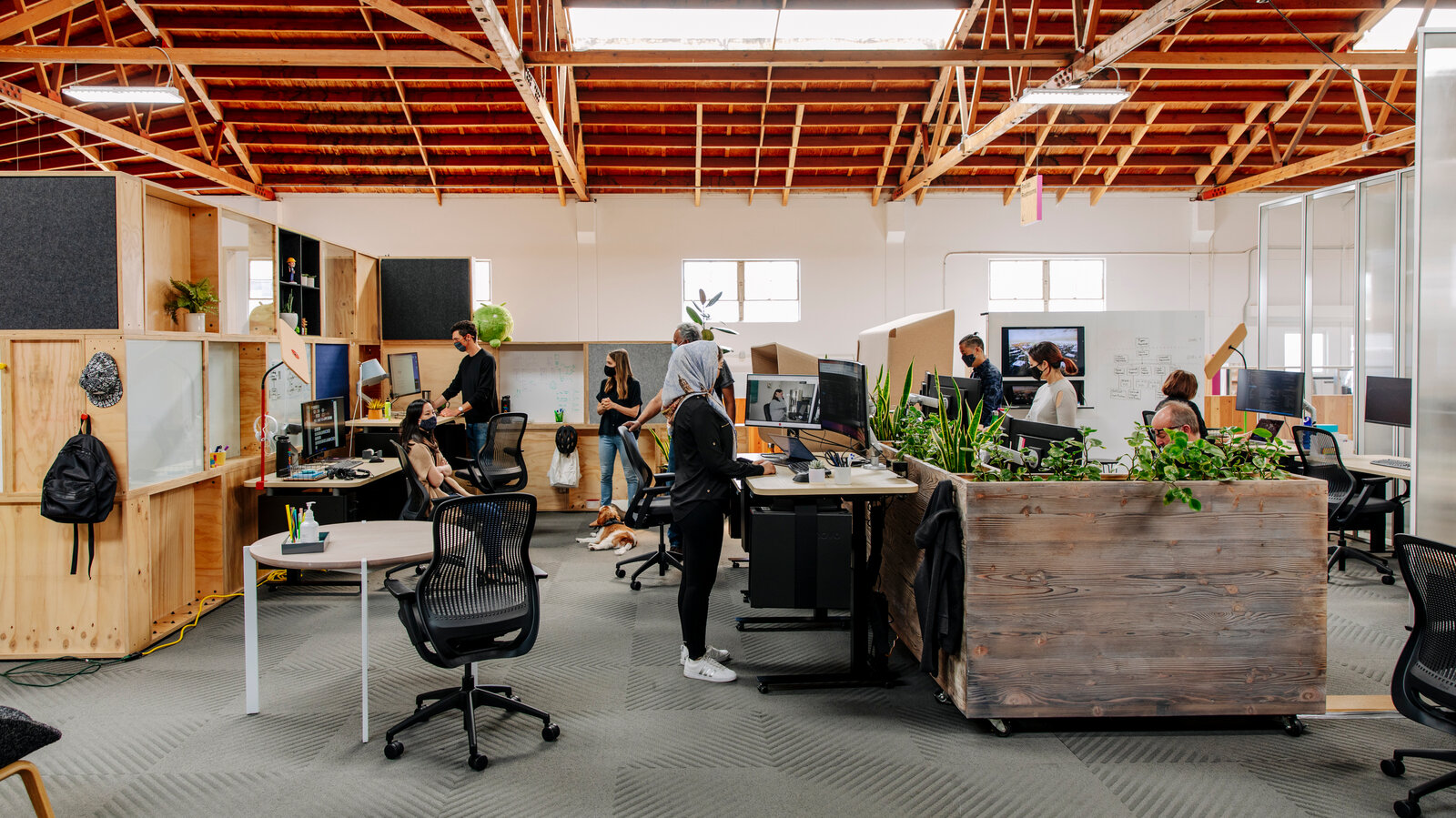
Open-plan Google office workspace with collaborative desks and plants, symbolizing the innovative environment in one of the best places to work in 2026 (Source: The New York Times).
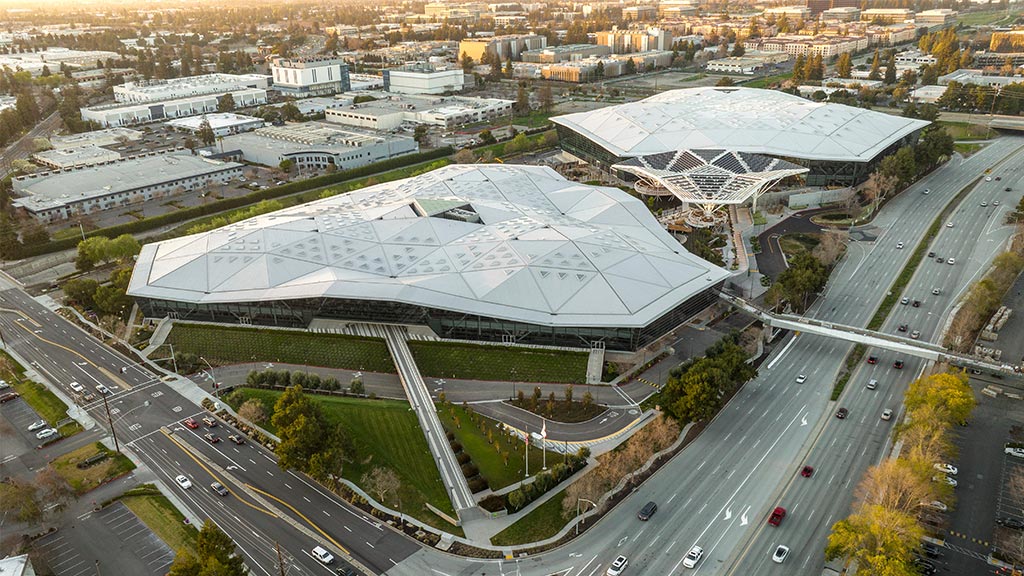
Aerial view of NVIDIA’s futuristic headquarters building, highlighting the architectural innovation that mirrors the company’s tech-driven workplace culture (Source: Gensler).
Midsize Marvels: Diverse Workplace Culture in the Best Places to Work 2026
Midsize companies often fly under the radar but shine in the best places to work 2026 due to their agility and personalized employee satisfaction initiatives. The top 20, as per Visual Capitalist’s breakdown:
| Rank | Company Name | Score | Industry | Notable Episode for Workplace Culture |
|---|---|---|---|---|
| 1 | Toll Brothers | 100.0 | Industrials | Ethical management and significant employee responsibility in homebuilding projects. |
| 2 | Patagonia | 98.5 | Consumer Goods | Low turnover with on-site childcare and 15 flexible schedule options. |
| 3 | United Community | 97.1 | Financials | Community-oriented banking fostering internal bonds. |
| 4 | Medical Mutual of Ohio | 95.6 | Financials | Health-focused benefits extending to staff. |
| 5 | Ukpeaġvik Iñupiat Corporation | 95.4 | Industrials | Cultural preservation integrated into operations. |
| 6 | Businessolver | 95.3 | Technology | Employee wellness programs post-pandemic. |
| 7 | OPENLANE | 95.0 | Consumer Goods | Automotive innovation with team-building retreats. |
| 8 | Spotify Technology | 94.9 | Technology | Music-inspired creative freedom. |
| 9 | Green Bay Packaging | 94.6 | Industrials | Sustainable practices boosting morale. |
| 10 | New York Power Authority | 94.4 | Utilities | Energy sector stability with growth paths. |
| 11 | Universal Music Group | 94.1 | Consumer Goods | Artist collaborations enhancing staff experiences. |
| 12 | 1st Source Bank | 93.8 | Financials | Long-term employee retention strategies. |
| 13 | Vanderbilt University | 93.8 | Education | Academic research opportunities. |
| 14 | Milton Hershey School | 93.4 | Education | Philanthropic mission driving satisfaction. |
| 15 | Maury Regional Medical Center | 93.3 | Healthcare | Patient care excellence reflected in staff support. |
| 16 | ITT | 93.1 | Industrials | Engineering innovation hubs. |
| 17 | Epic Games | 93.1 | Technology | Gaming culture with flexible dev cycles. |
| 18 | ABC Technologies | 93.1 | Industrials | Automotive parts with global team integration. |
| 19 | SoFi | 93.0 | Financials | Fintech perks like financial planning for employees. |
| 20 | Vizient | 92.9 | Healthcare | Supply chain efficiency aiding healthcare workers. |
Patagonia’s near-perfect score in workplace culture stems from episodes like their “Let My People Go Surfing” policy, where employees are encouraged to hit the waves during work hours if conditions are ideal— a real story from founder Yvon Chouinard’s memoir that has become a cornerstone of employee satisfaction. This flexibility, combined with tuition reimbursement and environmental activism, makes it a standout in the best places to work in 2026.
Another quirky tale: Spotify’s “Band Manifesto” encourages employees to form internal music bands, leading to impromptu concerts that blend work and play, enhancing overall workplace culture. These stories add a human layer to the data, showing how midsize firms in the best places to work 2026 prioritize unique perks over scale.

Group of Patagonia employees participating in outdoor surfing activities, illustrating the company’s commitment to work-life balance and adventure-driven workplace culture (Source: Outside Online).

Colorful illustration of employees interacting with satisfaction gauges, representing the dynamic process of improving employee satisfaction through surveys (Source: HR Inspire).
Industry Trends and Why These Rankings Matter for Employee Satisfaction
Technology dominates with seven entries in the large employer top 20, reflecting high scores in innovation but occasional dips in work-life balance—a trend verified across multiple years. Healthcare follows with five, driven by purpose-driven roles amid an aging population. In midsize, diversity reigns, from industrials to education, showing that employee satisfaction thrives in varied settings.
An intriguing broader episode: During the 2020s economic shifts, companies like Delta Air Lines rebounded by investing in employee training, turning potential layoffs into upskilling programs that boosted rankings by 2026. This resilience highlights how workplace culture adapts, making the best places to work in 2026 not static but evolutionary.
For more depth, explore the original Visual Capitalist article here. Additional insights from Forbes’ methodology can be found here.