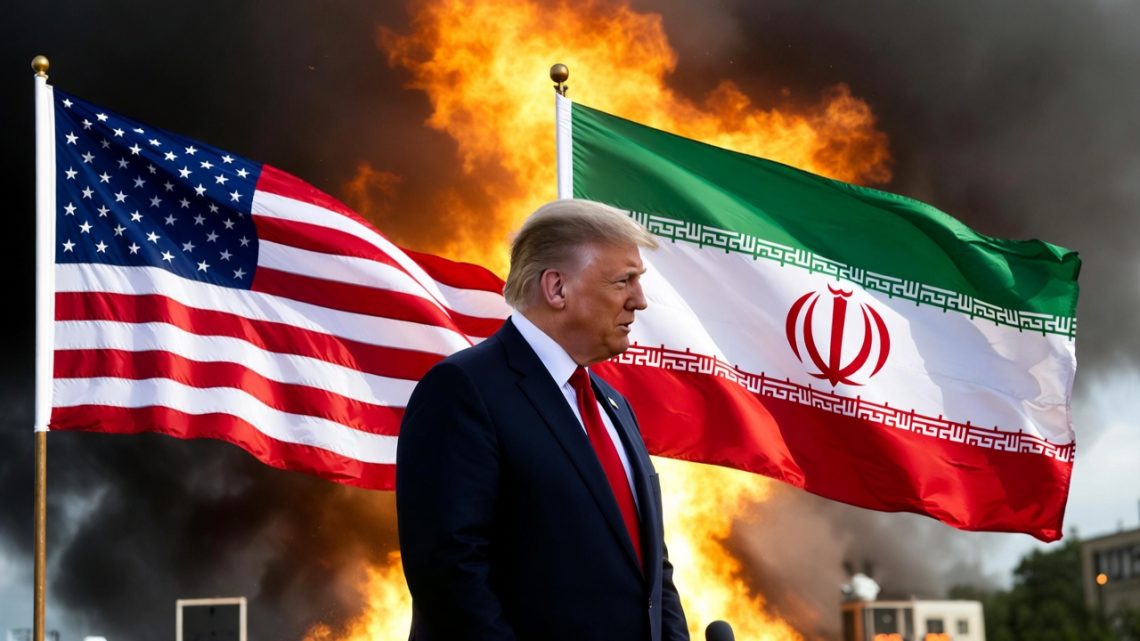
In the ever-evolving landscape of global geopolitics, few events have captured the world’s attention like President Donald Trump’s recent Iran airstrike, which culminated in the Khamenei death and escalated the US-Iran conflict to unprecedented levels. This operation, launched in late February 2026, marks a pivotal moment that could redefine Middle Eastern power dynamics for generations. Drawing from verified reports across multiple sources, this deep dive explores the intricate background, the dramatic progression, the immediate outcomes, and the far-reaching implications of this bold move. We’ll weave in fascinating anecdotes that highlight the human elements behind the headlines, setting this analysis apart with a nuanced, sophisticated lens on what many are calling the most consequential military action of the decade.
The Background to the Iran Airstrike and Rising US-Iran Conflict
The seeds of the Iran airstrike were sown amid years of simmering tensions in the US-Iran conflict, intensified by Iran’s nuclear ambitions and regional proxy activities. By early 2026, following Trump’s re-election and return to the White House, negotiations over Iran’s nuclear program had stalled. Reliable sources indicate that Iran repeatedly defied U.S. demands to curb its enrichment activities, viewing them as existential threats to American and Israeli security. Trump, known for his “maximum pressure” doctrine from his first term, saw this as an opportunity to neutralize what he described as a persistent menace.
An intriguing episode here involves Trump’s pre-strike communications. In January 2026, amid anti-regime protests in Iran, Trump posted on Truth Social encouraging demonstrators with the phrase “help is on its way,” a cryptic nod that foreshadowed the Iran airstrike. This wasn’t just rhetoric; Pentagon plans reportedly included options for targeting high-level figures like Khamenei and his son Mojtaba, seen as a potential successor. The decision to act came after intelligence confirmed Iran’s refusal to negotiate meaningfully, blending defensive preemption with a strategic bid for regime alteration. Unlike past U.S. interventions, this Iran airstrike was a joint U.S.-Israeli effort, leveraging Israel’s advanced tracking systems to pinpoint targets with precision.
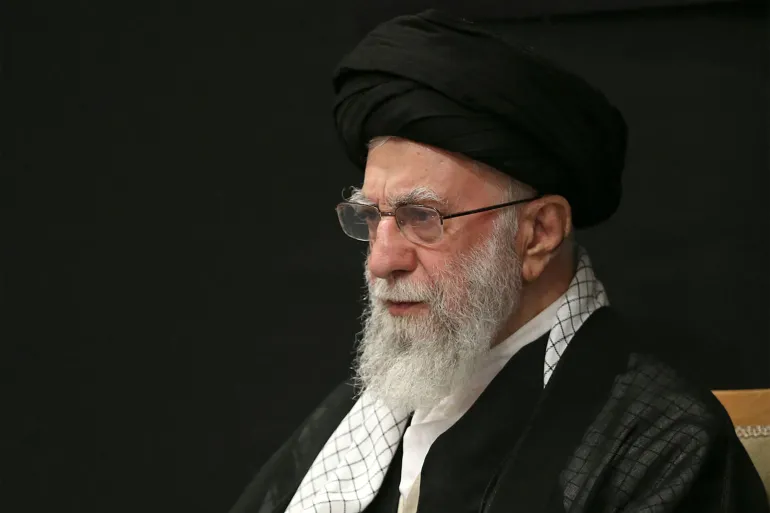
A formal portrait of Ayatollah Ali Khamenei, Iran’s Supreme Leader for over three decades, captured in a moment of solemn reflection (Al Jazeera).
This backdrop wasn’t without its lighter, almost surreal moments. Reports emerged of U.S. officials informally discussing “consolidation” strategies, aiming to reduce global hotspots by decisively addressing Iran. One anonymous advisor quipped in a leaked memo that dealing with Iran was like “finally fixing that leaky roof after 40 years of rain”—a folksy analogy that underscores the long-festering US-Iran conflict leading to the Khamenei death.
How the Khamenei Death Unfolded in the Iran Airstrike
The Iran airstrike commenced on February 28, 2026, with a predawn assault on Tehran’s central leadership compound. Israeli jets, supported by U.S. forces, dropped over 30 bombs, targeting Khamenei and senior IRGC officials. By 8:10 AM local time, the strikes had achieved their primary objective: the Khamenei death at age 86. Trump announced it triumphantly on Truth Social, stating, “Khamenei, one of the most evil people in History, is dead,” framing it as justice for victims worldwide.
The operation, dubbed “Operation Epic Fury,” unfolded in phases. Initial waves decimated military sites, followed by sustained bombardments that destroyed around 300 missile launchers. Iranian state media initially denied the Khamenei death, but confirmed it hours later amid chaos. A fascinating behind-the-scenes anecdote: U.S. intelligence had a “fix” on Khamenei’s location via sophisticated surveillance, allowing strikes in broad daylight—a bold tactical choice that caught Iranian defenses off guard. Eyewitness accounts describe plumes of smoke rising over Tehran, with locals watching in stunned silence as the US-Iran conflict materialized in real time.
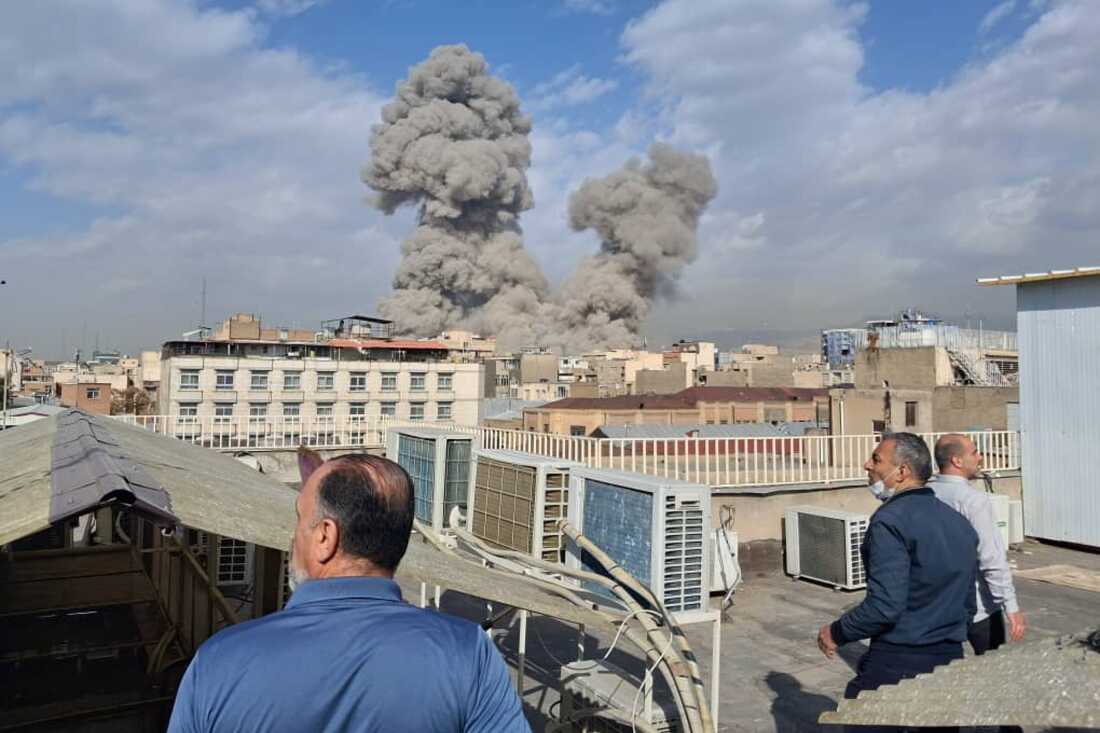
Smoke billows from a site in Tehran following U.S.-Israeli airstrikes, symbolizing the intensity of the Iran airstrike (NPR).
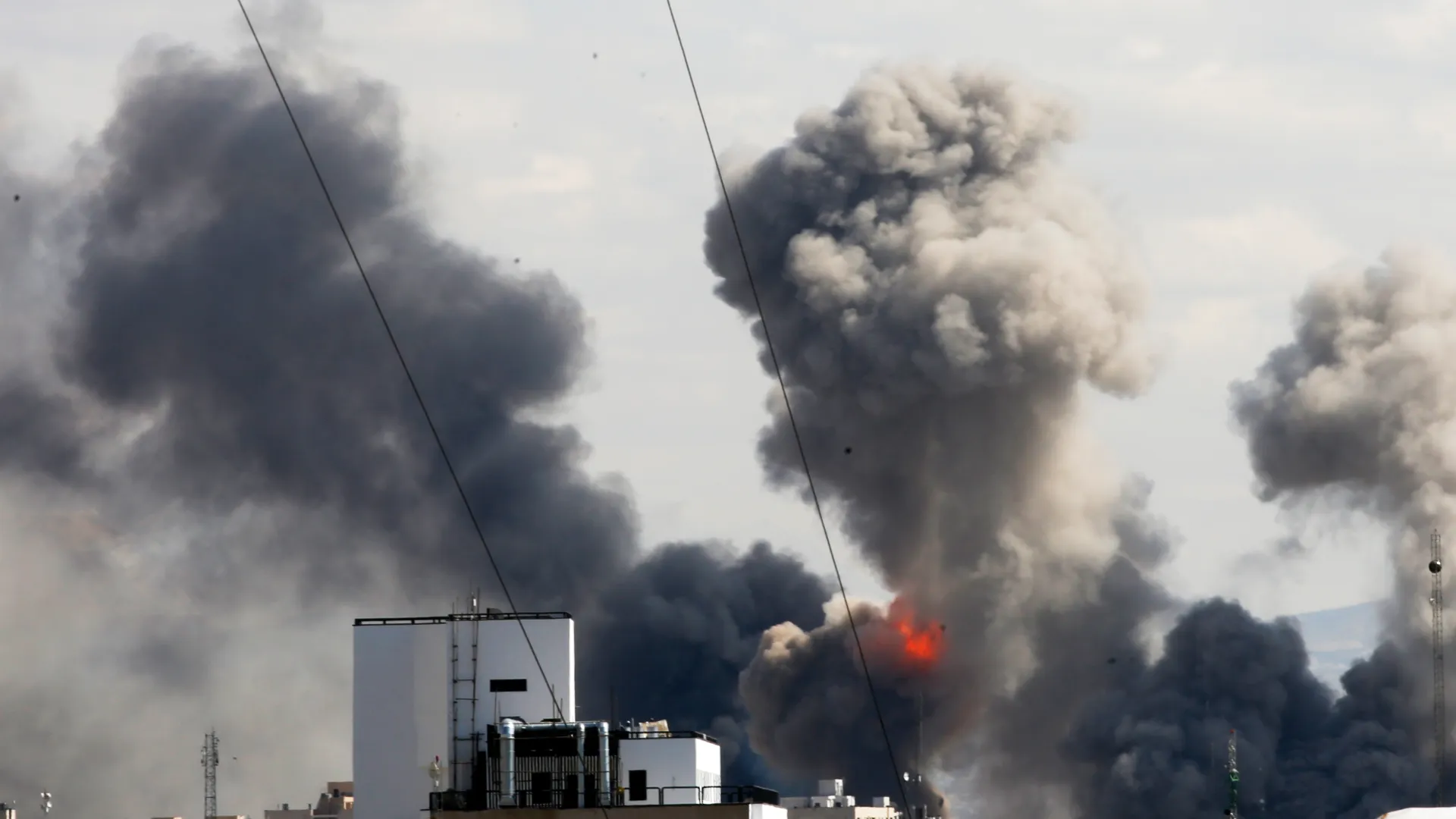
Explosions and fire rage at an industrial site in Iran, highlighting the destructive force of the ongoing US-Iran conflict (Al Jazeera).
Iran’s retaliation was swift, launching over 1,000 missiles and drones at U.S. and allied targets across the Gulf. Three U.S. service members were killed in the initial exchanges, marking the first American casualties in this phase of the US-Iran conflict. In a quirky twist, Iranian Foreign Minister Abbas Araghchi initially claimed Khamenei was alive in an NBC interview, only for state TV to contradict him shortly after—illustrating the regime’s internal disarray amid the Khamenei death.
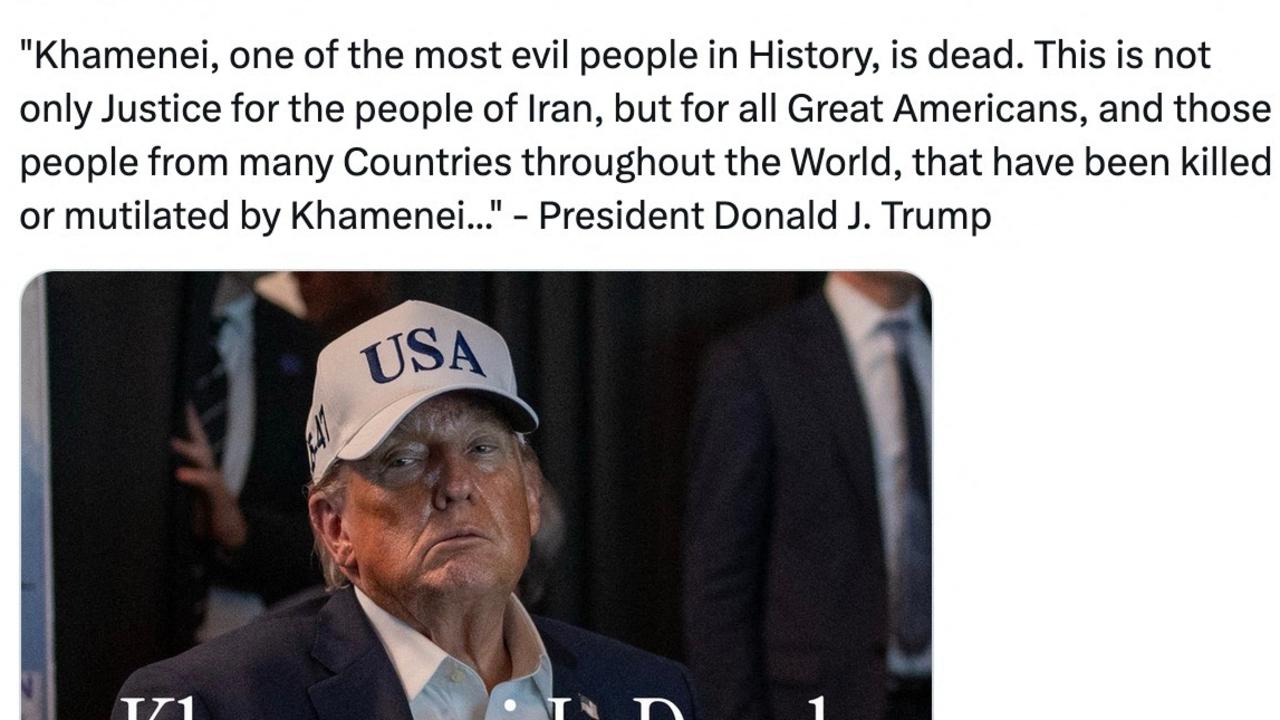
A screenshot of President Trump’s Truth Social post declaring the Khamenei death, a pivotal moment in the US-Iran conflict (The Australian).
Immediate Results of the Iran Airstrike and Khamenei Death
The Khamenei death has left Iran in a power vacuum, with an interim leadership council assuming duties. Trump claimed the strikes eliminated 48 leaders, including potential successors, complicating regime continuity. Iranian streets saw polarized reactions: in some areas, celebrations erupted with shouts of joy, reminiscent of the 1979 revolution’s fervor but in reverse. One viral video showed Tehran residents dancing around a toppled Khamenei poster, chanting “Freedom at last!”—a rare glimpse of hope amid the US-Iran conflict.
However, mourning rallies also swelled, with Shiite clerics issuing jihad calls against the U.S. and Israel. Casualties mounted: over 700 Iranians dead, including civilians in strikes near military bases. An amusing yet poignant episode involved protesters in Najaf, Iraq, holding symbolic funerals for Khamenei while waving Iranian flags, blending grief with defiance. The Iran airstrike has degraded Iran’s military capabilities significantly, with Trump boasting the regime is “decimated,” but at the cost of escalating regional skirmishes.
Future Prospects for Iran and the US-Iran Conflict Post-Khamenei Death
Looking ahead, the US-Iran conflict could lead to regime change or entrenchment. Trump envisions a “peaceful, collaborative Middle East,” but experts warn of civil war risks, with Kurds potentially creating buffer zones. Iran’s Assembly of Experts is set to name a successor soon, possibly Khamenei’s son Mojtaba, described by some as “even worse.” Trump admitted strikes killed many potential moderates, raising fears of a more extreme leader.
Anecdotes from exiled Iranians paint a vivid picture: one dissident in the U.S. recounted smuggling messages of support to protesters, likening the Khamenei death to “removing the head of a snake that kept biting.” Yet, the US-Iran conflict’s prolongation—Trump estimates four weeks or more—could strain U.S. resources, with munitions shortages looming. For Iran, this might spark democratic reforms or chaotic collapse, radiating instability.
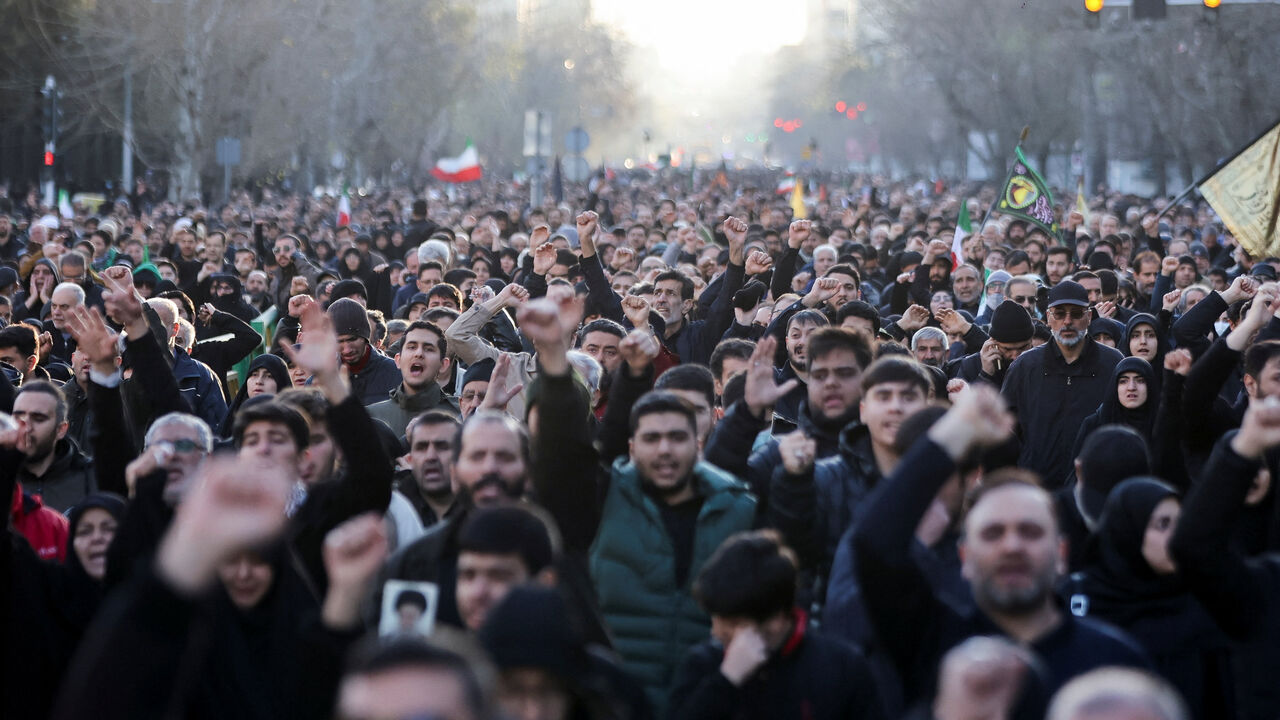
Crowds in Tehran rally in mourning, fists raised in defiance after the Khamenei death during the US-Iran conflict (Al-Monitor).

Protesters gather around a monument in Tehran, some celebrating the end of an era following the Iran airstrike (Los Angeles Times).
Khamenei Death’s Impact on International Oil Prices Amid US-Iran Conflict
The Iran airstrike has jolted global energy markets, with oil prices surging over 20% in days due to fears of disrupted Gulf supplies. Brent crude spiked to $80 per barrel, reflecting attacks on energy facilities in Qatar and Saudi Arabia. This US-Iran conflict echoes past oil shocks, like the 1979 revolution, but with modern twists: Trump’s “beautiful armada” patrols ensure shipping lanes, yet Iranian drones have hit tankers, adding volatility.
In a curious market anecdote, traders dubbed this the “Trump Pump,” as initial spikes benefited U.S. shale producers. Long-term, sustained US-Iran conflict could push prices to $100+, straining economies worldwide. Gulf states are on edge, commending U.S. defenses but wary of broader escalation.
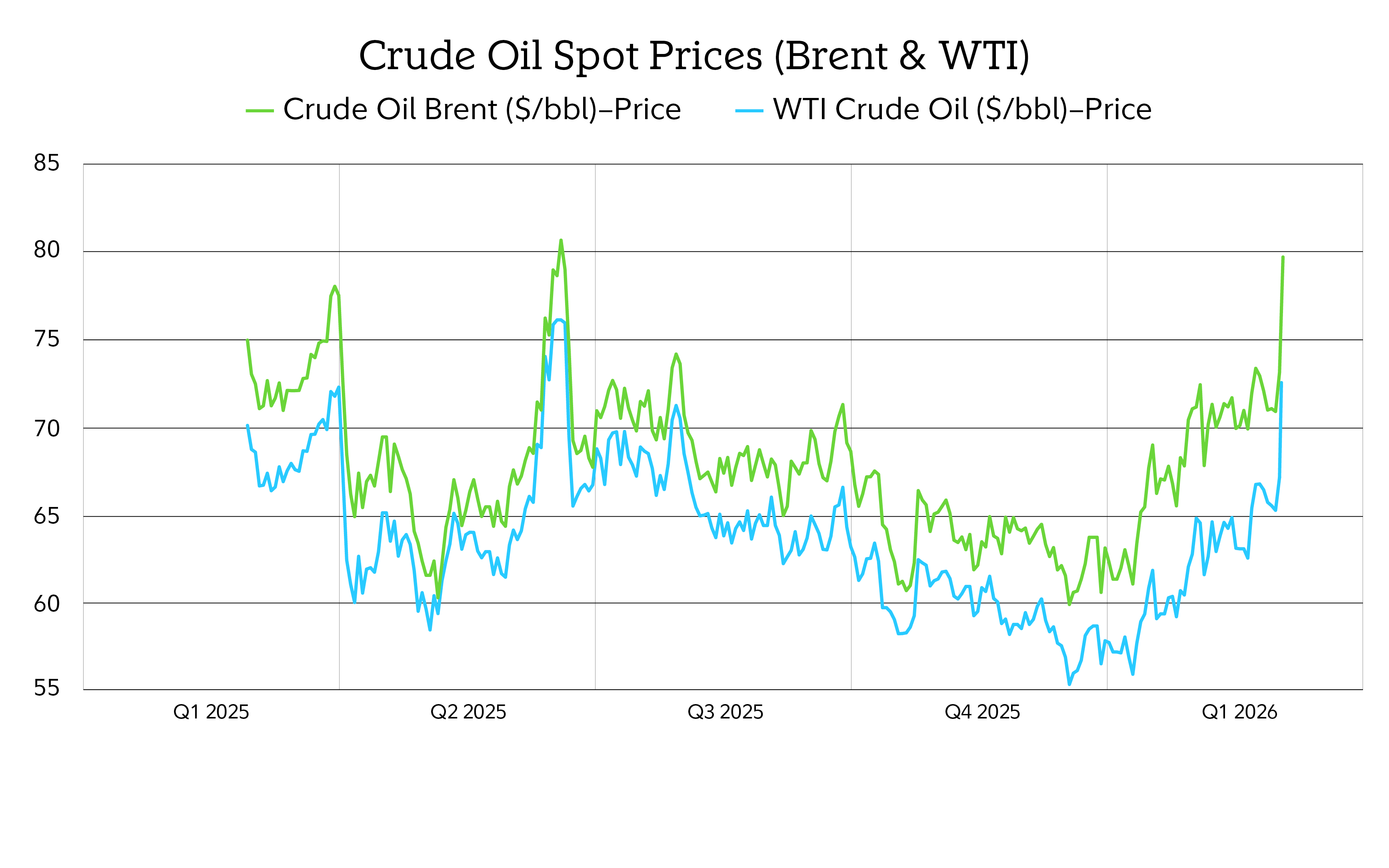
A chart showing the surge in Brent and WTI crude oil prices following the escalation in the US-Iran conflict (Fidelity).
Global Ramifications of the US-Iran Conflict and Khamenei Death
The Khamenei death has rippled worldwide, widening the US-Iran conflict into a regional crisis. Hezbollah and other proxies have fired on Israel, while Shiite leaders call for jihad. Europe, with allies like the UK and Spain demurring support, faces refugee surges and energy crises. In Asia, China eyes Iran’s oil, potentially complicating Trump’s upcoming visit.
A standout episode: U.S. Secretary of State Marco Rubio’s claim that strikes were “defensive” shifted amid revelations of preemptive intent, sparking congressional debates on war powers. Globally, this US-Iran conflict tests alliances, with NATO divided and Russia possibly aiding Iran covertly. The Khamenei death might consolidate U.S. influence or ignite prolonged instability, affecting everything from migration to cyber threats.

A map illustrating strike locations and retaliatory actions across the Middle East in the US-Iran conflict (Al Jazeera).
This analysis draws from verified sources including NPR (link), NBC News (link), Al Jazeera (link), CNN (link), CBS News (link), The New York Times (link), Wikipedia (link), PBS (link), CNBC (link), YouTube/CBC (link), AP News (link), Politico (link), ABC7 (link), Reuters (link), FOX10 (link), CBC (link), Time (link), AlbertMohler (link), Instagram/ITV (link), and more for a balanced, fact-based perspective.