In the intricate tapestry of international relations, few narratives capture the dramatic shifts quite like US-Iran tensions. What began as a robust alliance in the mid-20th century has evolved into a saga marked by diplomatic breakthroughs, betrayals, and recurring escalations. This exploration delves into the chronological evolution of US-Iran tensions from the 1970s to the present, highlighting how economic interests, ideological clashes, and geopolitical maneuvers have fueled this ongoing dynamic. By examining verified historical events, we uncover the layers of US-Iran tensions that continue to shape global politics today.
1970s: The Twilight of Alliance and the Dawn of US-Iran Tensions
The 1970s marked the pinnacle of cooperation between the United States and Iran under Shah Mohammad Reza Pahlavi, yet it also sowed the seeds for future US-Iran tensions. Iran, a key Cold War ally, received extensive U.S. support, including military aid and nuclear technology through the Atoms for Peace program. In 1972, President Richard Nixon visited Tehran, promising unlimited arms sales (short of nuclear weapons) in exchange for Iran’s role in safeguarding U.S. interests in the Middle East. This era of US-Iran tensions was subtle, emerging from economic strains like Iran’s oil price hikes via OPEC, which strained U.S. finances during the 1973 oil crisis.
A fascinating episode from this period involves the Shah’s extravagant lifestyle, which symbolized the growing disconnect with his people. In 1971, he hosted a lavish Persepolis celebration costing over $100 million, featuring imported French chefs and exotic birds, while many Iranians faced poverty. This opulence, backed by U.S. support, fueled domestic resentment and foreshadowed the revolution. By 1977, President Jimmy Carter toasted the Shah in Tehran, calling Iran an “island of stability” amid US-Iran tensions—ironic words, as protests erupted soon after.
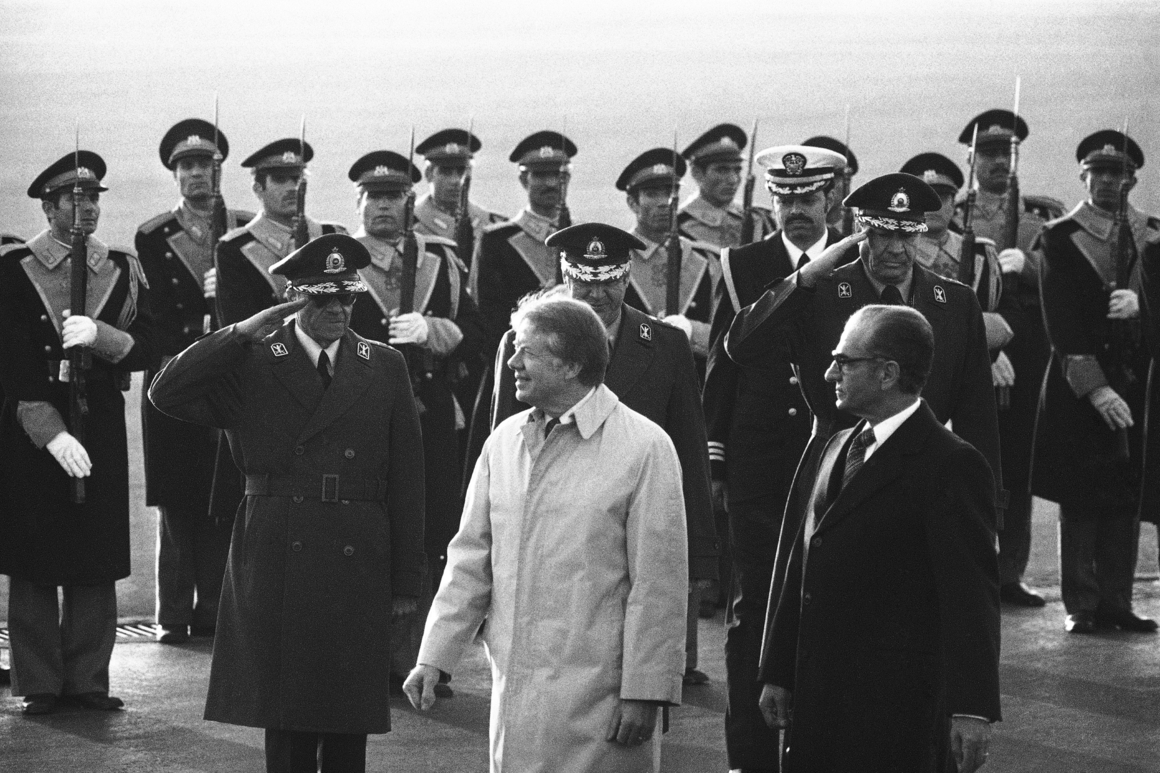
Image Description: President Jimmy Carter inspecting an Iranian honor guard alongside Shah Mohammad Reza Pahlavi during a 1977 state visit, capturing the era’s close alliance before the revolution intensified US-Iran tensions.
As the decade closed, the 1979 Iranian Revolution transformed US-Iran tensions dramatically. Ayatollah Ruhollah Khomeini led the overthrow of the Shah on February 11, 1979, establishing the Islamic Republic. The U.S. had underestimated the revolution’s momentum, with CIA reports failing to predict its scale. An intriguing anecdote: Khomeini, exiled in France, used cassette tapes to smuggle sermons into Iran, mobilizing millions—a low-tech innovation that outmaneuvered high-tech U.S. surveillance.
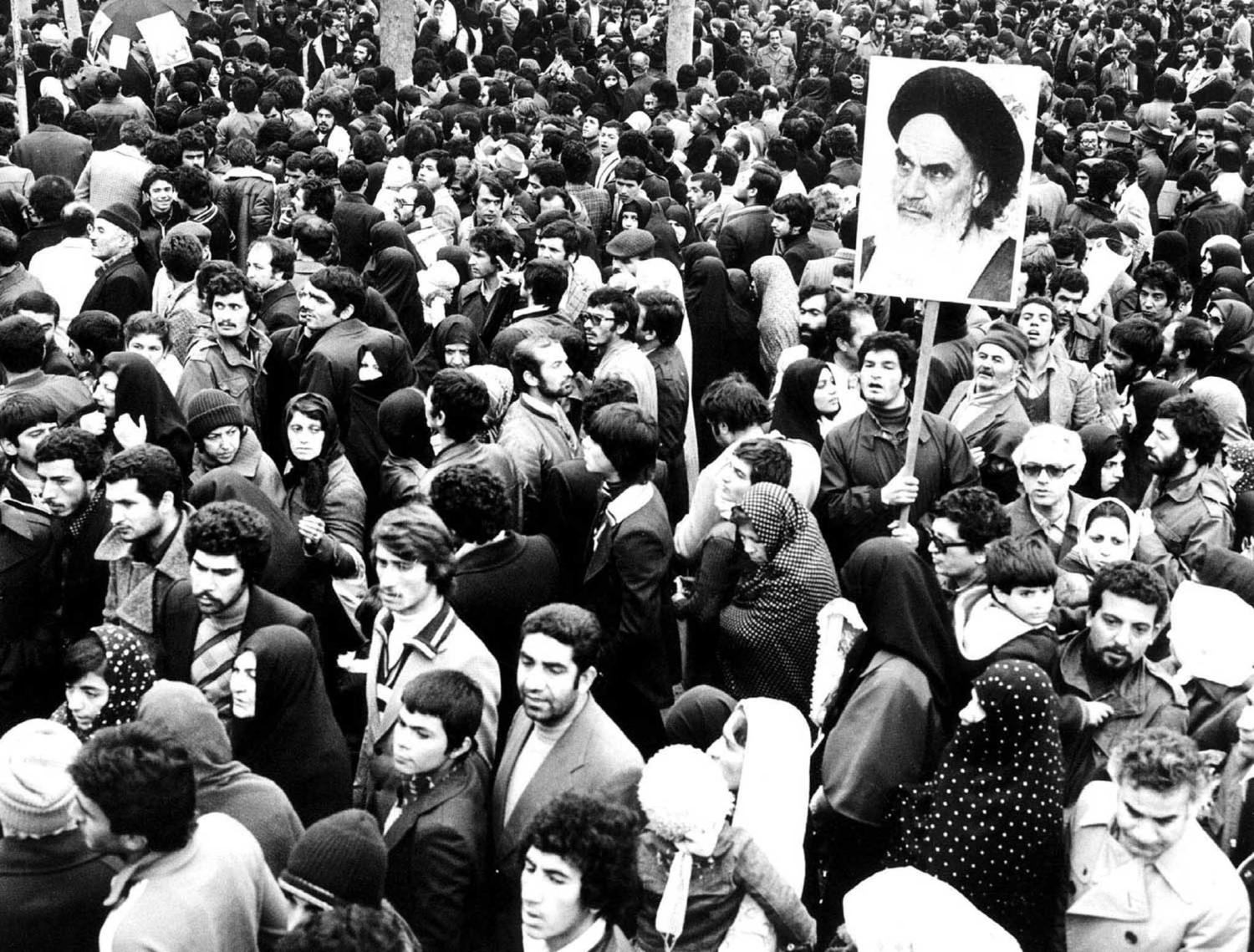
Image Description: Crowds of protesters in Tehran during the 1979 Iranian Revolution, holding posters of Ayatollah Khomeini, illustrating the mass mobilization that escalated US-Iran tensions.
1980s: Hostage Crisis and Proxy Wars Deepen US-Iran Tensions
The 1980s amplified US-Iran tensions through direct confrontations and indirect conflicts. The Iran Hostage Crisis, beginning November 4, 1979, saw Iranian students seize the U.S. Embassy in Tehran, holding 52 Americans for 444 days. Triggered by Carter’s decision to admit the Shah for medical treatment, this event severed diplomatic ties. Carter froze $12 billion in Iranian assets and banned oil imports. The hostages’ release coincided with Ronald Reagan’s inauguration on January 20, 1981, via the Algiers Accords, but suspicions lingered about backchannel deals.
A riveting episode: The failed Operation Eagle Claw rescue attempt in April 1980 resulted in a helicopter crash, killing eight U.S. servicemen—a debacle that highlighted U.S. vulnerabilities and intensified US-Iran tensions. Meanwhile, the Iran-Iraq War (1980-1988) saw the U.S. tilt toward Iraq, providing intelligence and arms to Saddam Hussein, despite Iran’s pleas. Yet, in a twist of irony, the 1985-1986 Iran-Contra Affair revealed secret U.S. arms sales to Iran to fund Nicaraguan Contras, bypassing Congress. Reagan’s administration faced scandal, with Oliver North’s shredded documents becoming a symbol of covert intrigue.
In 1988, U.S. forces engaged Iran in Operation Praying Mantis, destroying oil platforms after a mine incident. Tragically, the USS Vincennes shot down Iran Air Flight 655 on July 3, killing 290 civilians; the U.S. later paid compensation but never formally apologized, further entrenching US-Iran tensions.
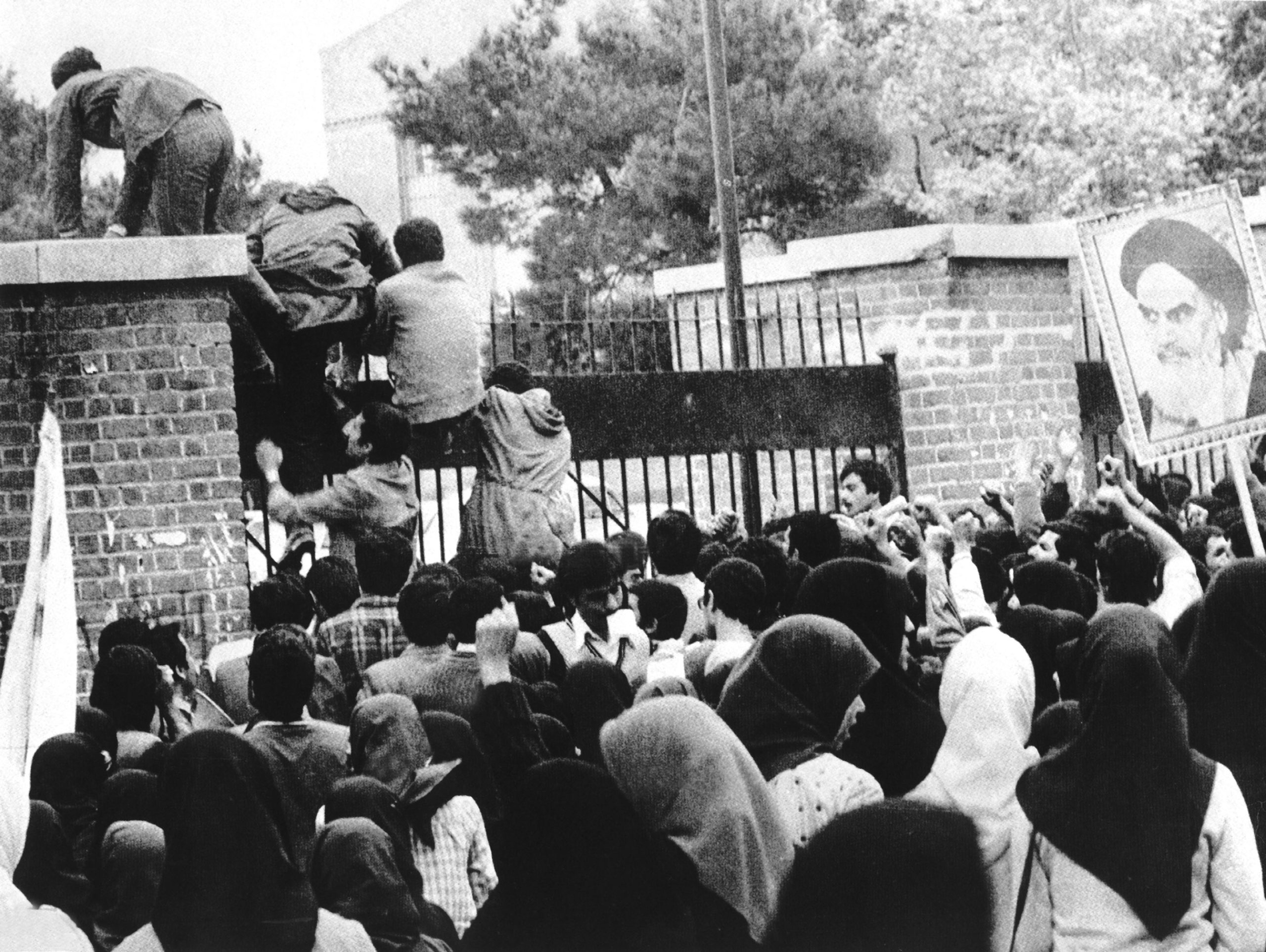
Image Description: Iranian protesters scaling the walls of the U.S. Embassy in Tehran during the 1979 hostage crisis, a pivotal event that crystallized US-Iran tensions.
1990s-2000s: Sanctions and the “Axis of Evil” Era in US-Iran Tensions
The 1990s saw US-Iran tensions formalized through sanctions. In 1995, President Bill Clinton imposed a total trade embargo, citing Iran’s support for terrorism. The 1996 Iran-Libya Sanctions Act targeted foreign investments in Iranian energy. Despite this, moderate Iranian President Mohammad Khatami’s 1998 call for a “dialogue of civilizations” sparked brief hope, with U.S. easing on imports like carpets.
Post-9/11, under George W. Bush, US-Iran tensions surged. Bush labeled Iran part of the “Axis of Evil” in 2002 for pursuing weapons of mass destruction. Accusations flew: Iran allegedly armed Iraqi insurgents during the 2003 U.S. invasion of Iraq. A lesser-known episode: In 2003, Iran proposed a “grand bargain” via Swiss channels, offering nuclear transparency for normalized relations, but the U.S. ignored it, opting for confrontation.
The 2000s also featured naval skirmishes in the Strait of Hormuz and U.S. drone incursions. An amusing yet tense anecdote: In 2008, Iranian speedboats approached U.S. warships, prompting warnings; Iran dismissed it as routine, but it underscored the hair-trigger nature of US-Iran tensions.
2010s: Nuclear Deal and Withdrawal Heighten US-Iran Tensions
The 2010s brought a fleeting thaw amid persistent US-Iran tensions. Under Barack Obama, indirect talks led to the 2015 Joint Comprehensive Plan of Action (JCPOA), or Iran nuclear deal. Iran agreed to limit enrichment and allow IAEA inspections in exchange for sanctions relief. The deal’s signing was historic, with Obama and Iranian President Hassan Rouhani’s 2013 phone call marking the first leader-level contact since 1979.
However, Donald Trump’s 2018 withdrawal from the JCPOA reignited US-Iran tensions via “maximum pressure” sanctions, crippling Iran’s economy. Escalations peaked with the January 3, 2020, drone strike killing General Qasem Soleimani in Baghdad. Iran retaliated by striking U.S. bases in Iraq, injuring over 100 troops. A bizarre episode: Amid COVID-19, U.S. sanctions hampered Iran’s response, leading to accusations of “medical terrorism,” while Iran launched its first military satellite, defying U.S. warnings.
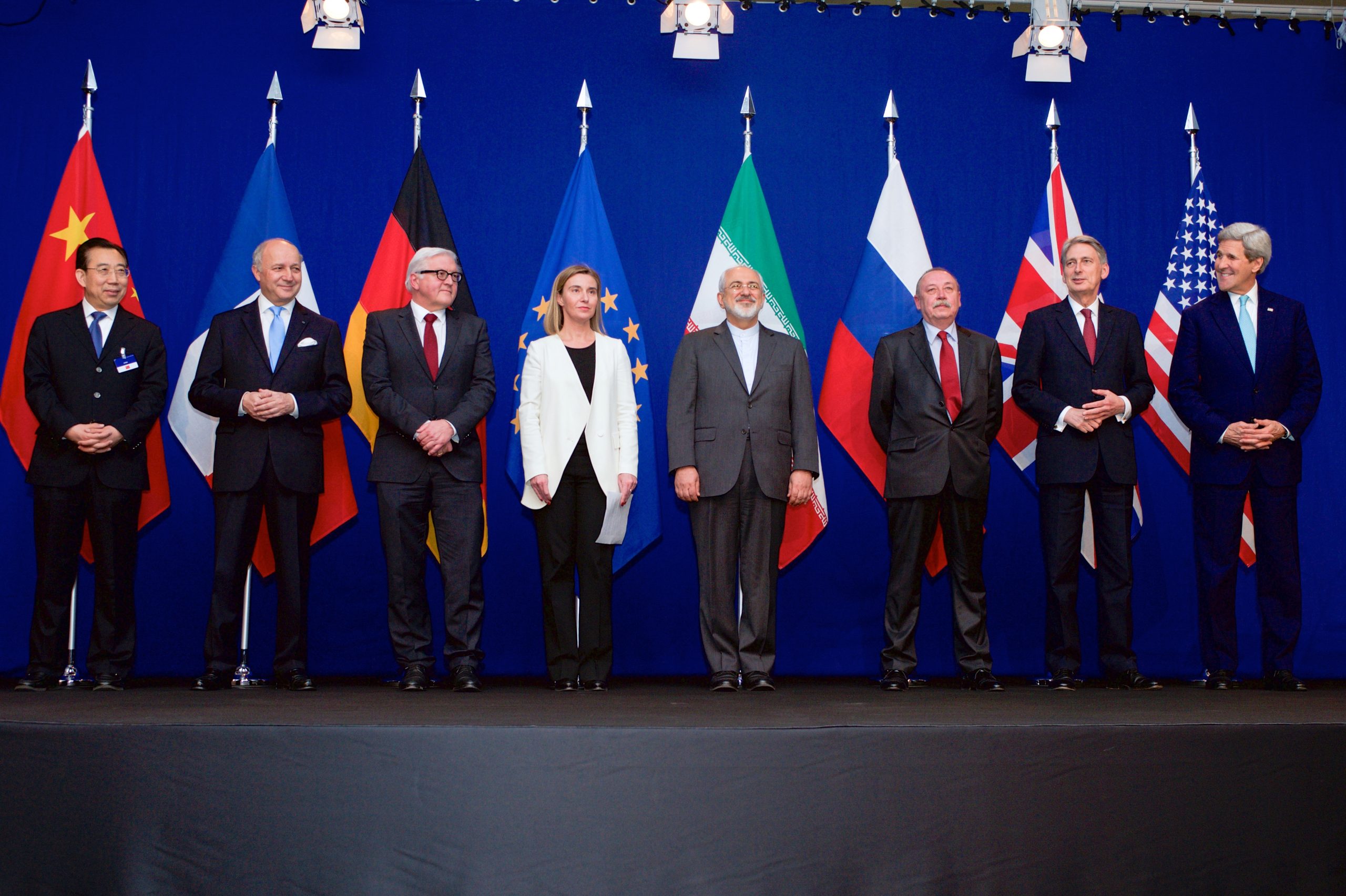
Image Description: Diplomats from P5+1 nations and Iran posing after the 2015 JCPOA signing, a brief respite in US-Iran tensions.
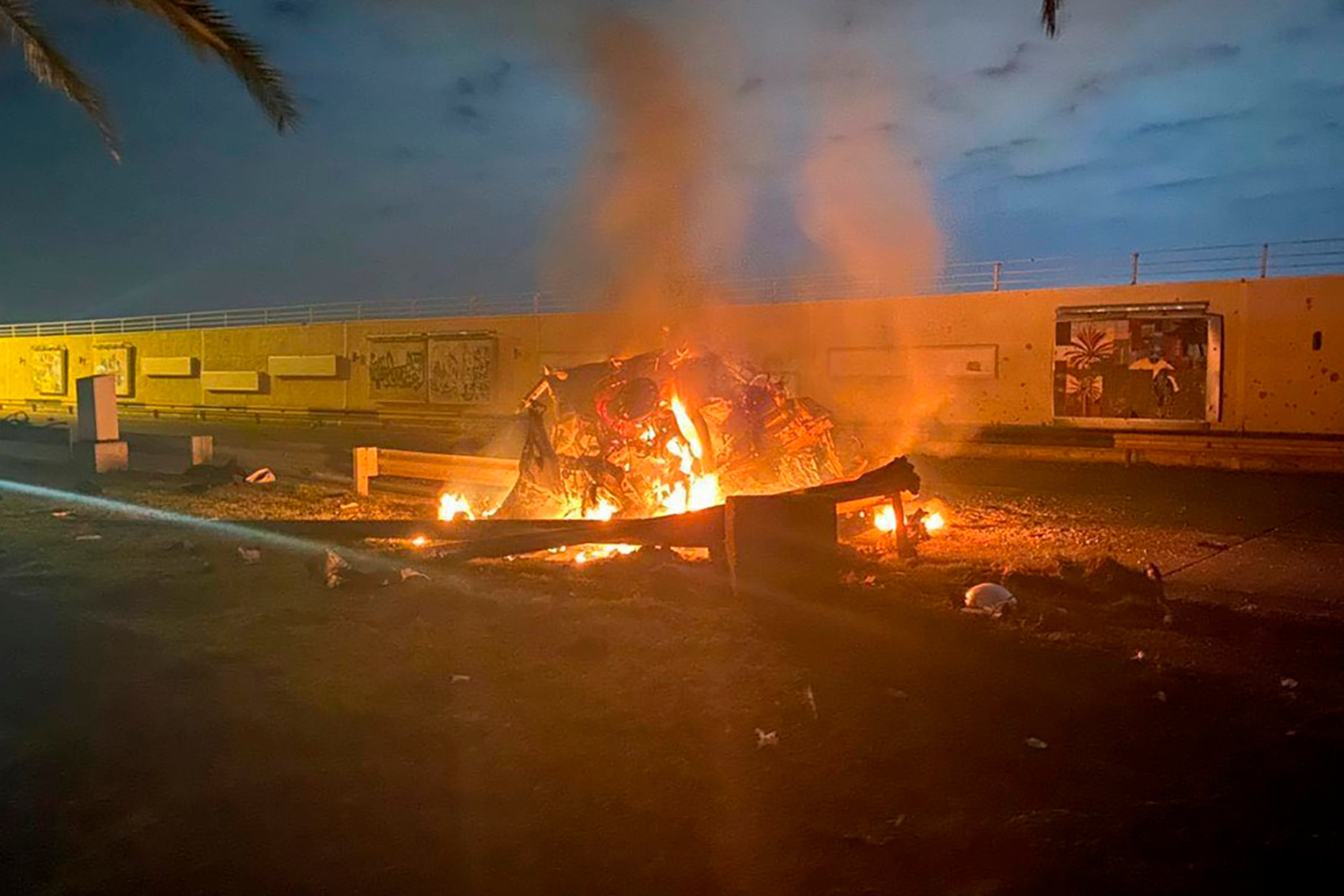
Image Description: Burning wreckage from the 2020 drone strike that killed General Qasem Soleimani, escalating US-Iran tensions to new heights.
2020s: Proxy Conflicts and Recent Escalations in US-Iran Tensions
Under Joe Biden (2021-2025), attempts to revive the JCPOA stalled amid Iran’s uranium enrichment advances. US-Iran tensions manifested through proxies: Iran-backed militias attacked U.S. forces in Syria and Iraq, prompting U.S. airstrikes. In 2023, a prisoner swap freed Americans for $6 billion in frozen funds, but accusations of Iranian interference in U.S. elections persisted.
Trump’s second term (2025 onward) intensified US-Iran tensions. In February 2025, he reinstated “maximum pressure,” threatening strikes. Talks in Oman began in April but collapsed after U.S. bombings of Iranian nuclear sites (Fordow, Natanz) on June 21, 2025, during the Iran-Israel war. By 2026, mass protests in Iran over economic woes led to thousands of deaths; Trump imposed 25% tariffs on Iran’s trade partners and built up U.S. military presence.
A gripping recent episode: The February 28, 2026, U.S.-Israel joint Operation Epic Fury targeted Iranian leadership, killing Supreme Leader Ali Khamenei. Iran retaliated with missiles on U.S. bases, closing the Strait of Hormuz and sparking global condemnation. This cycle of US-Iran tensions underscores the fragility of peace in the region.
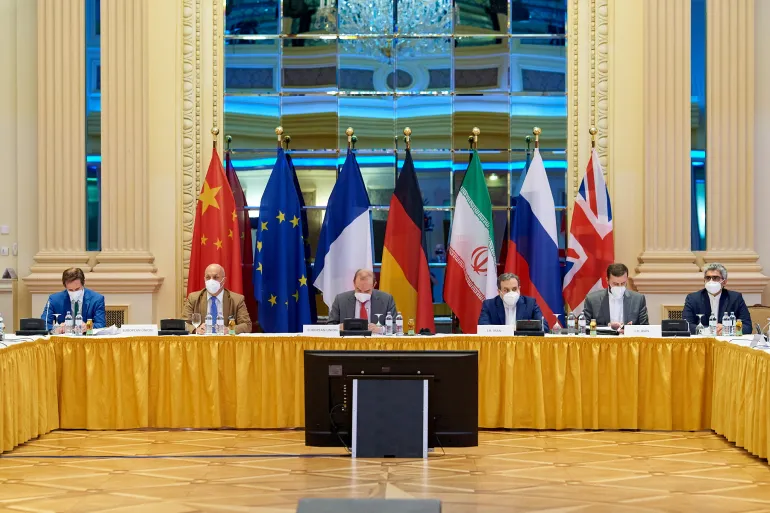
Image Description: Delegates at the 2021 Vienna talks on reviving the JCPOA, amid ongoing US-Iran tensions.
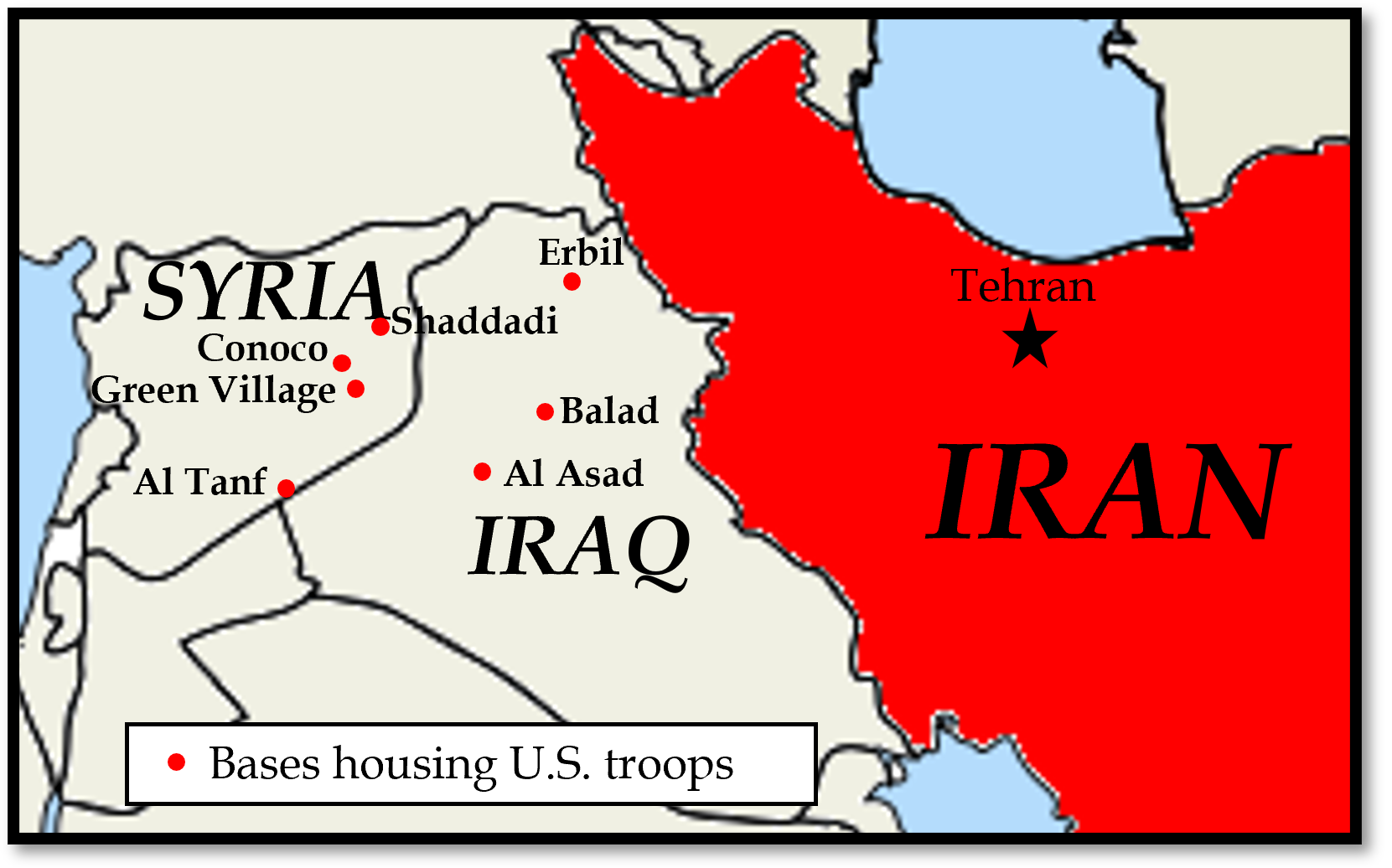
Image Description: Map showing U.S. bases in Iraq and Syria targeted by Iran-backed groups in 2024 proxy attacks, highlighting recent US-Iran tensions.
This chronicle of US-Iran tensions reveals a relationship defined by missed opportunities and mutual distrust. From allies sharing nuclear know-how to adversaries trading strikes, the story is one of perpetual flux, influenced by oil, ideology, and power plays.
Sources and Links
For those seeking deeper dives, here are key sources with clickable links:
- A Timeline of U.S. and Iran Relations, From Allies to Enemies
- U.S. Relations With Iran
- The Complex History of US-Iran Relations: A Visual Timeline
- Timeline, 1979-2026: Iran, United States and a half-century of conflict
- A timeline of U.S.-Iran relations
- Backgrounder: Timeline of Iran-U.S. tensions since 2015
- Wikipedia: United States–Iran relations
- 7 Key Moments in US-Iran Relations
- The Iran-Contra Affair