In the frozen expanse of the Arctic, where climate narratives often paint a dire picture of vanishing ice and starving wildlife, a surprising story of polar bear resilience emerges from Svalbard, Norway. This archipelago, nestled in the Barents Sea, has become a focal point for understanding Arctic adaptation amid rapid environmental shifts. A groundbreaking study in Scientific Reports reveals that polar bears here are not just surviving but actually gaining weight and improving health, challenging the sea ice paradox where melting habitats should spell doom. Let’s dive deep into this report, explore its contradictions with global warming trends, and ponder the future outlook—all while weaving in captivating anecdotes that highlight these majestic creatures’ ingenuity.
Unpacking the Scientific Reports Study: Polar Bear Resilience in Action
Published on January 29, 2026, the study titled “Body condition among Svalbard Polar bears Ursus maritimus during a period of rapid loss of sea ice” by Jon Aars and colleagues from the Norwegian Polar Institute and collaborators analyzed data from 770 adult polar bears captured between 1995 and 2019. Over this 25-year span, researchers measured body length, girth, and estimated mass to calculate a Body Condition Index (BCI)—a metric that essentially gauges how “fat” and healthy a bear is, crucial for survival in harsh winters. They used sophisticated statistical models, like generalized additive models (GAMs), to account for variables such as age, sex, reproductive status, capture date, and environmental factors including sea ice extent and climate indices like the Arctic Oscillation.
The key finding? Despite a staggering increase in ice-free days—jumping by about 100 days since the early 2000s—and sea ice breaking up a full month earlier post-2005, polar bears’ BCI actually improved after an initial dip around 2000. Males, in particular, showed a steep rise in condition up to age 12, plateauing before declining in old age, while females’ scores varied based on motherhood: those with cubs-of-the-year had the lowest BCI due to the energy drain of nursing, but overall, the population bulked up. “A fat bear is a healthy bear,” as lead author Jon Aars aptly put it in interviews, emphasizing how these reserves fuel long swims, hunts, and reproduction.
Why this polar bear resilience? The researchers point to Arctic adaptation strategies. As sea ice shrinks, seals—prime prey—concentrate in smaller areas, making hunts more efficient. Bears are shifting diets: harbour seals are booming and spreading coastal-ward, reindeer populations are thriving (leading to opportunistic kills), and even walrus carcasses provide easy meals. Some bears adopt a “local” ecotype, sticking to fjords and terrestrial foods like bird eggs, while “pelagic” ones roam farther but still fatten up. Spatial data showed better conditions in southeast Svalbard, possibly due to richer prey densities. This defies expectations, as Aars noted: “When I started, if you asked me what do you think will happen, I would assume they would be struggling and they would get leaner.”
To visualize this hunt, here’s an image of a polar bear in mid-leap, embodying the agility behind polar bear resilience in Svalbard’s changing seas.
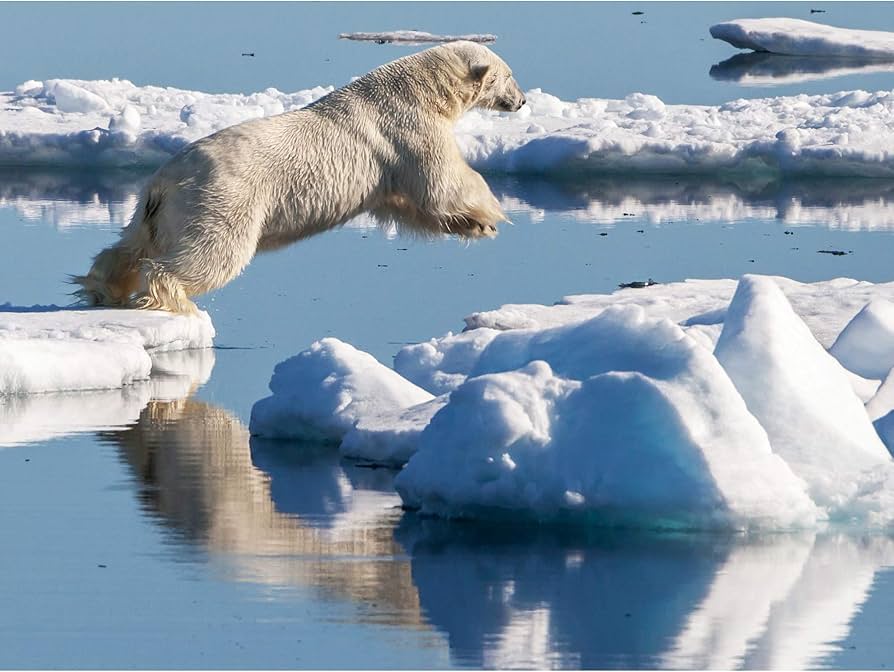
(Image Description: A majestic polar bear leaping between ice floes in Svalbard, capturing the dynamic hunting prowess that supports Arctic adaptation amid the sea ice paradox. amazon.com)
Reproduction remains robust too, with no major declines tied to ice loss in this group, though nursing mothers bear the brunt. Limitations include potential biases in capture locations (favoring certain ecotypes) and the study’s focus on adults only—cubs might tell a different tale. Yet, this data underscores polar bear resilience as a temporary buffer, not a permanent fix.
The Sea Ice Paradox: Clashing with Global Warming Narratives
Here’s where the sea ice paradox truly shines—or melts, depending on your view. Global warming, driven by human emissions, has accelerated Arctic ice loss at rates unseen in millennia, with projections of an ice-free summer Arctic by mid-century. Conventional wisdom holds that polar bears, icons of climate vulnerability, suffer most: less ice means harder seal hunts, leading to starvation, lower reproduction, and population crashes. Studies from Hudson Bay, Canada, show bears there losing weight and numbers, with females dropping 86 pounds on average over decades.
But Svalbard flips the script. This Arctic adaptation highlights a contradiction: while overall polar bear populations face threats (19 subpopulations, some declining sharply), local resilience emerges from biodiversity shifts. Warming waters boost fish stocks, indirectly fattening seals; reduced ice concentrates prey, turning disadvantage into opportunity. It’s a sea ice paradox—climate change harms habitats yet temporarily aids foraging in specific spots. As one researcher quipped in a BBC report, scientists were “quite surprised” by these plumper bears.
This isn’t denial of warming’s perils; it’s nuance. The Barents Sea warms fastest globally, yet polar bear resilience persists—for now. It challenges oversimplified doom stories, urging balanced views: yes, emissions must drop, but nature’s adaptability buys time.
For a glimpse into this paradox, check this image of a lone polar bear navigating thin ice, symbolizing the delicate balance of Arctic adaptation.
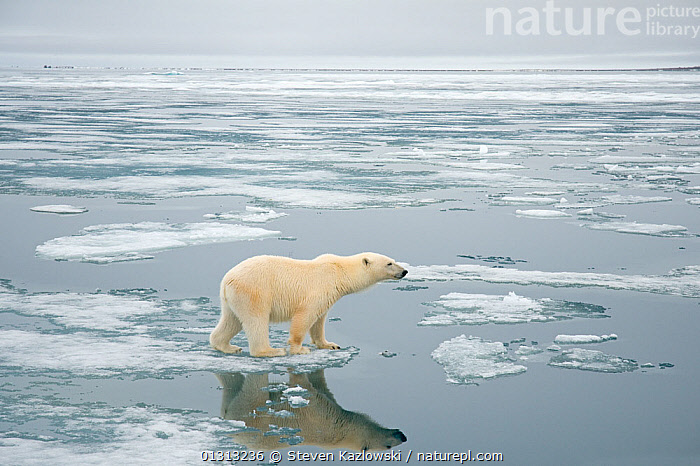
(Image Description: A polar bear cautiously walking on fragmented sea ice in Svalbard, illustrating the sea ice paradox where shrinking platforms still support thriving hunts. naturepl.com)
Future Outlook: Sustaining Polar Bear Resilience or Facing the Melt?
Peering ahead, the future for Svalbard’s bears hinges on sustaining Arctic adaptation. The study warns this fat gain might be fleeting: as ice vanishes further, even concentrated prey could dwindle if marine ecosystems collapse. Projections suggest the Barents subpopulation could halve by 2100 under high-emission scenarios, with more bears forced ashore, risking malnutrition from low-calorie land foods. Continued monitoring is key, tracking ecotype shifts and demographics.
Optimistically, polar bear resilience could inspire conservation: protecting prey habitats, curbing pollution, and reducing shipping disturbances. Global efforts like the Paris Agreement aim to cap warming, potentially stabilizing ice. But without action, the sea ice paradox resolves grimly—resilience exhausted.
Imagine a family of bears emerging from a den, cubs playful amid snow-capped peaks, representing hope for future generations.
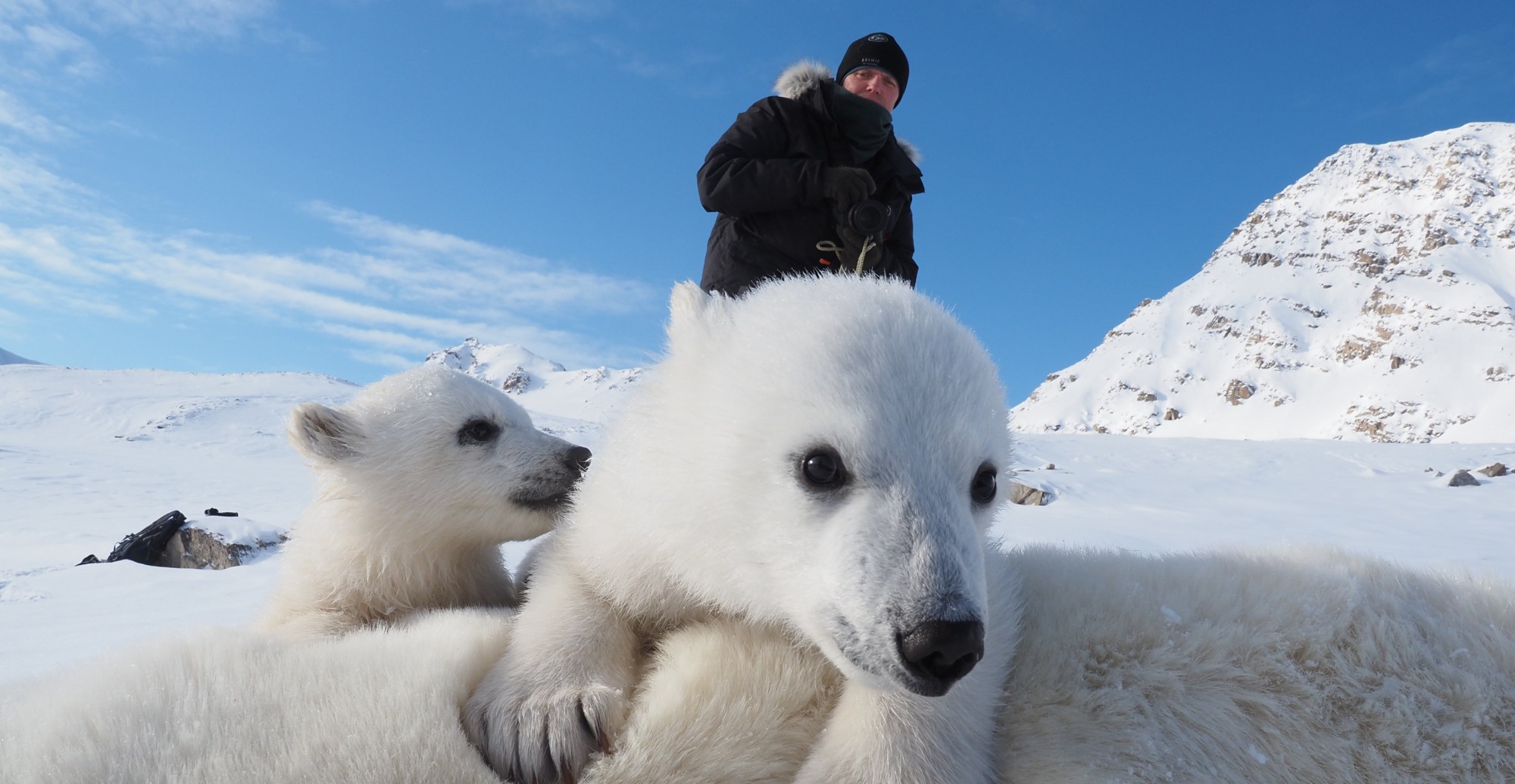
(Image Description: A polar bear mother with cubs in snowy Svalbard terrain, highlighting reproductive success tied to polar bear resilience despite the sea ice paradox. vox.com)
Fun Episodes: Tales of Arctic Wit and Wonder
To lighten the science, let’s sprinkle in episodes showcasing polar bear resilience with humor and heart. Remember Knut, the Berlin Zoo polar bear cub who became a global sensation in 2007? Orphaned and hand-raised, he symbolized climate awareness but also bears’ charm—drawing millions, even gracing Vanity Fair. In Svalbard, a cheeky anecdote: in 2011, a bear “stole” a researcher’s tripod, playfully batting it like a toy before ambling off, reminding scientists of their wild subjects’ curiosity.
Or Fat Bear Week, Alaska’s annual online contest where bears like “Chunk” pack on pounds for hibernation—mirroring Svalbard’s fatter bears. One year, a bear waddled so rotundly it inspired memes: “Polar bear resilience meets belly laughs!” In Svalbard folklore, locals recount “ghost bears” vanishing into blizzards, only to reappear fatter, embodying Arctic adaptation. A 2020 expedition caught a bear swimming 200 miles non-stop, surfacing plump from seal feasts—nature’s marathoner!
These stories humanize the sea ice paradox, blending awe with amusement.
Wrapping Up: A Call for Balanced Arctic Stewardship
Svalbard’s polar bear resilience offers a refreshing counterpoint to warming woes, but it’s no excuse for inaction. Through Arctic adaptation, these bears navigate the sea ice paradox, yet vigilance is vital. For more, explore the full study here. Additional insights from BBC coverage and CNN report.